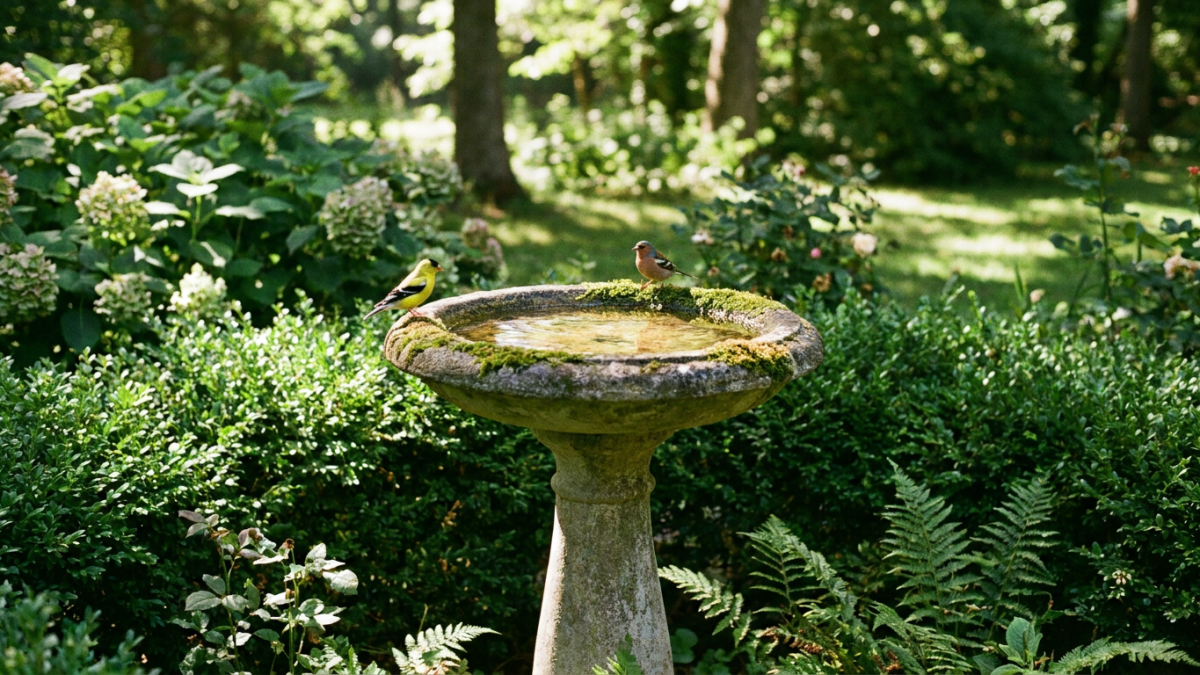
The best bird bath placement is 10 to 15 feet from dense cover, in dappled shade, on the ground or a low pedestal, with a clear sightline in every direction. That combination gives birds an escape route without handing a cat a hiding spot.
Move an existing bath to match those four conditions and you will usually see new species inside a week.
The cover distance rule
Birds will not bathe where they cannot flee. Wet feathers cut flight performance badly, so they need a branch within a short hop.
Put the bath too close to a shrub and an ambush predator gets cover of its own. Ten to fifteen feet from a low tree or hedge is the range that suits most backyard species.
Plumelore earns a commission on qualifying purchases through the Amazon links on this page, at no extra cost to you. Picks are chosen on performance and suitability, not on commission.
Shade beats full sun
Dappled shade keeps the water cooler, slows algae growth, and cuts evaporation. Full afternoon sun turns a shallow basin into warm soup by mid-afternoon.
Overhanging trees carry a cost in leaf litter and droppings, so sit the bath under the edge of a canopy rather than the middle of it. You will still be scrubbing either way, and our guide on how to keep a bird bath from turning green covers the routine.
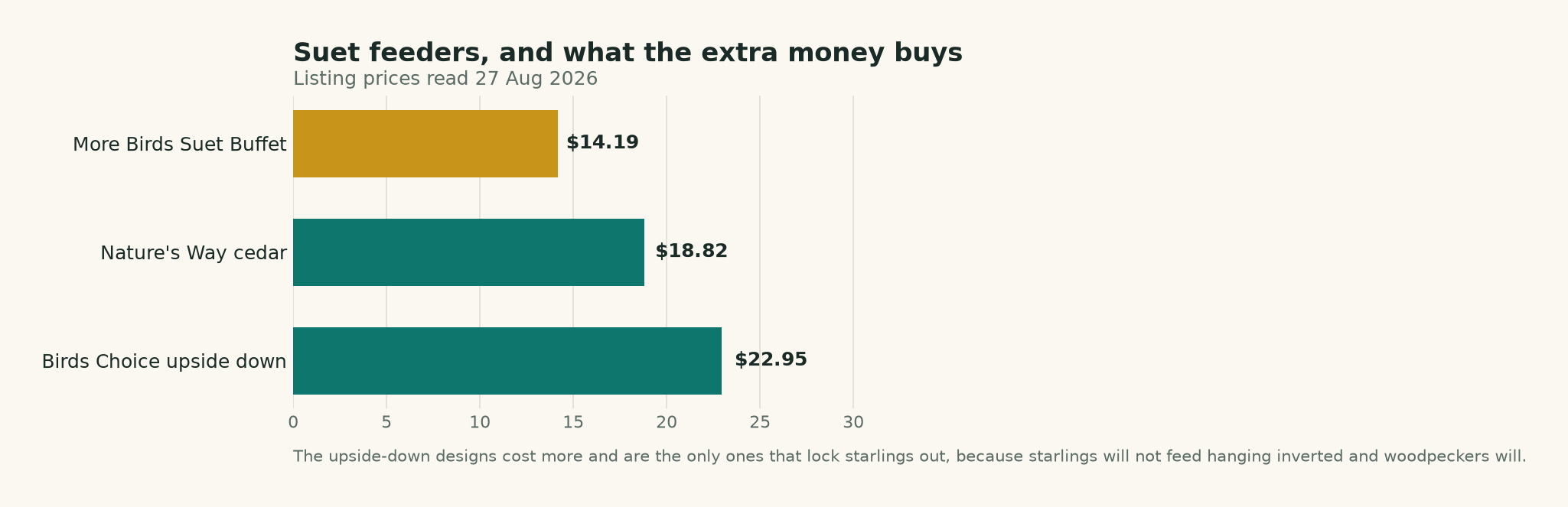
Prices move, and stock does too. Each of these opens the product page on Amazon in a new tab.
Height changes which species show up
Ground level draws the widest range: robins, thrushes, doves, sparrows, and towhees all prefer it. It is also the most exposed to cats, so cover distance matters more here.
A pedestal at 2 to 3 feet is the compromise most yards land on, and finches, chickadees, and cardinals use it readily.
Hanging baths sway, and plenty of birds refuse them for that reason. If railing space is all you have, mount the basin solidly instead of letting it swing.
Two baths at different heights outperform one perfect bath. Basin depth counts as much as height, and the picks in best bird baths flag which designs are too deep to be useful.
Windows, water sound, and the small details
Keep the bath either within 3 feet of a window or more than 30 feet away. The middle distance is where fatal strikes happen, because birds have room to build up speed. If collisions are already a problem, stop birds from hitting your windows has the fixes.
Moving water is the strongest single attractant you can add. A dripper, a solar wiggler, or a slowly leaking jug hung above the basin pulls in species that ignore still water entirely.
Set the bath within reach of a hose. A bath you cannot refill in ten seconds is a bath you will let go green.
Placement mistakes worth undoing
- Middle of an open lawn with no cover in sight
- Directly beneath a feeder, where hulls and droppings foul the water daily
- Deep basins with slick sides and no shallow shelf to stand on
- Full sun on a south-facing patio
Fix the cover distance first. It is the change that moves the needle fastest.