Best Bird Seed, by Goal and Budget
Quick answer (Updated June 2026): Wagner’s Songbird Supreme is the best all-purpose bird seed. Its 50% sunflower base with no filler milo draws cardinals, chickadees, finches and titmice to one feeder. If you only want to attract one species, use black oil sunflower seed alone; it is cheaper and preferred by more backyard birds than any other single seed.
The best bird seed overall: Wagner’s Songbird Supreme because it contains 50% sunflower seed (the universal bird favorite), no filler milo that attracts nuisance birds and a balanced mix that draws cardinals, chickadees, finches and titmice to the same feeder. If you want one bag that pleases the widest variety of birds, this is it.
Quick Reference: What Seed Attracts Which Birds
| Bird You Want | Best Seed | Notes |
|---|---|---|
| Cardinals | Black oil sunflower, safflower | Platform or hopper feeder |
| Finches (Goldfinches) | Nyjer (thistle) | Requires special Nyjer feeder |
| Chickadees, Titmice | Black oil sunflower, peanuts | Tube feeder with small ports |
| Woodpeckers | Suet, peanuts, sunflower | Suet cage or mesh peanut feeder |
| Blue Jays | Whole peanuts, sunflower | Platform feeder, noisy but fun |
| Doves | Millet, cracked corn | Ground or platform feeder |
| Nuthatches | Sunflower, suet | Upside-down suet feeder |
Plumelore earns a commission on qualifying purchases through the Amazon links on this page, at no extra cost to you. Picks are chosen on performance and suitability, not on commission.
Best Overall: Wagner’s Songbird Supreme
Our Top Pick: Wagner’s Songbird Supreme
A 50% sunflower blend with safflower, millet and cracked corn. No filler. Attracts the widest variety of birds without the waste of cheap mixes.
Best No-Mess Blend: Kaytee Waste Free
Every seed in this blend is hulled, so there are no shells to clean up. It costs more per pound but your patio stays clean and you are not paying for inedible weight. Best for decks, patios and areas where you do not want a mess.
Prices move, and stock does too. Each of these opens the product page on Amazon in a new tab.
Best Budget: Wagner’s Classic Blend
The cheapest option that still attracts decent birds. It contains some milo filler that cardinals and doves will eat, but finches and chickadees will pick out the sunflower and leave the rest. Expect waste.
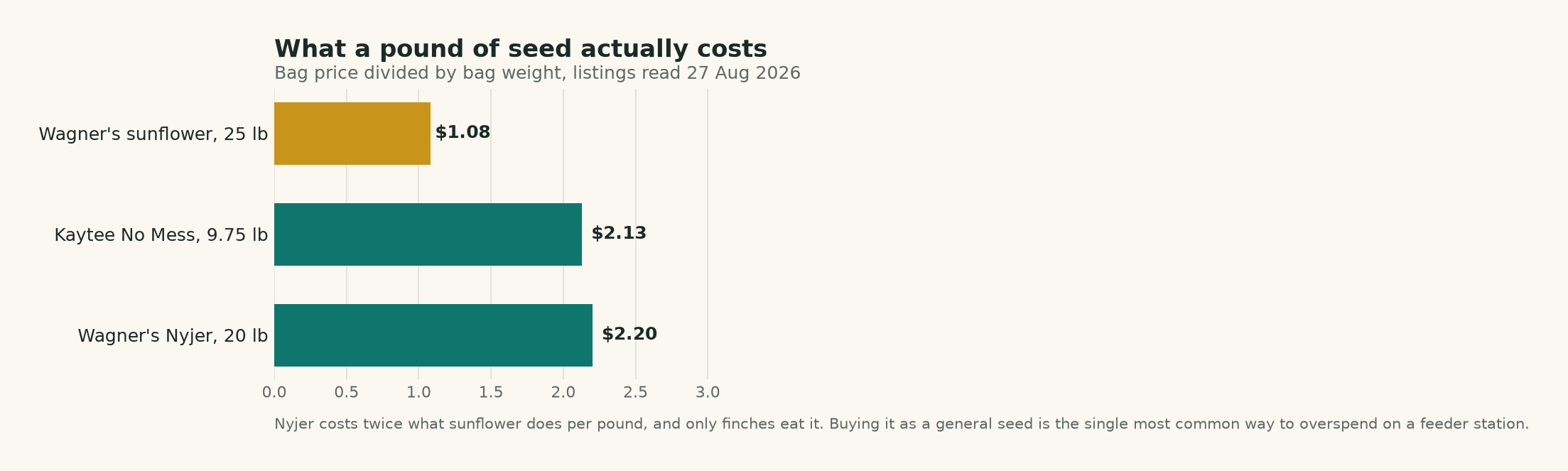
Seed price is the number worth checking. Black oil sunflower in a 40 lb bag usually lands well under half the per-pound price of the same seed in a 5 lb bag, and a no-mess mix costs more per pound but nothing gets kicked to the ground.
Cost Per Season Comparison
| Seed Type | Price per 20 lbs | Weekly Usage | Season Cost (12 weeks) |
|---|---|---|---|
| Premium blend (Songbird Supreme) | $35 | 2 lbs | $42 |
| No-mess blend | $48 | 1.5 lbs | $43 |
| Budget blend | $22 | 3 lbs (includes waste) | $40 |
| Black oil sunflower only | $28 | 1.8 lbs | $30 |
Storage Tips
Store seed in airtight metal containers to keep rodents and pantry moths out. Keep in a cool, dry place. Seed stays fresh for about 6 months in proper storage. If it smells musty or you see webbing, it has gone bad. Seed selection also depends on the feeder you are running; our guide to feeders by bird type pairs each seed type with the right feeder design so you get the species you want. Woodpeckers and nuthatches need more than seed; pair your seed feeder with one of our top-rated suet feeders to keep them coming back through cold months.
Frequently Asked Questions
Can birds eat old seed?
Birds will eat stale seed but fresh seed attracts more birds. If seed has been sitting in a feeder for more than 2 weeks in humid weather, empty it and refill with fresh seed.
What seed attracts the most birds?
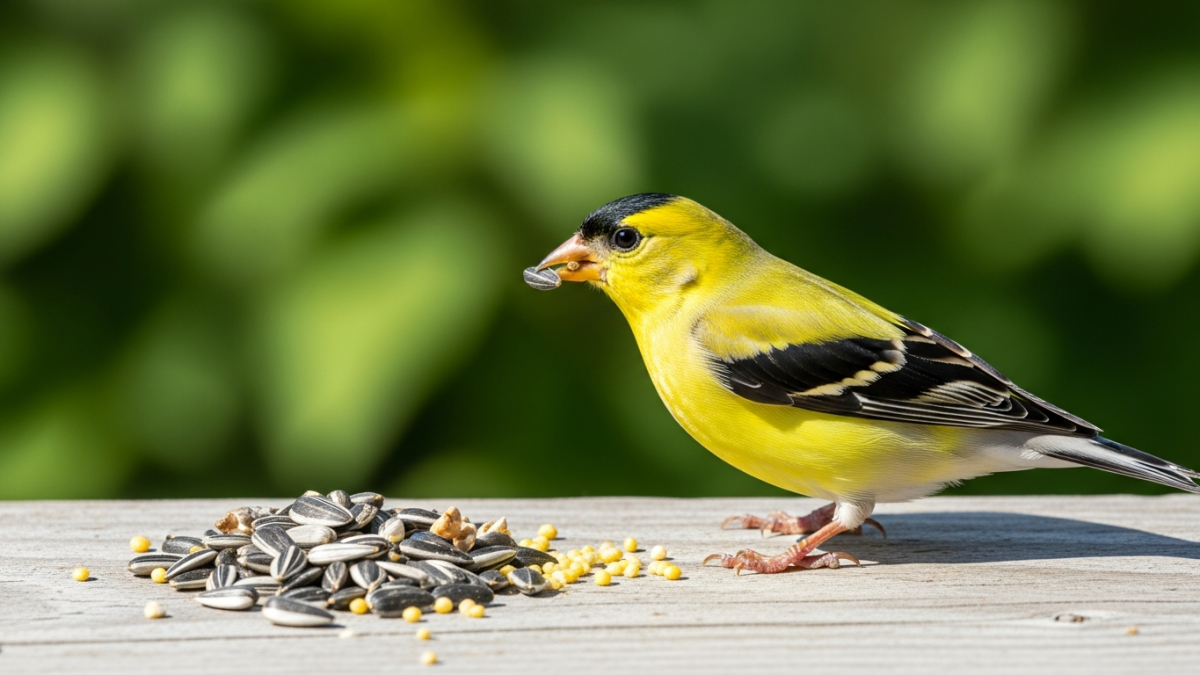
Black oil sunflower seed. It has thin shells that small birds can crack, high fat content and broad appeal across species. If you feed only one thing, make it black oil sunflower.
Why do birds throw seed out of the feeder?
They are sorting for their favorites. Cheap mixes contain milo, wheat and other fillers that most songbirds reject. Switch to a no-filler blend and the waste will stop.