Best Bird Feeders by Bird Type
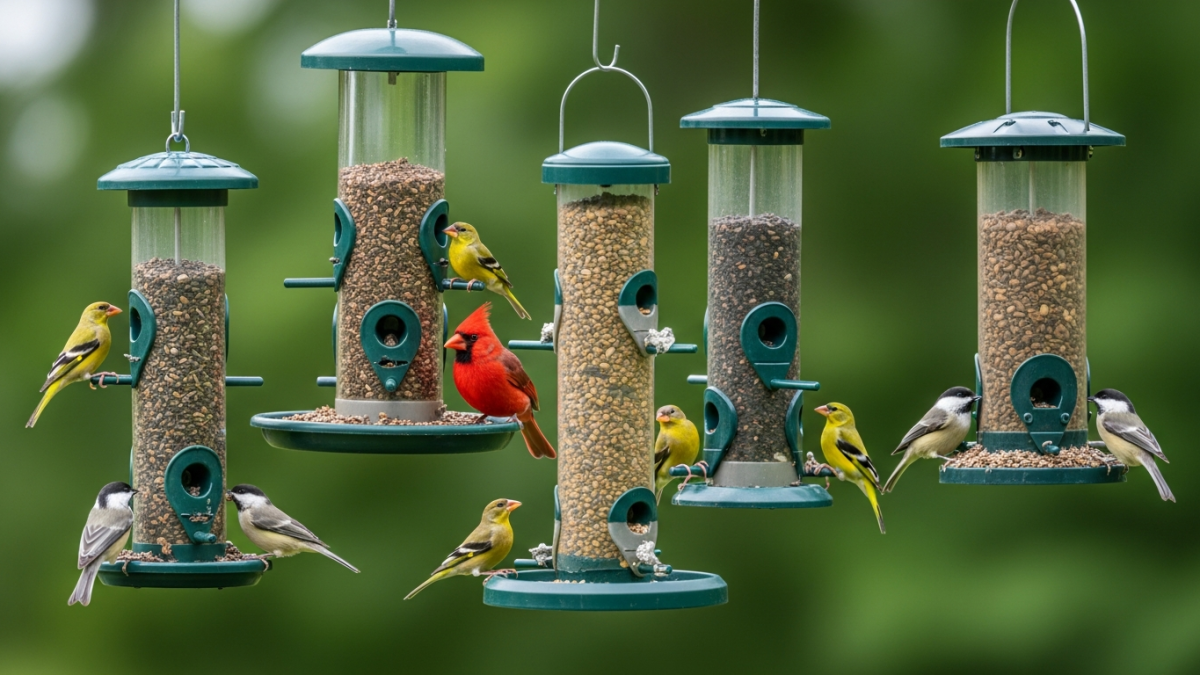
Quick answer (Updated June 2026): Match the feeder to the bird. Cardinals need wide platform perches; finches need Nyjer tube ports; woodpeckers need vertical suet cages. Start with a tube feeder plus a suet cage, and you will cover the majority of common backyard species in North America.
The right feeder for the birds you want: Different birds feed differently. Cardinals need wide perches and prefer platform feeders. Finches eat upside-down and need tiny Nyjer ports. Woodpeckers cling to vertical surfaces and love suet. This guide matches feeder type to bird type so you buy once and get the species you actually want to see.
For Cardinals: Platform or Hopper Feeder
Cardinals are larger birds that prefer stable, wide perches. A Woodlink Platform Feeder with a mesh bottom for drainage is ideal. Fill it with black oil sunflower and safflower. Cardinals have a preference for feeding facing forward, so an open tray design lets them land comfortably without twisting.
Plumelore earns a commission on qualifying purchases through the Amazon links on this page, at no extra cost to you. Picks are chosen on performance and suitability, not on commission.
For Finches: Nyjer Tube Feeder
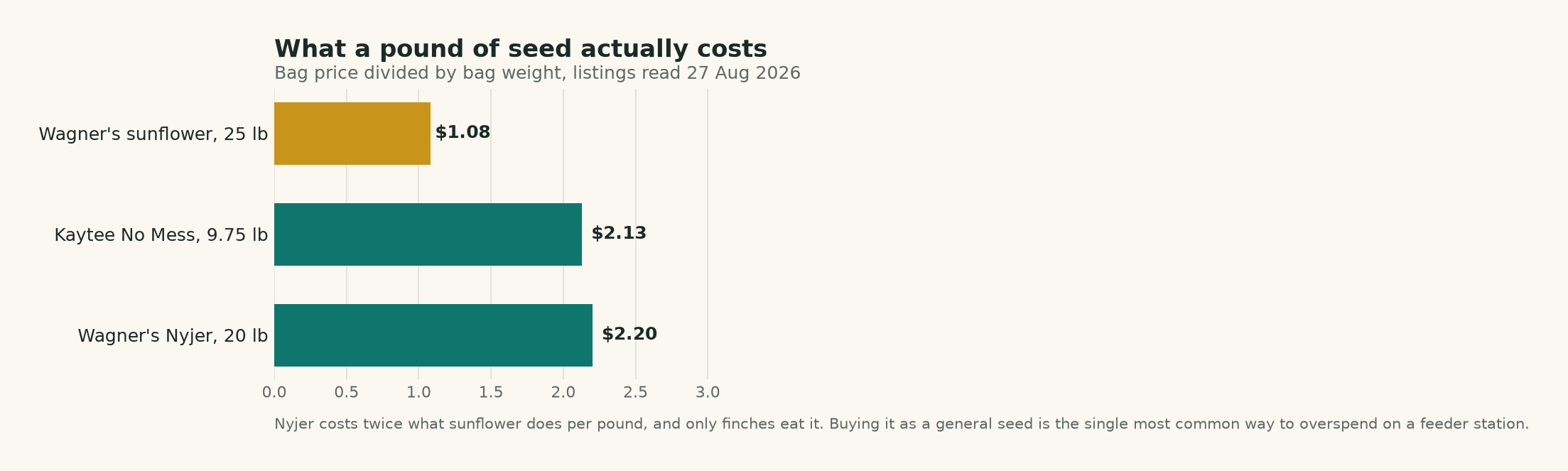
Goldfinches, house finches and pine siskins all love Nyjer (thistle) seed. A specialized tube feeder with tiny ports, like the Aspectek Nyjer Feeder, prevents spillage and keeps the expensive seed where it belongs. Upside-down Nyjer feeders deter house sparrows while still accommodating agile finches.
For Woodpeckers: Suet Cage Feeder
Woodpeckers are clinging birds. A Stokes Select Suet Cage mounted on a tree trunk or feeder pole will attract downy, hairy and red-bellied woodpeckers. Use high-quality suet cakes with nuts and fruit. An upside-down suet feeder prevents starlings from devouring the suet in hours.
Prices move, and stock does too. Each of these opens the product page on Amazon in a new tab.
For Chickadees and Titmice: Small Tube Feeder
These tiny acrobats can feed at any angle. A standard tube feeder with small perches and black oil sunflower is all you need. The Droll Yankees Onyx is virtually indestructible and the lifetime warranty means you will never buy another.
For Blue Jays: Peanut Wreath or Platform
Blue jays love whole peanuts in the shell. A Heath Peanut Wreath is the most entertaining way to feed them. The mesh design lets them pull peanuts out one at a time while giving you a show. Be warned: jays are loud and will empty a wreath in a day if you let them.
Feeder Placement by Bird Type
| Bird | Feeder Type | Best Placement | Height |
|---|---|---|---|
| Cardinals | Platform/hopper | Near shrubs, open sightlines | 4-6 feet |
| Finches | Nyjer tube | Open area, away from feeders | 5-6 feet |
| Woodpeckers | Suet cage | Tree trunk or pole near trees | 6-10 feet |
| Chickadees | Small tube | Near cover but visible | 5-6 feet |
| Blue Jays | Peanut wreath | Open yard, visible from house | 5-8 feet |
| Nuthatches | Upside-down suet | Tree trunk | 6-8 feet |
Seed selection ties directly to feeder type. Our bird seed guide matches each seed variety to the species and feeder design that gets the most out of it. If squirrels are clearing your platform or hopper feeders, pairing them with a squirrel-proof design is worth the upgrade; see our picks for squirrel-proof bird feeders.
Frequently Asked Questions
Can I use one feeder for all birds?
A standard tube feeder with black oil sunflower will attract chickadees, titmice and finches, but cardinals and woodpeckers may struggle. For the widest variety, add a platform feeder and a suet cage alongside your tube feeder.
How many feeders should I have?
Start with two: a tube feeder for sunflower and a suet cage. Add a platform feeder if you want cardinals, and a Nyjer feeder if goldfinches are common in your area. Multiple feeders reduce competition and attract more total birds.