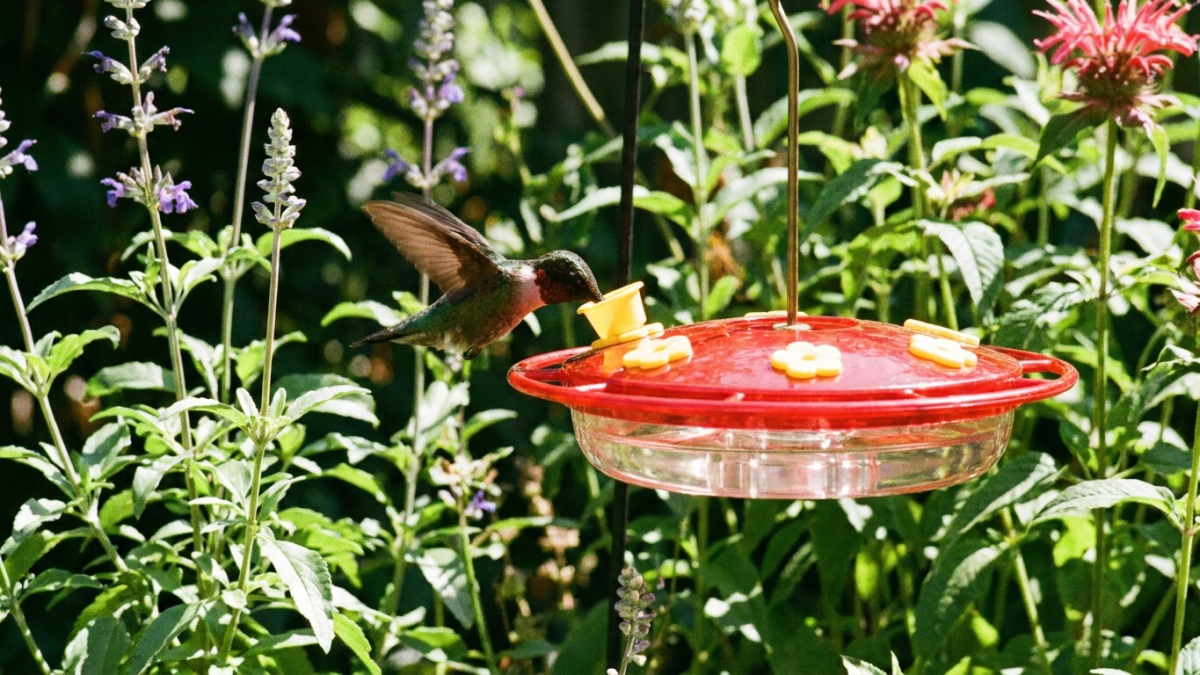
Bees and wasps hit hummingbird feeders because the nectar is reachable, not because your yard is unusual. Cut off the access and they lose interest fast: switch to a saucer-style feeder, keep every drop off the outside, and never spray anything near the ports.
The saucer swap is the single biggest change. Nectar sits below the port, out of range of a short insect tongue but easy for a hummingbird’s long one.
Cut Off the Access
Inverted bottle feeders drip as air pressure and temperature shift, and every drip is an invitation. A saucer design has no positive pressure, so it does not push nectar out on a hot afternoon.
If drips are already your issue, the causes behind a hummingbird feeder leaking nectar usually explain it: a worn gasket, a loose seal, or sun-driven expansion.
Bee guards help on feeders that have them, though very fine mesh can block hummingbird access too. Check that birds still feed comfortably after you add them.
Remove the Yellow
Wasps and bees track yellow. Plenty of feeders still ship with yellow plastic flowers, and swapping or pulling them off cuts insect traffic noticeably.
Red is what hummingbirds respond to anyway, which is the whole argument in hummingbird feeder color.
Keep the Outside Clean
Sticky residue on the reservoir attracts more insects than the nectar inside ever will. Wipe the feeder body down every time you refill.
Old nectar also ferments in heat, which sharpens the smell insects follow. Change it every two days above 90F and every three to four days in mild weather, then wash properly on the schedule in how to clean a hummingbird feeder.
Move It, Do Not Poison It
Relocating a feeder ten to fifteen feet often breaks the insect route while your hummingbirds follow within a day. Insects navigate by learned location and scent trail more rigidly than birds do.
Skip oils, petroleum jelly, and insecticide anywhere near the ports. Anything greasy fouls feathers, and a hummingbird that cannot preen properly is in real trouble.
A shallow decoy dish of sugar water placed well away from the feeder works on honeybees. Set it far enough out that you are not just concentrating traffic in the same corner of the yard.
When It Is Actually Yellowjackets
Late summer is when yellowjacket colonies peak and turn aggressive toward any sugar source. Volume matters more than tactics at that point.
Take the feeders down for two or three days. The insects abandon the route, and hummingbirds return quickly because they remember reliable sources.
Thinning the nectar slightly, closer to five parts water to one part sugar, is a reasonable temporary move. Go back to the standard four to one mix once the pressure drops.