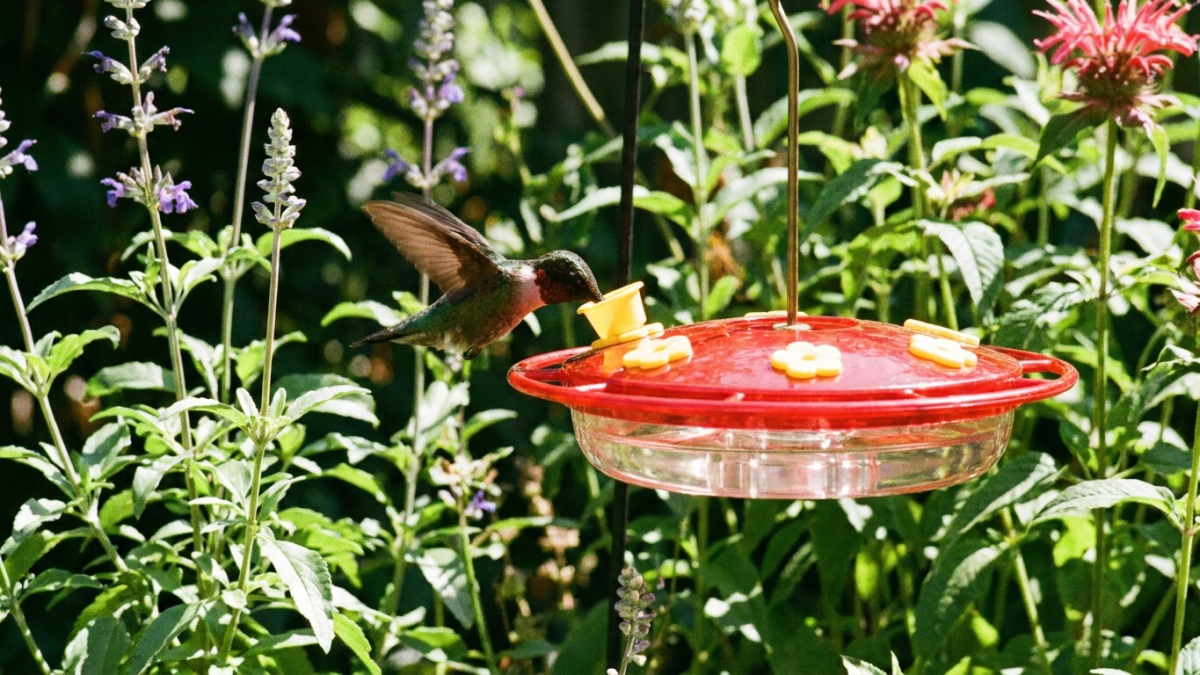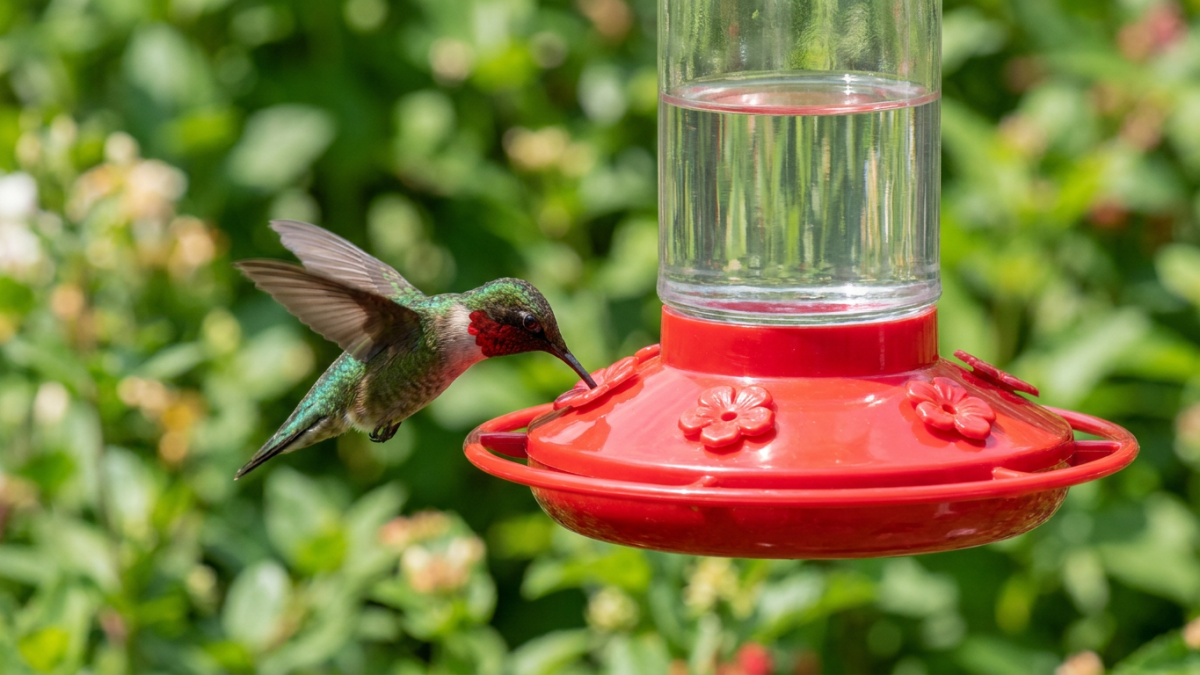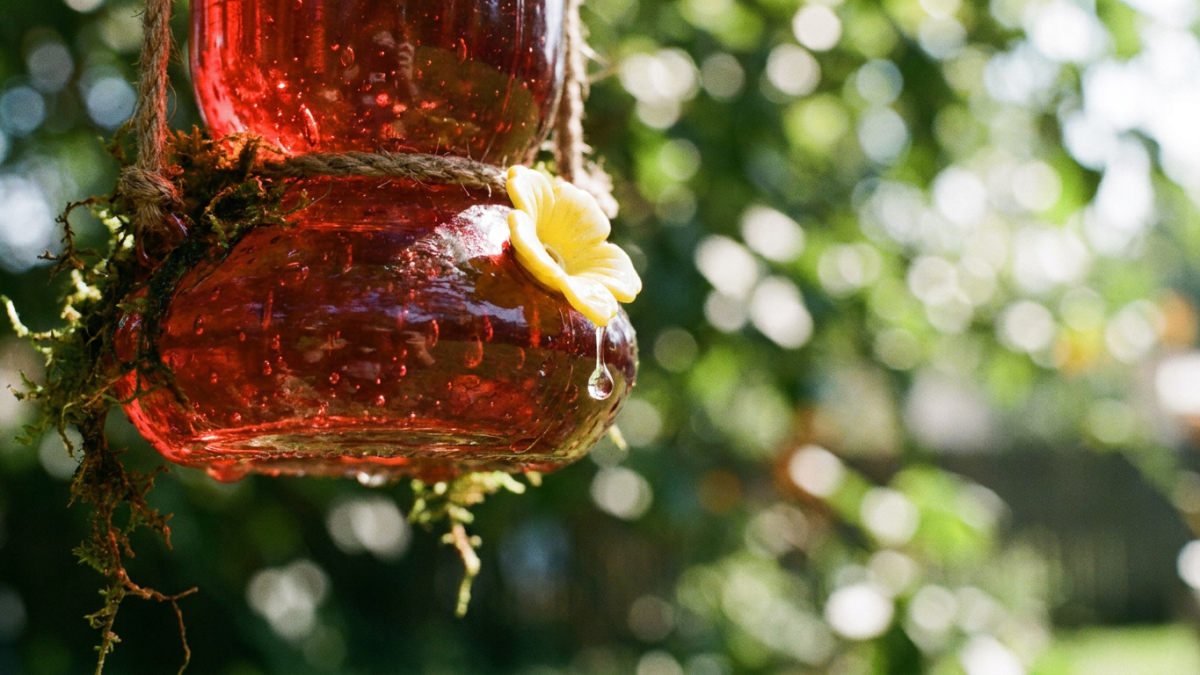
Three causes cover almost every leak: sun heating the air inside the reservoir, a seal that is loose or cross-threaded, and a gasket that has gone hard. Inverted bottle feeders leak far more than saucer feeders, because they depend on a vacuum that heat breaks.
Heat is the usual answer
An inverted feeder holds nectar up with air pressure. Sun warms the trapped air above the nectar, that air expands, and it pushes liquid out through the ports.
Move the feeder into shade, or into a spot that gets morning sun and afternoon shade. That single change fixes most drips.
Also stop overfilling. A little headspace gives the expanding air somewhere to go.
Check the seal
Unscrew the base and reseat it slowly. Cross-threading is common on plastic collars and it leaves a gap you cannot see.
Wipe both mating surfaces dry before you assemble. Sticky nectar film on the threads keeps them from seating flat.
Do not overtighten either. Crushing a plastic thread deforms it permanently, and then it leaks no matter what you do.
Gaskets and hairline cracks
Rubber and silicone gaskets stiffen after a season or two in the sun. A hard, flattened gasket will not seal, and replacements are cheap.
Hold the reservoir up to light and look for hairline cracks near the neck, especially if the feeder ever froze or went through a dishwasher.
Cracked ports are the other suspect. If a port insert wobbles when you touch it, it is done.
Why the drip is worth chasing
Spilled nectar draws ants, wasps, and bees, and the trail keeps them coming back after you clean it.
It also ferments fast in warm weather, and fermented nectar is genuinely bad for the birds. Stay on top of how to clean a hummingbird feeder and change nectar on a schedule matched to your temperatures.
Thick homemade nectar drips more and clogs ports faster. Stick to a 4 to 1 ratio, as in this hummingbird nectar recipe.
When to switch to a saucer feeder
Saucer feeders hold nectar below the ports, so there is no vacuum to break and nothing for heat to push out. They are the structural fix for chronic leaking.
They hold less and need topping up more often, which is a fair trade if you are cleaning ants off a pole every week. Compare designs in our best hummingbird feeders roundup.