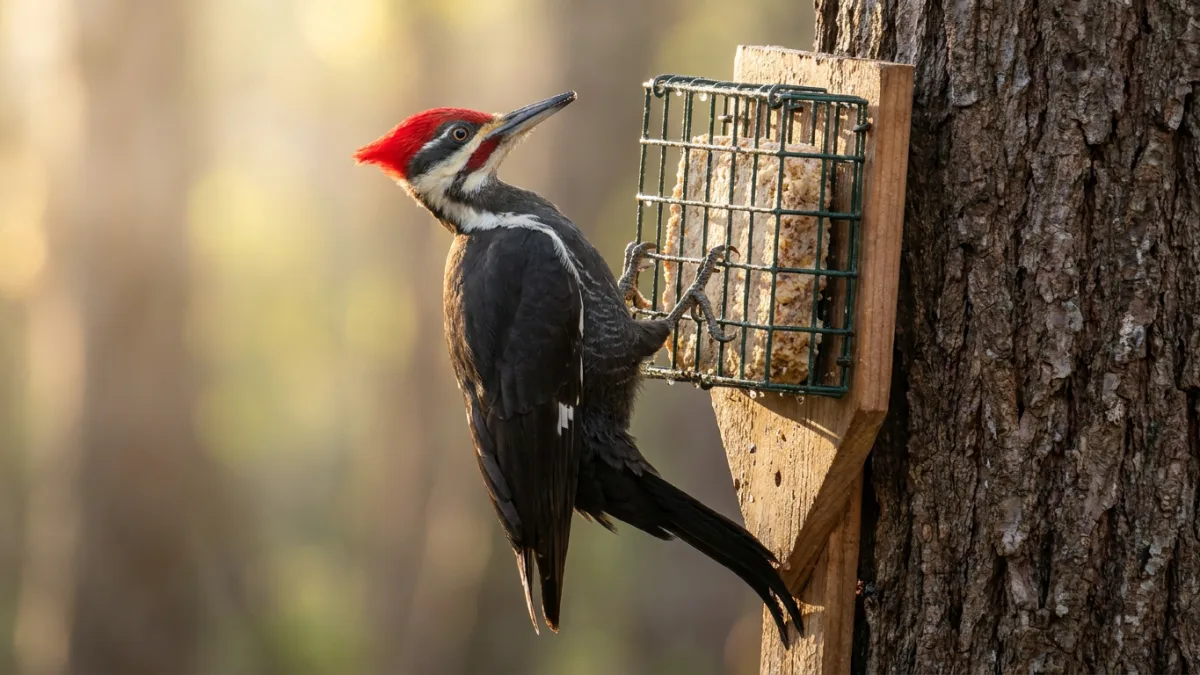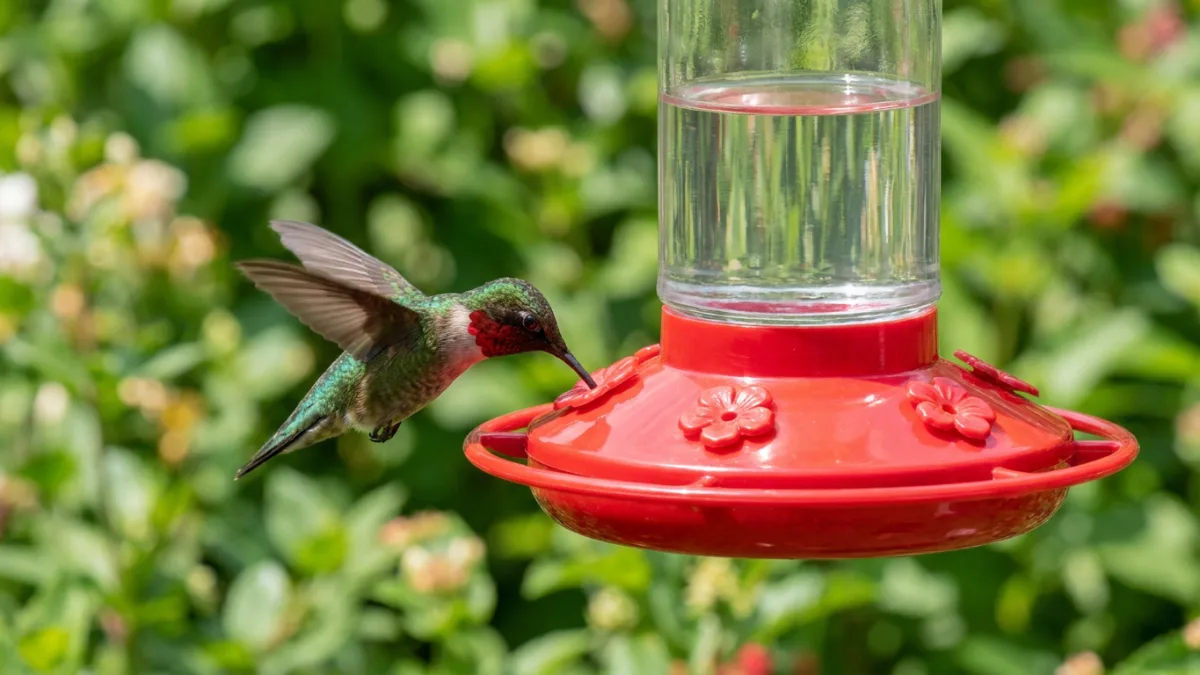
No. Skip the red dye. Hummingbirds locate feeders by the red on the hardware, not the color of the liquid inside, and clear sugar water gets visited exactly as often.
Every commercial nectar concentrate sold in a red bottle exists because the color sells to people. The birds were never the customer.
What actually draws them in
Hummingbirds see red and orange strongly and use those cues to scan for flowers at a distance. A feeder with a red base, red ports, or red glass supplies that signal on its own.
Once a bird has fed at your feeder it navigates back by memory and location rather than color. That is why an established feeder keeps its traffic even if you swap it for a plain glass one, and it is the same behavior behind whether hummingbirds remember feeders year to year.
If your feeder has no red on it at all, tie a red ribbon to the hanger or plant something red nearby. Choosing hardware in the first place is covered in hummingbird feeder colors.
Why experienced birders leave dye out
There is no good published evidence that the dyes used in commercial nectar harm hummingbirds, and you will see that stated firmly in both directions online. The honest position is that the safety question is unsettled.
What is settled is the cost-benefit. A hummingbird processes a large volume of nectar relative to its body weight every day, so any additive passes through it repeatedly. Adding a compound with no benefit, at unknown long-term dose, to the diet of a 3 gram bird is a poor trade when the alternative costs nothing.
Rehabilitation centers, banders, and most state wildlife agencies recommend plain sugar water for that reason. Not because dye is proven dangerous, but because it is proven pointless.
What to put in the feeder instead
- Four parts water to one part plain white sugar
- Boil or heat only enough to dissolve, then cool fully
- No honey, which ferments fast and grows mold
- No brown sugar, raw sugar, or molasses, all of which carry iron
- No artificial sweetener, which gives the bird no energy at all
White sugar dissolved in water is chemically close to the sucrose in flower nectar, which is why the plain recipe works so well. Exact ratios and batch sizes are in the hummingbird nectar recipe.
The thing that matters more than color
Spoilage outranks every other nectar question. Sugar water ferments in a day or two in summer heat, and cloudy nectar or black specks around the ports means the batch is done.
Change it every two days above 27 C, every three to four days in mild weather, and rinse the feeder each time. Clear nectar makes that check easy, which is one more small argument against dye: you can see the batch going off.