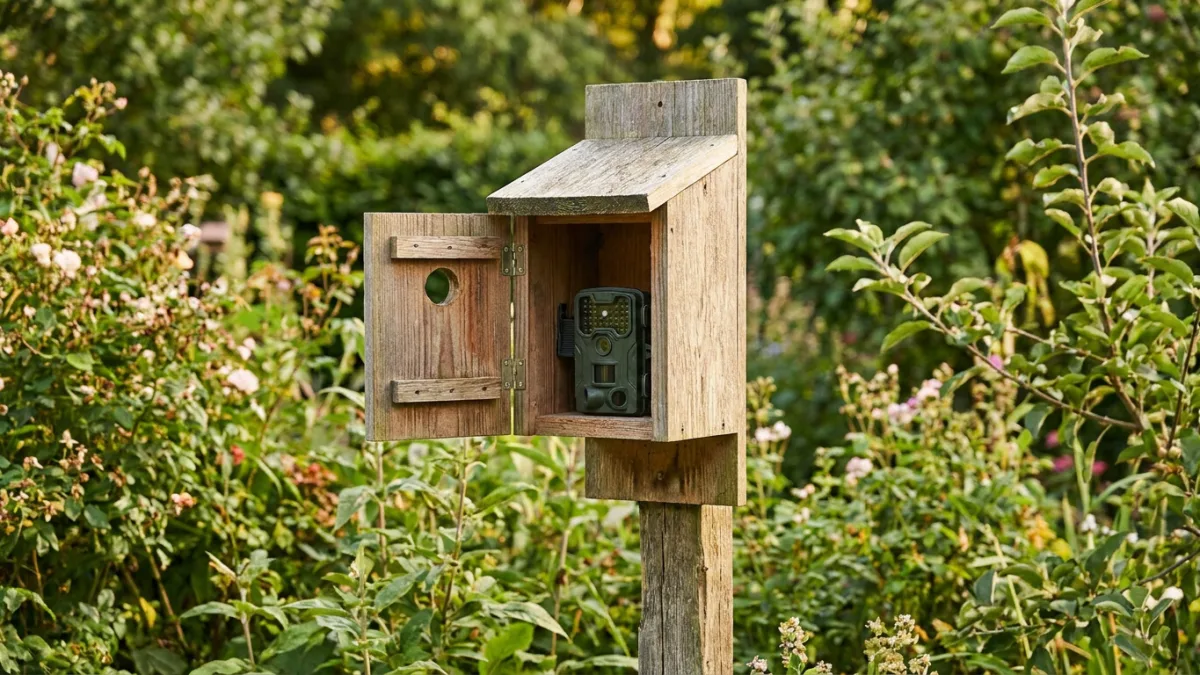
A bird house with a camera is worth it if you get three things right: 1080p resolution, a power plan that survives May, and install timing that does not spook the pair. Get any of them wrong and you own an empty box with electronics in it.
Resolution: what you actually need
720p is enough to confirm chicks exist. It is not enough to see a mite load, count eggs reliably in dim light, or tell a brown-headed cowbird egg from a house wren’s. 1080p handles all three, and 4K mostly buys storage headaches, since most boxes stream to an SD card or cloud plan that fills twice as fast for detail you will never zoom into. Low-light performance matters more than raw pixels, because nests sit in permanent shade and the interesting hours are dawn and dusk.
Power: the part that fails in week two
Battery units die at exactly the wrong moment, right as eggs pip, because a camera rated to last months assumes a few triggered clips a day, not continuous nesting-season streaming. Solar panels sound like the fix until you mount one; a nest box under canopy gets a fraction of the sun a fence-mounted camera enjoys. The reliable options are a wired USB run to an outlet, or a panel mounted in open sun with a cable to the box. Plan the wire route before you buy anything.
Disturbance: the legal and ethical limit
Active nests of native birds are protected in the US under the Migratory Bird Treaty Act, and disturbing an active nest of a protected species is not just rude, it can be illegal. Practical version: mount and test the camera weeks before nesting season opens, then hands off once the first egg appears. Opening the box to fix a dropped camera during incubation risks abandonment, and species differ in tolerance; bluebirds are surprisingly forgiving of a quiet camera, while wrens will bail on a box that smells handled. Box dimensions and entrance size still decide who moves in, camera or no camera, so start from bird house plans with dimensions that get occupied.
Placement follows the same rules as any box: the hole size decides the tenant, and a camera adds a bump some species notice. Run your setup against the backyard birding checklist before nesting season so the wiring is done in February, not April.
Verdict
Buy 1080p, wire the power, and install before the birds arrive. The camera itself is the easy part; the calendar is what separates a fledge video from an abandoned box.