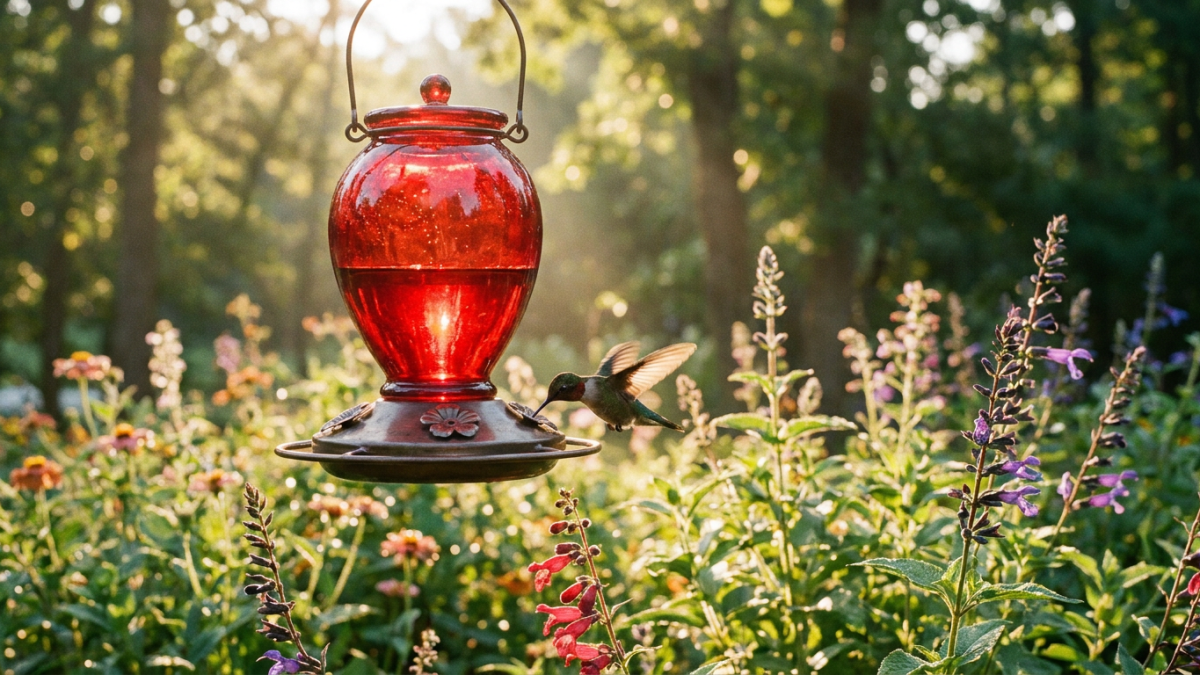
Choose glass if the feeder hangs somewhere sheltered and you want one that still looks clear in five years. Choose plastic if it lives on a windy pole, a window suction cup, or anywhere it can fall, because glass resists scratching, clouding, and sun damage, while plastic survives being dropped. That single difference decides most purchases.
What glass gets right
A glass reservoir does not cloud. Sugar water and scrubbing gradually etch plastic until you can no longer tell whether the nectar inside is fresh, while glass wipes back to transparent season after season, which makes the hummingbird feeder cleaning routine faster since you actually see the film you are removing. UV also breaks plastic down over a few summers, and a warped base is where leaking starts. Glass ignores all of it, which is why most picks in our best hummingbird feeders guide lean glass.
Where glass bites back
It breaks, and it is heavy. A full glass bottle on a window suction mount is asking for a crash landing onto the patio, and even a sheltered hook becomes a hazard the day a storm swings the feeder into its own bracket. Weight matters on poles too, since a heavy bottle flexes cheap shepherd’s hooks until the whole assembly leans.
The hybrid most feeders actually are
Nearly every glass feeder is a glass bottle on a plastic base, so you only half-solve durability: the bottle outlives the base, which warps, cracks at the threads, or develops the drip issues documented in our Perky-Pet feeder problems writeup. Check the base material before checkout, because it is the part you will actually replace. Pure plastic wins on price, weight, and window mounts, and losing one to a fall costs little.