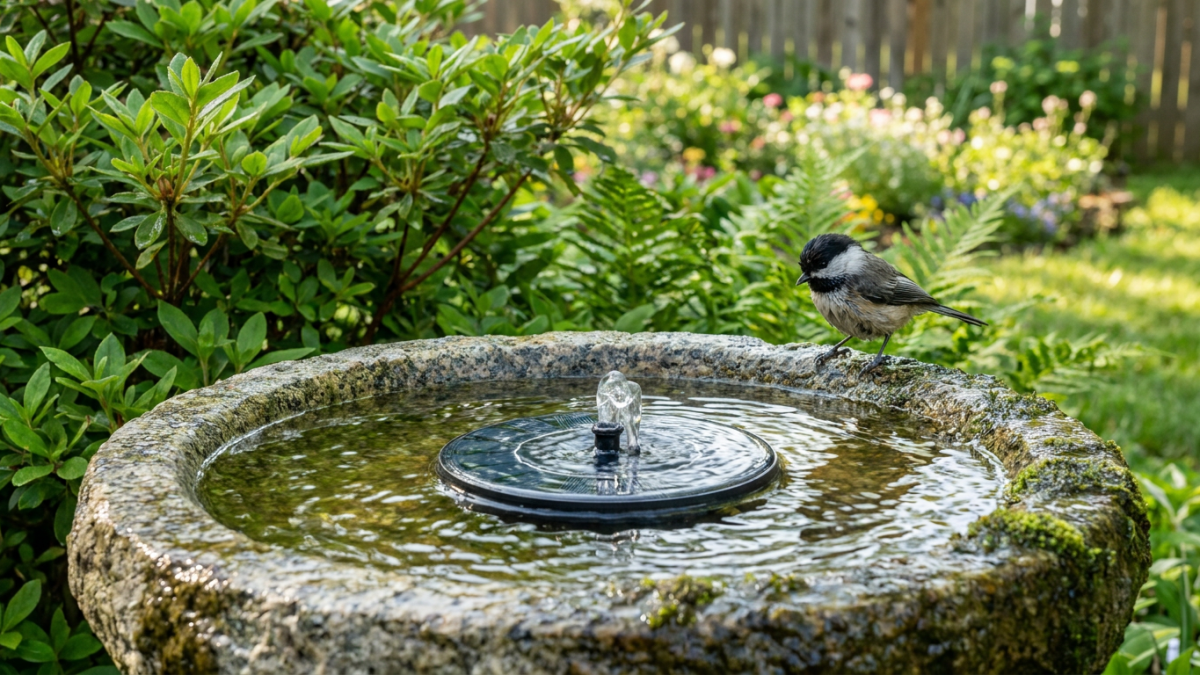
A bird bath fountain earns its keep in two ways: moving water will not host mosquito larvae, and the flicker of it pulls birds in from across the yard. If your basin sits ignored and green, a pump fixes both problems at once.
Mosquitoes need a still surface to lay on and calm water for larvae to develop. Constant circulation takes that away, which is why a running fountain lets you skip the every-other-day dump and refill routine.
The draw is the bigger surprise. Sound and ripple travel across a yard, and birds prefer moving water strongly enough that a bubbler or dripper usually lifts your visitor count within a week or two.
Pump wattage and running cost
Small bath pumps are cheap to run. Manufacturer figures for plug-in bath and fountain pumps typically land between 3 and 10 watts, less than a single LED bulb burning all day.
Solar units are rated lower, often 1.4 to 3 watts at the panel, because they only need to move a trickle. That is enough for a gentle bubble, not enough for a tall spray.
Solar, plug-in, or battery backup
Floating solar discs are the easy entry point: no cord, no install, low street price. The catch is that they stall the moment a cloud passes, and they want direct sun on the panel for most of the day.
Plug-in pumps run steadily and push more water, but you are committing to an outdoor-rated cord and a GFCI outlet within reach. That constraint decides your placement more than the birds do.
Solar kits with a battery reservoir split the difference. They keep running through cloud cover and into dusk, which matters because the last hour of light is a heavy drinking and bathing window.
Shutting the fountain down for winter
Pull the pump before the first hard freeze. Water expanding inside the housing splits impellers and seals, and a pump left running dry once the basin ices over will burn out quickly.
Store it indoors and dry. If you want open water through the cold months, switch to one of the best heated bird baths instead of fighting ice with a pump.
Cleaning a fountain basin
Moving water is not self-cleaning water. Algae still films the walls, and the pump intake clogs with feathers, seed hulls, and pollen, often inside two weeks.
Scrub weekly and pull the intake screen on the same schedule. The routine that keeps a bird bath from turning green is the same one that keeps the pump from starving.
Keep the water shallow. Two inches at the deepest point suits most songbirds, and a jet that arcs above the rim just drains your basin onto the lawn.