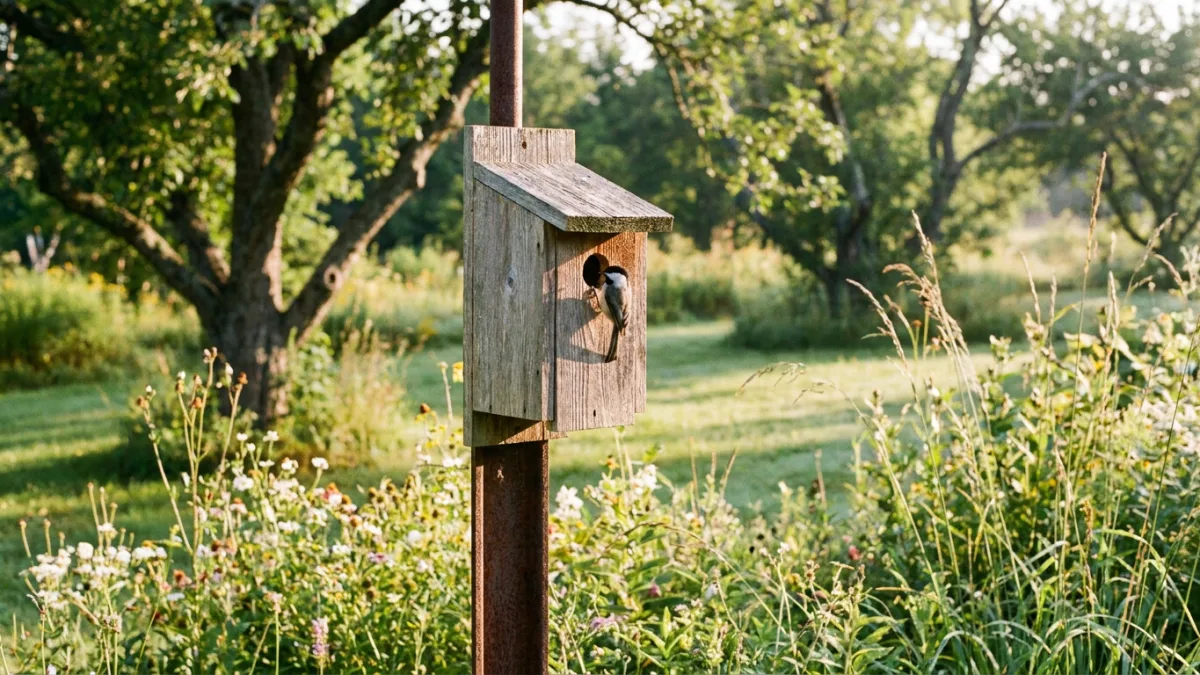
The hole decides everything. A bird house with a 1 1/8 inch entrance rents to chickadees, 1 1/2 inch rents to bluebirds and tree swallows, and 1 inch keeps it wrens only. Paint, shape, and price are style; diameter is the one spec that picks your tenants.
Hole sizes by species
- 1 inch: house wrens, and stubbornly, only house wrens.
- 1 1/8 inch: chickadees.
- 1 1/4 inch: white-breasted nuthatches, downy woodpeckers, and, regrettably, house sparrows.
- 1 1/2 inch: eastern and western bluebirds, tree swallows; European starlings stay out.
Bigger is never better here. A hole sized one step too large invites exactly the birds you cannot legally remove once they move in.
Why the smallest workable hole wins
A correctly sized hole keeps out everything too big to fit, and in most of the country that means starlings, which cannot squeeze past 1 1/2 inch. The failure case starts at 1 1/4 inch: house sparrows fit through it, evict nesting natives, destroy eggs, and are unprotected nonnatives everywhere in the US. Going smaller than needed costs you the species you wanted; going larger hands the box to the one you did not. Wren fans get the easy version of the problem, because a 1 inch hole excludes nearly everything; when the goal is to attract wrens, the hole does the whole job.
The perch question, settled
Nesting songbirds grip rough wood and have no use for a peg, while a perch under the entrance hands squirrels, cats, and rival birds a convenient handhold. Every well-designed box ships without one for that reason. If yours has a dowel, pull it out and sand the front flat.
Placement matters less than the diameter
Mount the box between 5 and 10 feet, entrance facing away from prevailing wind and away from your busiest window. Leave open flight space in front; attracting chickadees comes down to hole size plus a clear, leafy approach. Check the box weekly through nesting season and clean it in fall, and the same entrance serves the next tenant in spring. When the target is bluebirds, add a pole baffle; the hole keeps out starlings, not climbing snakes.