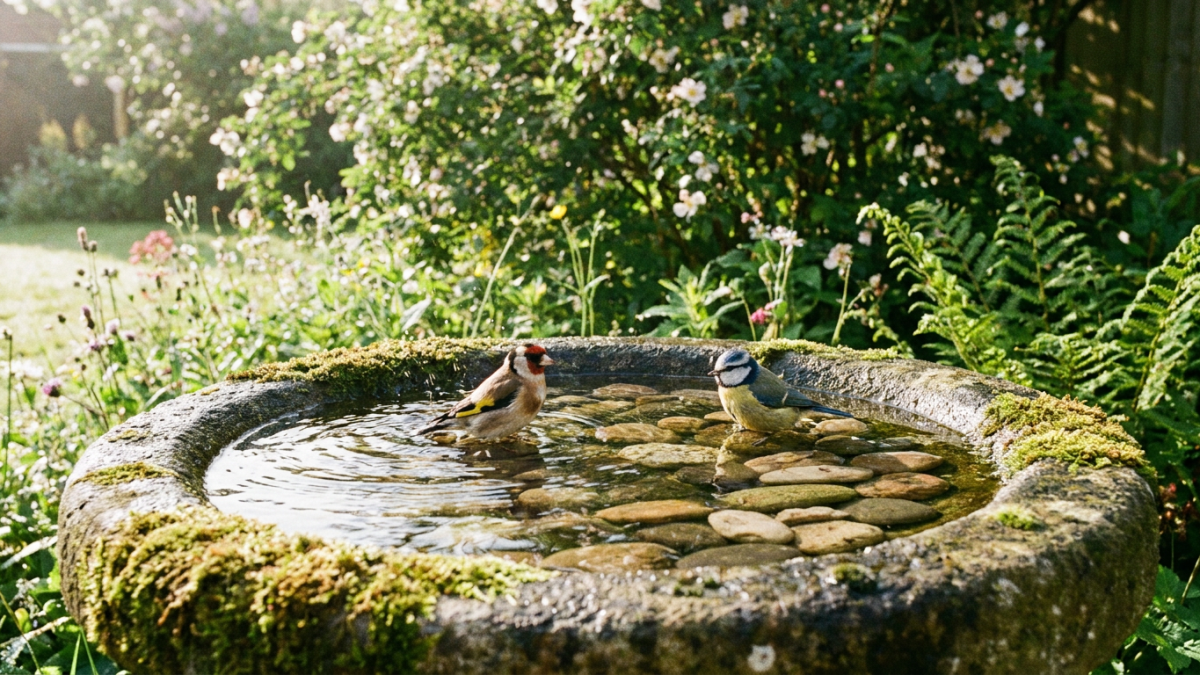
If birds are ignoring your bird bath, the water is almost certainly too deep. Most backyard species wade rather than swim, and they want two inches or less at the deepest point with something rough underfoot.
Fix depth and footing first. The rest is fine tuning.
Depth and Footing Decide Everything
A basin that runs three or four inches deep reads as a hazard to a chickadee. It lands on the rim, looks in, and leaves.
Drop a few flat stones into the middle. You get a graded shallow entry, a dry perch, and traction on glazed ceramic or polished concrete that would otherwise be slippery.
A single layer of pea gravel across the bottom does the same job in a deep pedestal basin, bringing the water line down to something usable.
Put Motion on the Surface
Still water is close to invisible from thirty feet up. Ripples catch light and make sound, and that is why birds prefer moving water over a flat basin in nearly every yard.
A small solar bubbler or a slow dripper is plenty. You do not need a pump you can hear from the porch.
A plastic jug with a pinhole, hung above the rim, gives you the same drip sound for nothing.
Check Where the Bath Sits
Wet birds fly badly, so a bath with no escape route stays empty. Shrubs or a low branch roughly ten feet away give them somewhere to bolt, while cover hanging directly overhead just hands cats a launch pad.
Afternoon sun cooks the water and speeds algae, so morning light with shade later is the sweet spot. Getting bird bath placement right often does more than any accessory you can bolt on.
Green Water Gets Skipped
Birds avoid basins with a slick film on the sides. Dump, scrub with a stiff brush, and refill every two or three days through summer, and leave the soap out of it.
If yours turns cloudy within days, solving that is the whole job, and keeping a bird bath from turning green comes down to shade, water volume, and how often you dump it.
Give It Three Weeks Before Judging
Birds work established routes. A new water source only joins the circuit after they have watched it sit there safely for a while.
Keep it filled every single day during that stretch. An empty basin resets the clock on all the watching they have already done.
Who Shows Up First
Robins and jays tend to pioneer new water because they are bold and bathe hard. Finches, chickadees, and warblers usually follow once the bigger birds have proved it safe.
If only starlings and house sparrows arrive, shrink the water. A shallower, smaller basin favors the songbirds you actually want.