Robins mostly ignore seed feeders, so the usual feeder advice does not work on them. To attract robins, give them three things: open water, short grass for hunting worms, and berry-producing plants.
Get those right and robins become regulars, even though they rarely touch a tube feeder.
Why seed feeders do not work
Robins are not seed eaters. They feed on worms, insects, and fruit. A feeder full of sunflower seed does nothing for them, which is why people who only offer seed rarely see robins up close.
Shift your thinking from feeding to habitat. The same logic applies to other insect eaters, similar to how we approach shy species in attracting bluebirds.
Water is your strongest tool
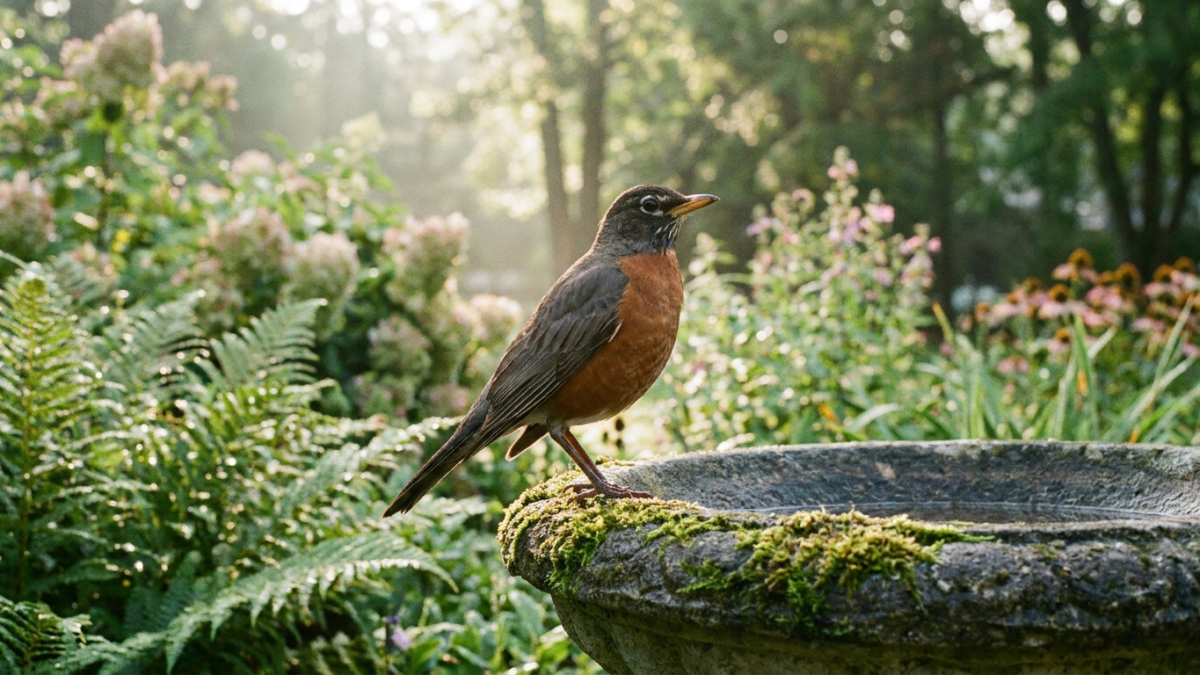
Robins are drawn to water more than almost any backyard bird. A shallow bird bath, ideally with moving or dripping water, pulls them in fast.
Keep the basin shallow, around two inches, and clean it often. If you are choosing one, our roundup of the best bird baths covers the depth and placement robins prefer.
Food they actually eat
Short, chemical-free grass lets robins hunt earthworms, their staple. Avoid pesticides, which wipe out the insects they rely on.
Plant native berry producers like dogwood, serviceberry, and holly for fall and winter. You can also offer mealworms on a platform or the ground. For colder months, our notes on what to feed birds in winter include options robins take when worms are scarce.
Shelter and nesting
Robins nest on flat, sheltered surfaces rather than in birdhouses. A nesting shelf under an eave, or dense shrubs and evergreens, gives them a spot.
Leave some leaf litter under trees and shrubs. It holds the insects robins forage for and gives them a reason to stay in your yard through the seasons.