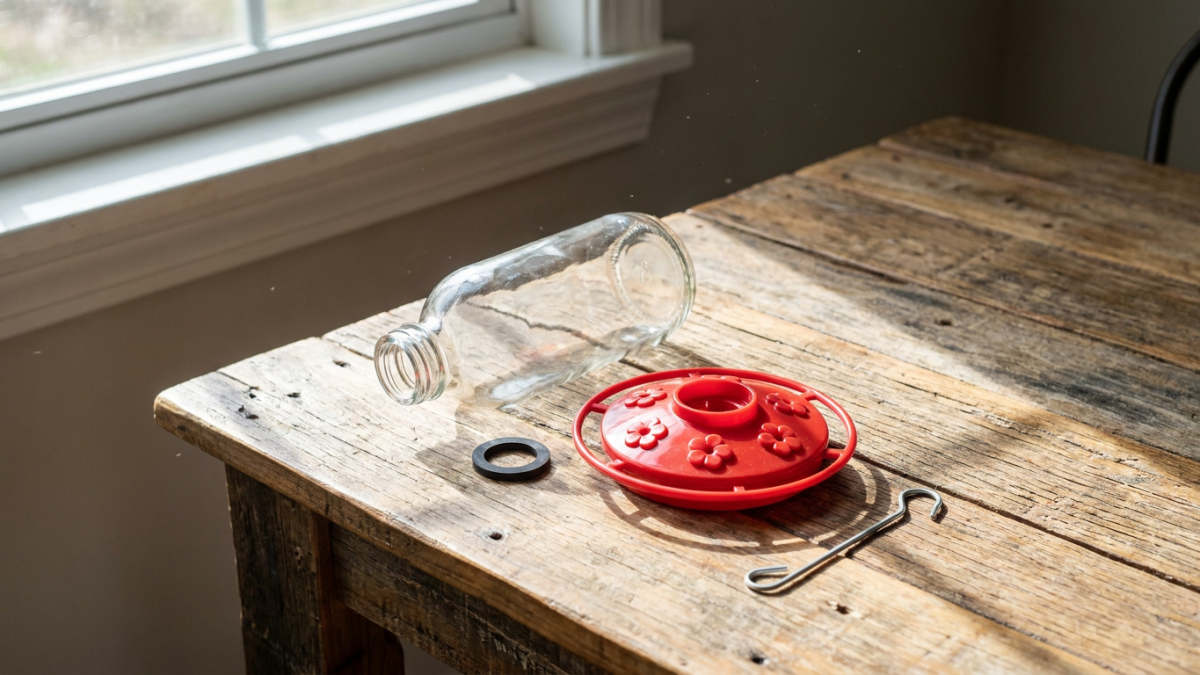
Run a feeder for two summers and the failure order is predictable: the rubber gasket or O-ring goes first, the flower ports and perches go second, and the glass reservoir outlives both. Knowing that order saves you from binning a whole feeder over a seal that costs a couple of dollars.
The gasket fails first, every time
Sugar water, sun, and repeated scrubbing harden rubber season by season until it stops compressing. The symptom is a feeder that drips from the seam or leaks where the base screws on, and most owners blame the reservoir when the seal is the entire problem. We map the drip patterns in why hummingbird feeders leak nectar.
Replacement is unglamorous. Pull the old ring, measure its outer diameter and thickness with a ruler, and order a food-grade silicone O-ring in that size, sold in cheap multipacks. Silicone shrugs off sugar and UV far better than the commodity rubber most feeders ship with, so a replaced gasket usually outlasts the original by seasons.
Ports, perches, and the parts nobody stocks
Flower ports crack from UV exposure, and perches snap at the weld during an overenthusiastic cleaning. Several major brands sell these pieces directly by model number, and universal replacement flower ports fit most saucer-style feeders, but for cheap house-brand feeders the honest answer is that parts simply do not exist. That is the hidden argument for a known brand: it costs more up front while staying repairable.
Bee guards deserve a separate warning. Dried syrup clogs them, and the mesh bends easily under a brush, leaving a guard that either blocks beaks or waves wasps in. Soak them instead of scrubbing.
The reservoir usually outlives everything
Glass reservoirs last for years, and their failure mode is obvious: a crack from a drop. Plastic ages differently, clouding under UV after a few seasons and then growing fine cracks along the mold seams that no repair addresses. Our comparison of glass vs plastic hummingbird feeders lays out the tradeoffs before you buy a replacement.
When repair is the wrong call
Mold that keeps returning inside a two-part base after scrubbing means the seam has opened enough to harbor it, and no new gasket changes that. Retire the feeder. Same for a scratched reservoir interior, since scratches hold biofilm that routine washing misses; wildlife agencies suggest a bleach soak of about one part bleach to nine parts water, and only on feeders you can rinse fully afterward. For everyday care between refills, follow our guide on how to clean a hummingbird feeder, because spoiled nectar harms hummingbirds far more often than broken hardware does.