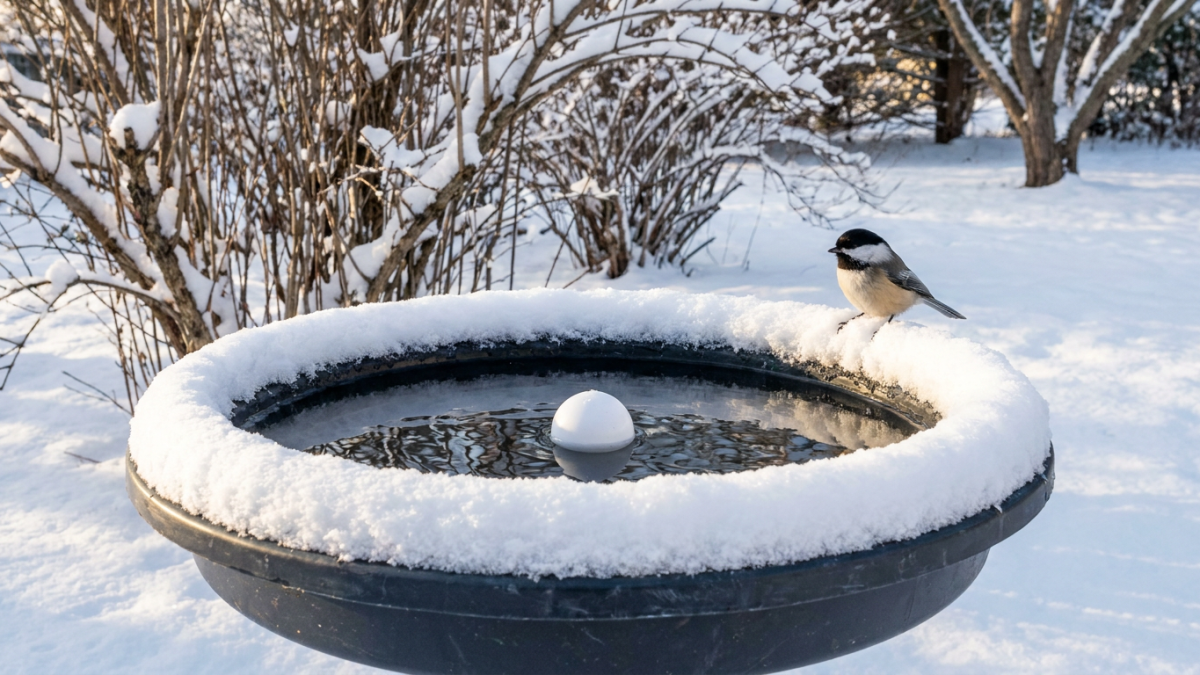
You cannot stop a bird bath from freezing without power once the air sits below the mid twenties, but you can buy hours of open water every morning. A dark shallow basin, full sun, a wind block, and something floating on the surface all delay ice.
The one thing you must never do is add anything to the water. Salt, glycerin, and antifreeze all harm birds.
Set the basin up to work with the sun
Move the bath to the sunniest spot you have, and put it where a fence, hedge, or wall cuts the prevailing wind. Wind pulls heat off the surface faster than the air temperature alone suggests.
Swap a deep stone bath for a shallow dark plastic or black rubber basin for the winter. One to two inches of water thaws faster in weak sun, and dark surfaces absorb more of what little heat is available.
Keep the surface moving
Still water freezes first. A floating ping pong ball drifts on the least breeze and holds a thin ring of open water around it long after the edges lock up.
A dark stone or two in the basin gives birds a landing spot and adds a little thermal mass. That setup also stays cleanest, which counts because keeping a bird bath from turning green gets harder once you stop scrubbing in cold weather.
The morning hot water routine
The simplest method is manual. Pour hot water over the ice at first light, tip the slab out, and refill with warm water.
Birds need open water most in the two hours after sunrise, so one dawn visit covers the critical window. A plastic basin tolerates this better than ceramic or concrete, which crack when they cycle between hot water and hard frost.
Pair it with high-fat food nearby, since a bird that has just eaten suet or sunflower has the energy to spare for bathing. Our guide on what to feed birds in winter covers that pairing.
Insulate underneath
Set the basin on a block of foam, a stack of bricks, or a wooden board instead of directly on frozen stone or metal. Ground contact wicks heat out of the base all night.
Wrapping the outside of a plastic basin with bubble wrap or foam pipe insulation buys a little more time. It looks rough and it works.
When to give up and go electric
Below roughly fifteen degrees Fahrenheit, no passive trick keeps water open for long. If your winters run that cold for weeks, a thermostatic de-icer or a heated basin is the only reliable answer, and the models in our best heated bird baths roundup draw far less power than people assume.