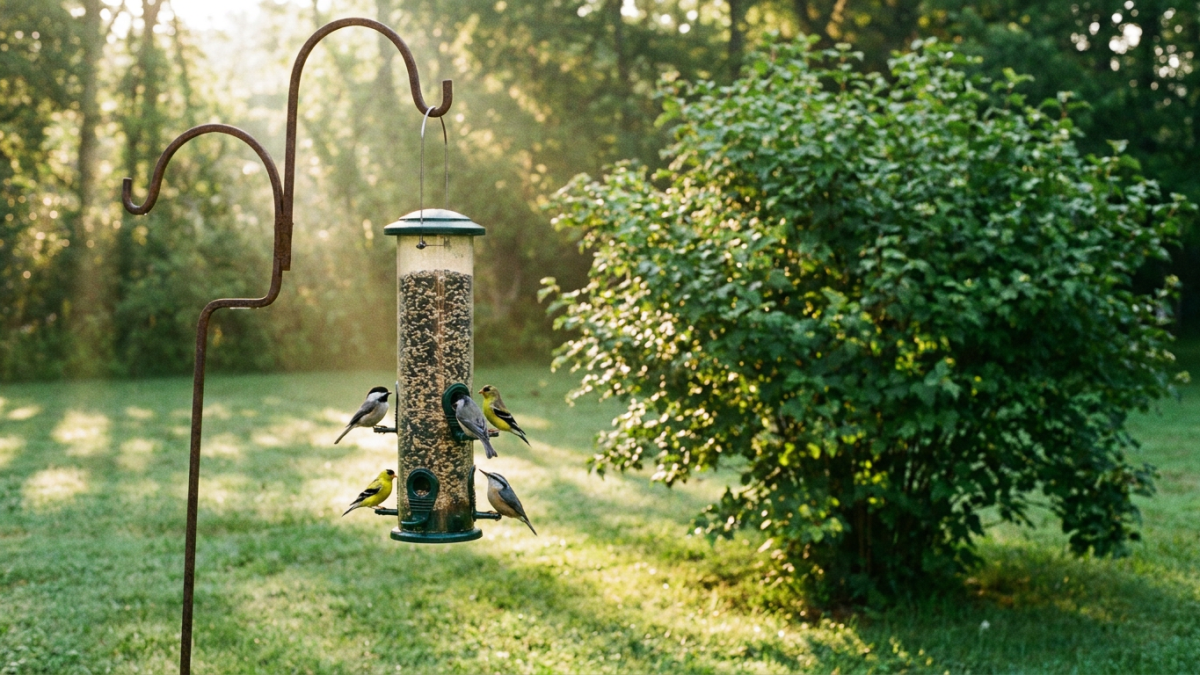
Hang a bird feeder about 10 feet from natural cover, at least five feet off the ground, somewhere you can watch it from a window. That distance gives birds a quick escape into branches while keeping cats from launching a surprise attack. Get the placement right and traffic climbs fast.
The 10 foot rule for cover
Birds want an exit. A feeder set roughly 10 feet from a shrub, hedge, or tree gives them a place to dart when a hawk passes, without giving squirrels and cats a launch pad right beside the food.
Too far from cover and nervous birds like chickadees stay away. Too close and predators use the branches as an ambush point. Ten feet is the balance most yards land on.
Height and shelter
Five feet off the ground keeps food above most cats and makes refilling easy. Under a bit of tree canopy or an eave, the feeder and its seed stay drier, which slows spoilage and mold.
Morning sun on the feeder helps too. Birds feed heavily at dawn, and a spot that warms early tends to see the first visitors of the day.
Window distance that prevents strikes
Windows are a real hazard, but placement helps. Either keep the feeder within three feet of the glass, too close for birds to build up speed, or well beyond 30 feet. The dangerous zone is the middle distance, a point we cover in why there are no birds at your feeder.
If you place it close, you also get the best view. That tradeoff is worth it for most backyard watchers.
Give new feeders time and defense
A fresh feeder in a new spot can sit empty for days or weeks while birds notice it. That lag is normal, and our guide on how long birds take to find a feeder explains the timeline.
Wherever you hang it, plan for squirrels. A pole with a baffle in an open spot, away from jump-off points, works far better than any single feeder trick, as we lay out in how to keep squirrels off bird feeders.