You attract orioles by putting out orange halves, grape jelly, and a nectar feeder right as spring migration reaches your area, usually late April to early May across most of the US. Miss that window and orioles will already have claimed a territory somewhere else.
Orioles are seasonal visitors in most of the country, not year-round backyard birds. Timing your setup to their arrival matters more than almost anything else you can do.
When do orioles show up in spring?
Baltimore orioles migrate north from Central America and northern South America, arriving in the southern US in March and reaching the upper Midwest and New England by mid to late May. Check regional migration maps or a site like eBird to time your feeders to the first arrivals in your area.
Put feeders out about a week before the expected arrival date. Scouts show up first, and an established food source helps convince them to stay and nest nearby instead of moving on.
Why do orange halves work so well?
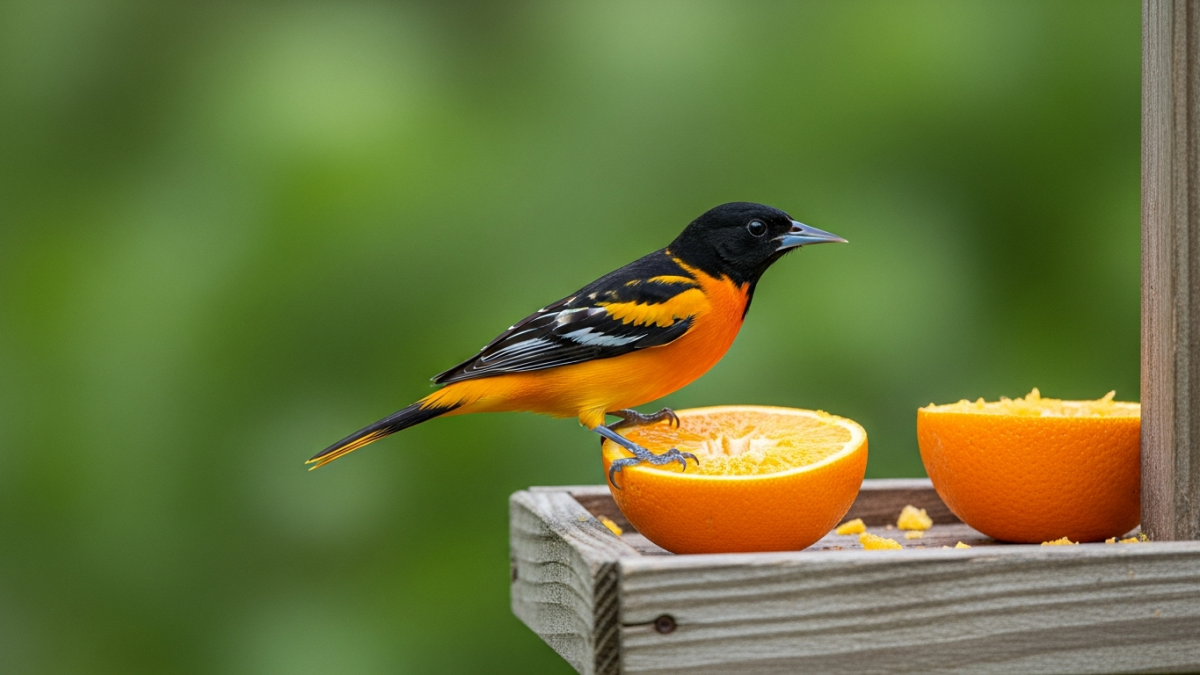
Orioles are drawn to bright orange color and the sugar in ripe fruit. A fresh orange cut in half and skewered on a branch or a dedicated oriole feeder gives them both at once, and it is the single easiest way to get their attention in the first week of the season.
Replace the orange every day or two once ants or wasps find it, especially in warm weather. Orioles lose interest in a dried-out, dark half almost as fast as insects do.
What about grape jelly?
Grape jelly is a genuine oriole favorite, though it should be treated as a treat rather than a full diet. Use a small dish or a dedicated jelly feeder cup, and offer it alongside oranges and nectar rather than as the only food source.
Too much jelly, especially in high volume, can also draw in starlings, grackles, and even bears in some regions. Small portions refreshed daily work better than a large dish left out for a week.
Do orioles use nectar feeders?
Yes, and a nectar feeder built for orioles rather than hummingbirds makes a real difference. Oriole feeders use the same basic 4-to-1 water-to-sugar ratio as hummingbird nectar, but with larger feeding ports and orange coloring instead of red.
Never use red dye or honey in homemade nectar. Plain white sugar dissolved in water is the only mix that is safe for orioles. Our roundup of feeders by bird type covers which oriole-specific models hold up best through a full season.
Does habitat matter beyond the feeder?
Orioles favor tall deciduous trees, especially near water or open woodland edges, where they build their hanging nests. A yard with mature trees will out-perform a yard with only shrubs, no matter how much fruit or jelly you put out.
Flowering trees and native plants that bloom in spring also help by drawing the insects orioles rely on to feed their young. If you are running multiple feeder types in the yard, keep oriole stations separate from seed feeders. Our guide on window bird feeders is worth checking if you want close-up views without competing for yard space, and our bird seed guide covers what to offer other species so orioles are not crowded out.