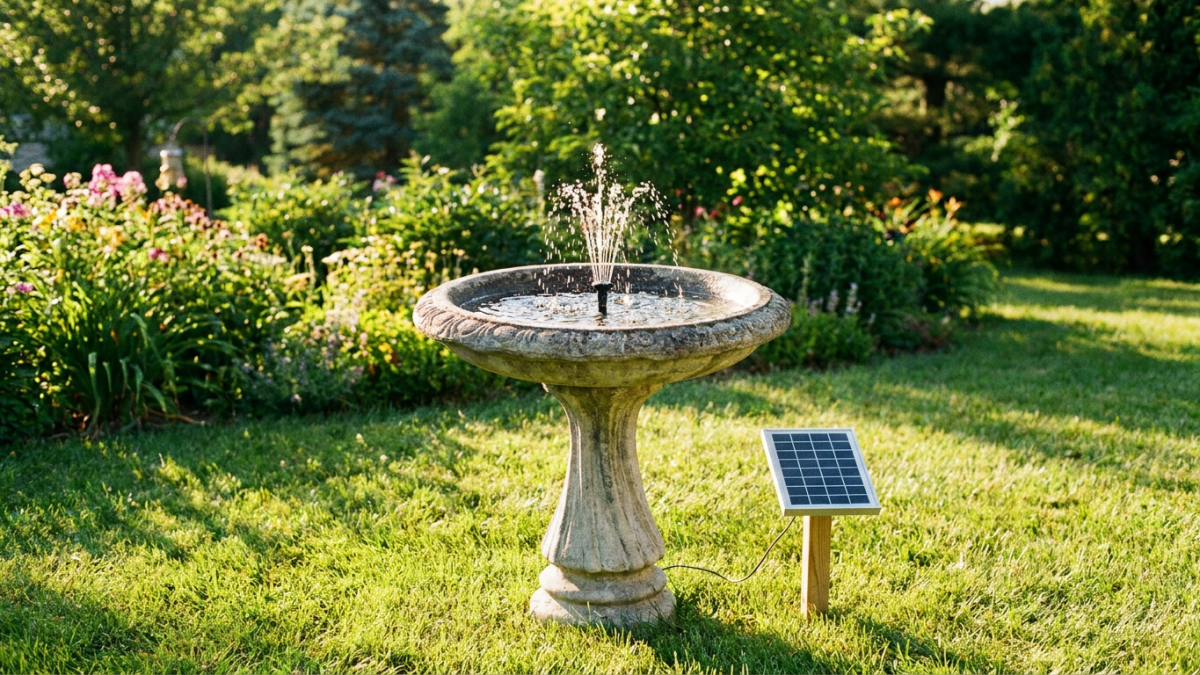
A solar bird bath fountain runs well when its panel gets direct, unshaded sun for most of the day. Put it under a tree canopy or on a shaded patio and the spray stops every time a cloud crosses, which is exactly when birds lose interest.
The panel, not the bowl, decides whether you get water movement. That one fact drives every choice below.
Floating unit or separate panel
Floating units drop straight into the bowl with panel, pump and nozzle in one disc. They cost little and need no setup, but they are stuck wherever the water sits. If your bath is shaded, a floater has no way out.
Separate-panel kits put the solar cell on a ground stake with a cord running back to the pump. You can leave the bath in the cool, sheltered spot birds prefer and stake the panel out in open sun. That flexibility is worth the extra cost in most yards.
Where solar stalls
Thin overcast cuts panel output sharply, and most direct-drive pumps quit outright rather than slow down. Low sun angles early and late in the day do the same thing. A pollen-filmed panel loses output too, so wipe it whenever you top up the water.
The stalling matters more than it sounds. Birds are pulled in by sound and glint from a distance, so intermittent bursts recruit far fewer visitors than steady flow does. For the full picture on that effect, read what bird bath fountains change about moving water.
Battery kits solve the cloud problem
Models with a small onboard battery bank charge during peak sun and keep the pump running through cloud cover and past sunset. Manufacturer figures commonly quote a few hours of runtime after dark. Treat those as best case, measured on a full charge in midsummer.
The placement compromise
Full sun heats shallow water fast and speeds up algae growth, and the sunniest corner is rarely where birds feel safe drinking. A separate panel splits the difference: bath near cover, panel out in the open. Our guide to bird bath placement covers the sightline and escape-route side of that tradeoff.
Keeping the pump alive
Solar pumps are tiny and clog on almost nothing. Feathers and seed husks are the usual culprits, and running dry can kill a pump in a single afternoon.
Rinse the intake screen weekly, keep the water level above the pump inlet, and stay ahead of green film. The routine in how to keep a bird bath from turning green applies directly here, because a clean bowl is what keeps the pump clear.
Who should skip solar entirely
If your yard is heavily wooded, or you want water moving on a fixed schedule, a low-voltage plug-in pump does the job without weather dependence. Solar earns its place where there is open sky and no outlet within reach.