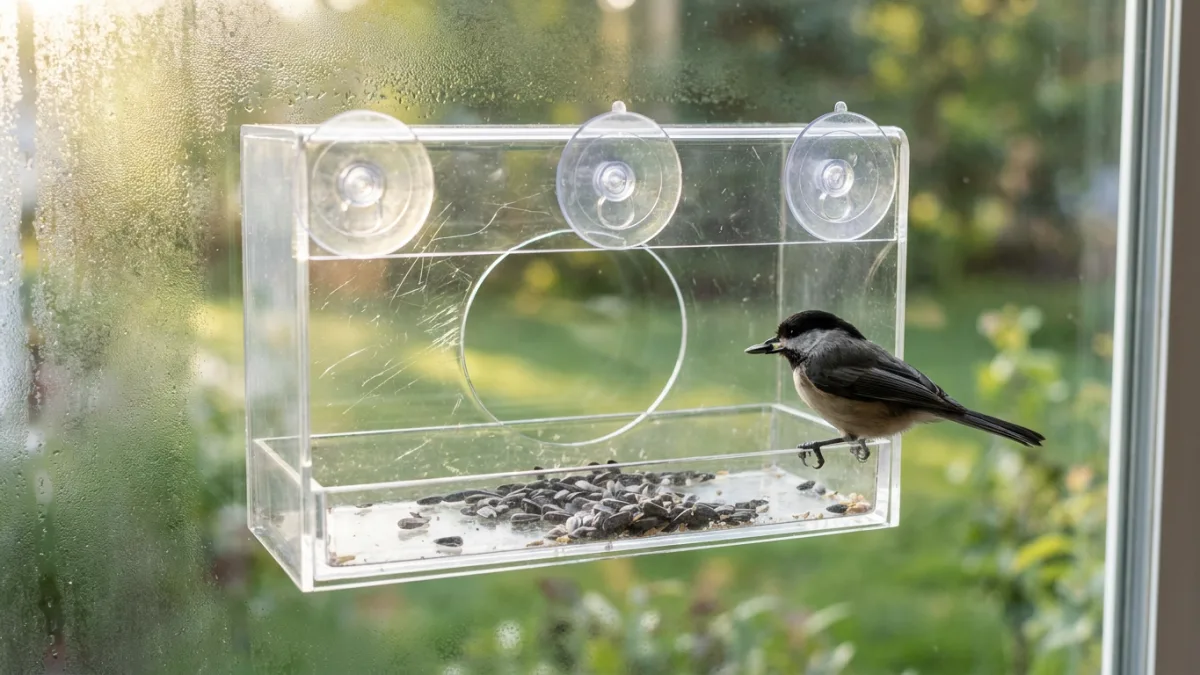
Suction cups fail because of the glass, not the cup. Clean both faces with rubbing alcohol, warm the cup, wet the rim, and press the air out from the center. Do that and a small tray holds for weeks instead of days.
Why the cups let go
Heat is the usual cause. Glass in direct afternoon sun warms the rubber and expands the trapped air, so the seal creeps open a little at a time. South and west windows are the worst places for that.
Film on the glass is second. Pollen, dust, and residue from ammonia glass cleaner leave a slick layer the cup cannot grip. Rubbing alcohol strips it in seconds.
Cold works the other way. Below freezing the rubber stiffens and stops conforming, which is why feeders that held all autumn drop in January.
Mounting so it stays put
- Wipe glass and cup face with rubbing alcohol, then let both dry.
- Warm the cup in your hands or under warm tap water so it flexes.
- Wet the cup rim with plain water, never soap.
- Press from the center outward to push the air out.
- Leave it empty for an hour before you load seed.
Weight decides the rest. An empty tray is easy; add a cup of seed plus a couple of birds and the load on each cup roughly doubles. Small trays outlast the wide ones for exactly this reason, which is why they dominate our shortlist of the best window bird feeders.
Seed that keeps the sill clean
Go with sunflower hearts. No shells means nothing piling up on the sill or sprouting in the bed below.
Skip mixes loaded with millet and milo. Birds flick the filler out of a shallow tray within minutes, and you end up sweeping it off the window ledge every few days.
Collision risk at the glass
Close is safer than middle distance. A bird leaving a feeder stuck to the pane has no room to build speed, so contact tends to be a bump rather than a strike.
American Bird Conservancy guidance puts feeders either within roughly three feet of the window or more than thirty feet away. The gap between those two is where birds hit hard, and it is worth pairing the feeder with the other fixes for birds hitting your windows.
Who actually shows up
Expect chickadees first. They are bold about new hardware and small enough that the cups barely notice them.
Titmice, house finches, and nuthatches follow within a week or two. Cardinals mostly stay away, since they want a solid perch and cover, and a pane of glass offers neither.
Give it two weeks before you judge the spot. Birds map a new feeder on their own schedule, and moving it early resets the clock.