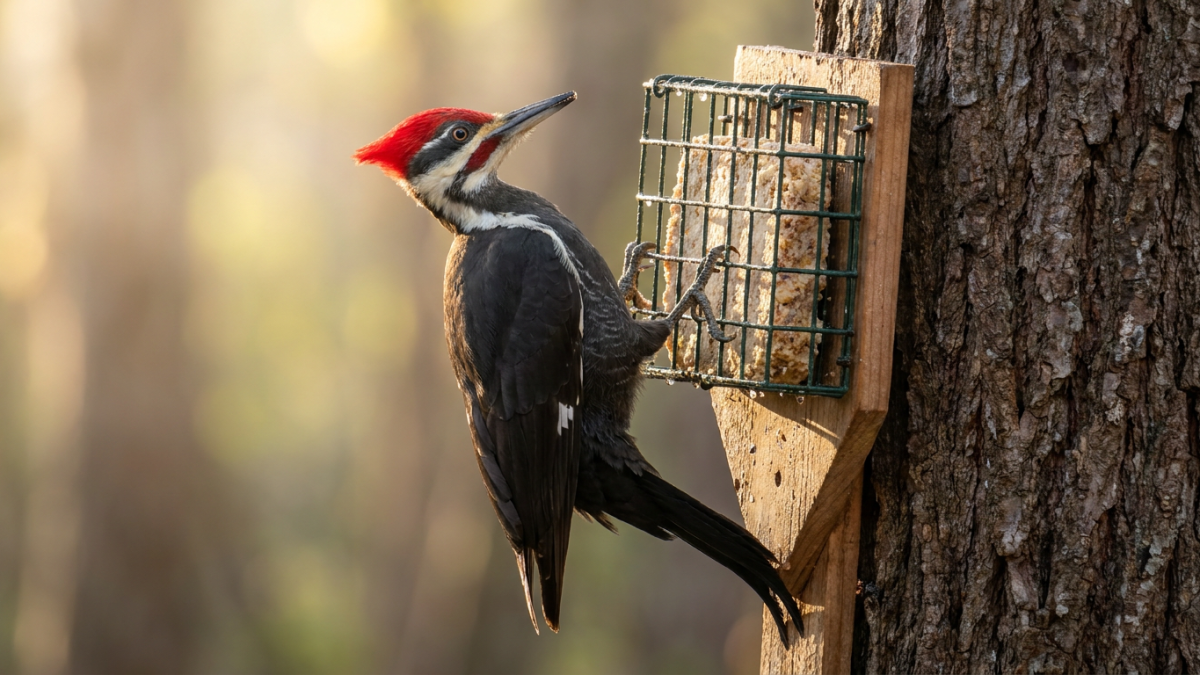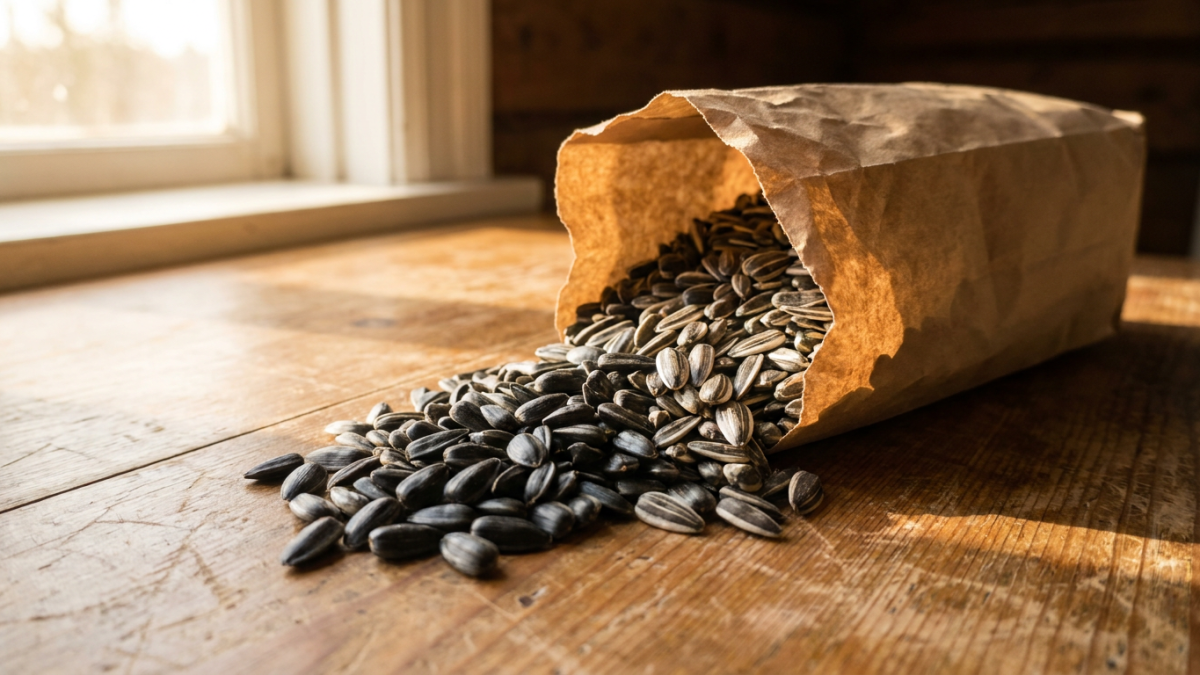
Black oil sunflower wins for most backyards. Thinner shells, higher oil content, and nearly every seed-eating bird can crack them, from chickadees to cardinals. Striped sunflower suits bigger bills and shuts out the small ones. Hearts cost the most per pound and waste nothing, which makes them right for a balcony feeder and wrong for an open hopper in the rain.
Black oil sunflower seed
The default choice and the one to buy with your first feeder. The shells are thin enough for small bills, the kernel-to-shell ratio is generous, and everything from finches to woodpeckers takes it. The catch is the mess: shells pile up under the feeder, and in a small yard that adds up. Squirrels love it too, which is the standing complaint behind most of the advice in our how to keep squirrels off bird feeders guide.
Striped sunflower seed
Thicker shell, larger kernel, harder to crack. Cardinals, grosbeaks, and jays handle striped easily, while chickadees and titmice work harder for less food. Some backyard birders use striped as a squirrel tax, since squirrels also eat it more slowly. Slower, not deterred.
Hearts and chips
Hulled hearts remove the shell problem entirely. Nothing germinates under the feeder and every pound you buy is food. The failure case is moisture: hearts have no shell protecting them, so in a hopper or tray exposed to rain they mold within days, and moldy seed can sicken the birds you are feeding. Use hearts in covered or small-capacity feeders that empty fast, and store the bag somewhere dry.
The hot pepper claim, honestly
Capsaicin-coated sunflower works on the logic that birds lack the receptor for capsaicin while mammals feel the burn. The logic holds; the coating does not last. Rain and feeder traffic wear it off, and the price premium repeats every bag. It buys weeks of relief, not a barrier. Mixing safflower into the rotation deters some squirrels as well, compared in safflower seed vs sunflower seed. For an overall shortlist, see best bird seed by goal and budget.