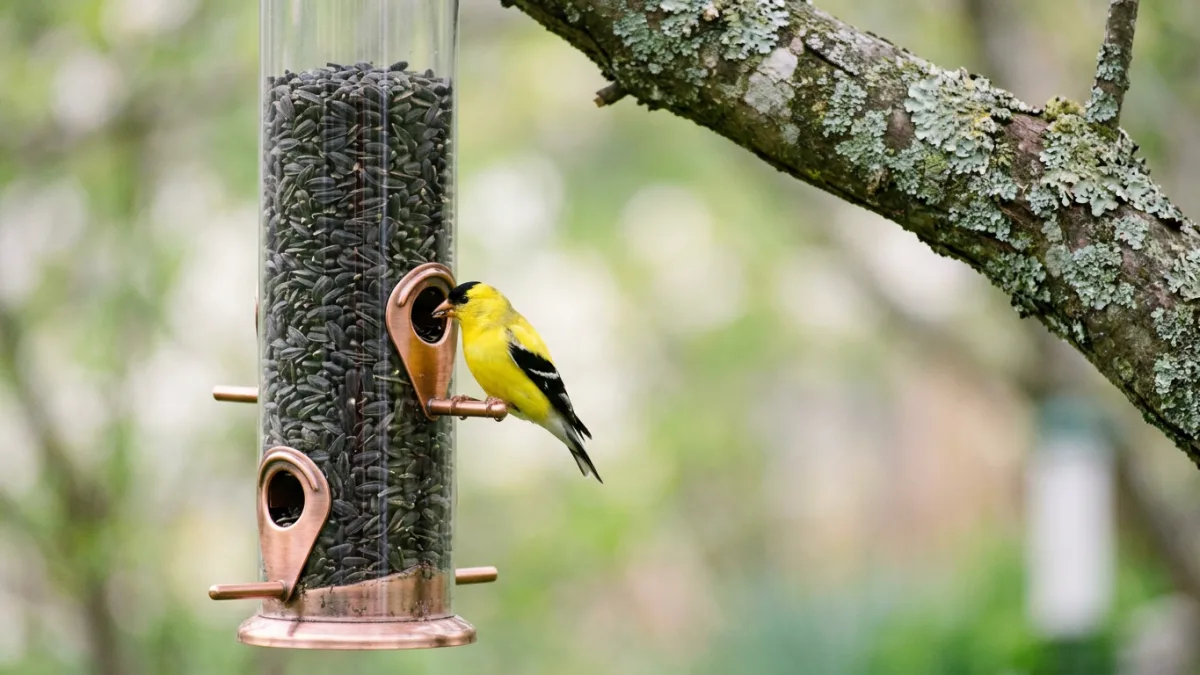
On a tube feeder, the ports decide everything: narrow slit ports feed nyjer to finches, standard round ports feed black oil sunflower to nearly everyone else, and a wrong pairing either clogs or dumps seed on the ground. Match the port to the seed before you buy the feeder.
Port shapes and the seed they fit
Nyjer ports are thin slits, sized so a goldfinch works one small seed at a time. Standard ports are sized for black oil sunflower, and blends loaded with milo or wheat bridge and jam in them. Sunflower hearts need slightly wider openings, because the pieces compact when damp.
On which sunflower form to buy, our guide to black oil vs striped sunflower vs hearts breaks down what each one attracts.
Mixed seed is where tubes go wrong
Budget blends are padded with milo, wheat, and red millet that most songbirds toss aside. In a hopper the waste stays invisible; in a clear tube you watch the level drop while filler collects at the ports and blocks them. The economics are in our piece on cheap bird seed and what the filler costs you, and the short version is that filler-heavy blends cost more per eaten seed than plain sunflower.
Perches quietly exclude cardinals
Cardinals are poor perchers and rarely use the short dowels on standard tubes. If cardinals are the goal, our comparison of the tube feeder vs the hopper feeder points to the better design, since hoppers give them a stable platform.
Base hardware
Brass or steel ports resist squirrel teeth; bare plastic ones get chewed into funnels within a season under squirrel pressure. Hang the tube from a baffled pole and the seed lasts weeks.