Cheap bird seed is only cheap by the bag. Budget mixes lean on milo, cracked corn, wheat and red millet, and most feeder birds sort those out and drop them on the ground. You pay for the whole bag and feed maybe half of it, which pushes your real cost per eaten pound above a plain bag of sunflower.
What the filler grains actually are
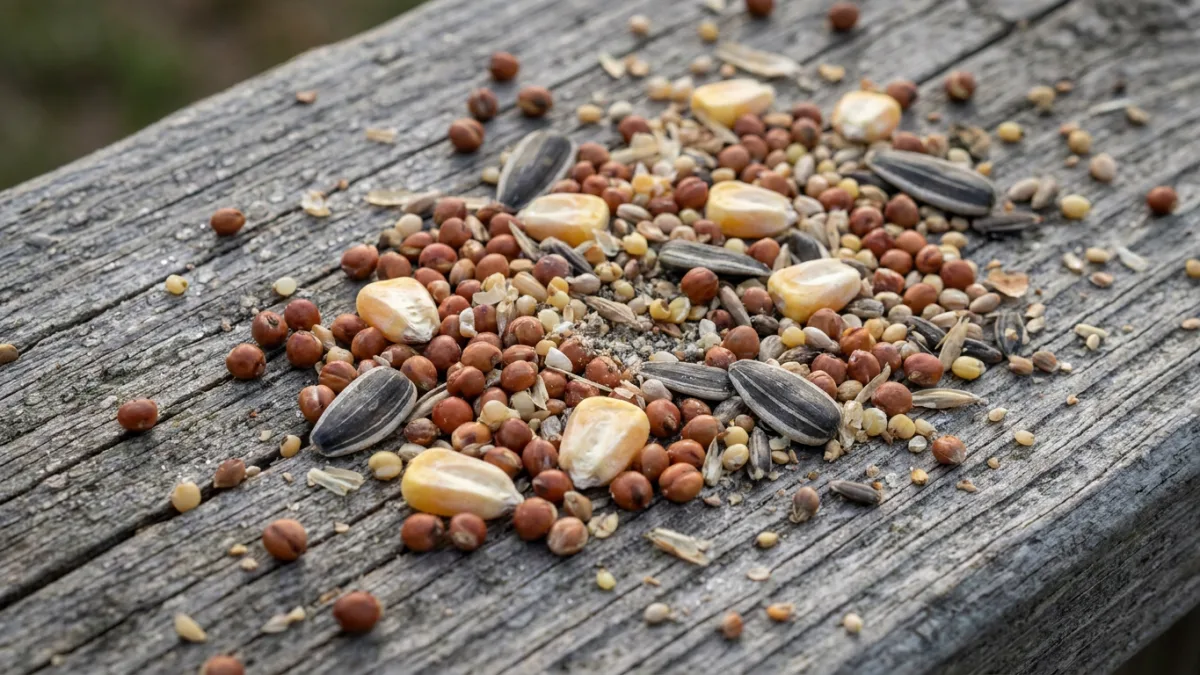
Turn a bag of Walmart wild bird seed around and read the order on the ingredient panel. Milo, also sold as sorghum, usually sits near the top, followed by cracked corn, wheat and oats. Those are the grains that end up underneath the feeder.
Milo is round, reddish and hard. Some ground birds take it, mainly doves, quail and house sparrows. Chickadees, titmice, finches and cardinals mostly will not.
Cracked corn pulls in starlings, grackles and squirrels, and it holds moisture, so it clumps and molds sooner than a hard seed does. That is one more reason keeping bird seed fresh matters more with a budget mix than with a premium one.
Cost per eaten pound, not cost per bag
Run the number the way it actually works. Take the street price of the bag, estimate the share your birds refuse, then divide the price by the pounds they actually eat.
A bag where half the volume hits the dirt costs you double what the shelf tag says. Sunflower at a higher shelf price with almost nothing rejected often lands lower on that per-eaten-pound figure. Black oil sunflower seed does the most work per pound because nearly every seed-eating visitor can crack it.
The mess underneath is a second cost
Rejected grain does not vanish. It piles up, sprouts wheat and corn in your lawn, sours after rain, and feeds the exact animals you were trying to keep away: rats, squirrels, and blackbird flocks that push smaller birds off the feeder.
Then you are buying a seed catcher, moving the pole, or reseeding a dead patch of grass.
When a budget mix does earn its place
Scattered on the ground it works, as long as doves, juncos and sparrows are the birds you want. Put out only as much as clears in a day, on a bare patch you can rake, and let the mix be exactly what it is.
It fails in tube feeders. Milo jams ports, corn swells and bridges, and small birds flick out three seeds for every one they keep. Matching seed to feeder and to your goal is the whole reason for picking bird seed by goal and budget instead of by price per pound.
How to read a bag in ten seconds
- First ingredient sunflower, safflower or nyjer: worth paying for.
- Milo, sorghum, wheat, oats or cracked corn in the first three: filler-led.
- “Assorted grain products” with no breakdown on the panel: assume filler.
- Dust and loose hulls in the bottom of the bag: old stock, leave it.
Read the panel, price the pounds your birds swallow, and the cheap bag usually stops looking cheap.