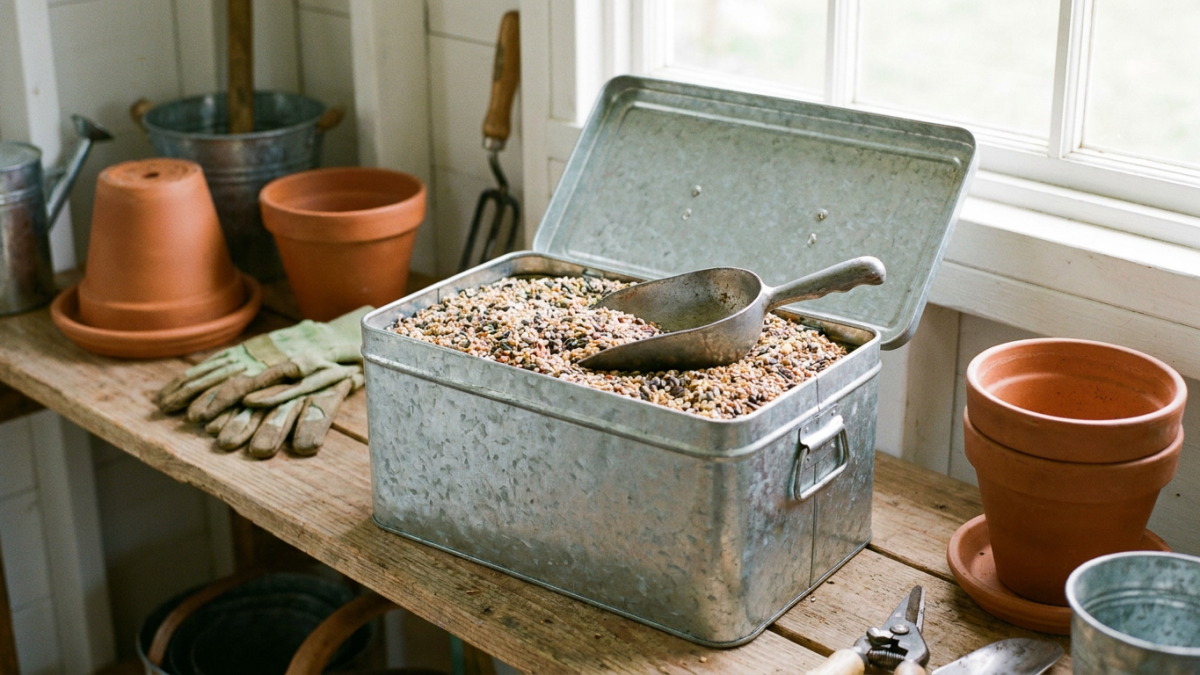
To keep bird seed fresh and mold-free, store it in an airtight container in a cool, dry, dark spot, and buy only as much as your birds finish in a month or two. Mold almost always comes down to moisture and warmth, so control those and seed lasts.
Store it right from the day you buy it
Move seed out of its paper or thin plastic bag into a sealed metal can or a thick lidded bin. Metal keeps mice out, which thin plastic will not. Keep the container off a hot garage floor and away from direct sun.
Label it with the date you filled it, and use older seed first. If you buy in bulk to save money, our notes on the best bird seed by goal explain which types keep longest.
Keep moisture out of the feeder
Wet seed in the feeder molds within days in warm weather. Use feeders with drainage, fill them only halfway in humid months, and shake out clumped or crusted seed before topping up.
Cleaning matters as much as storage. A dirty feeder grows mold that spreads to fresh seed, so review how often to clean a bird feeder and stick to it.
Signs seed has gone bad
Toss seed that smells sour or musty, looks clumped, shows webbing from moths, or has visible mold. Sprouting seed and any sign of rodent droppings are also reasons to throw it out. Feeding spoiled seed can make birds sick.
Cold months change the math, since seed keeps longer but birds eat more of it. See what to feed birds in winter to match your stock to the season.