For most yards, a submersible bird bath heater dropped into the bath you already own beats buying a dedicated heated bath. A de-icer costs less and works in the basin birds already visit. A heated bath earns its place only when your current bowl is glass or thin ceramic.
De-icer vs heated bath: what each one is
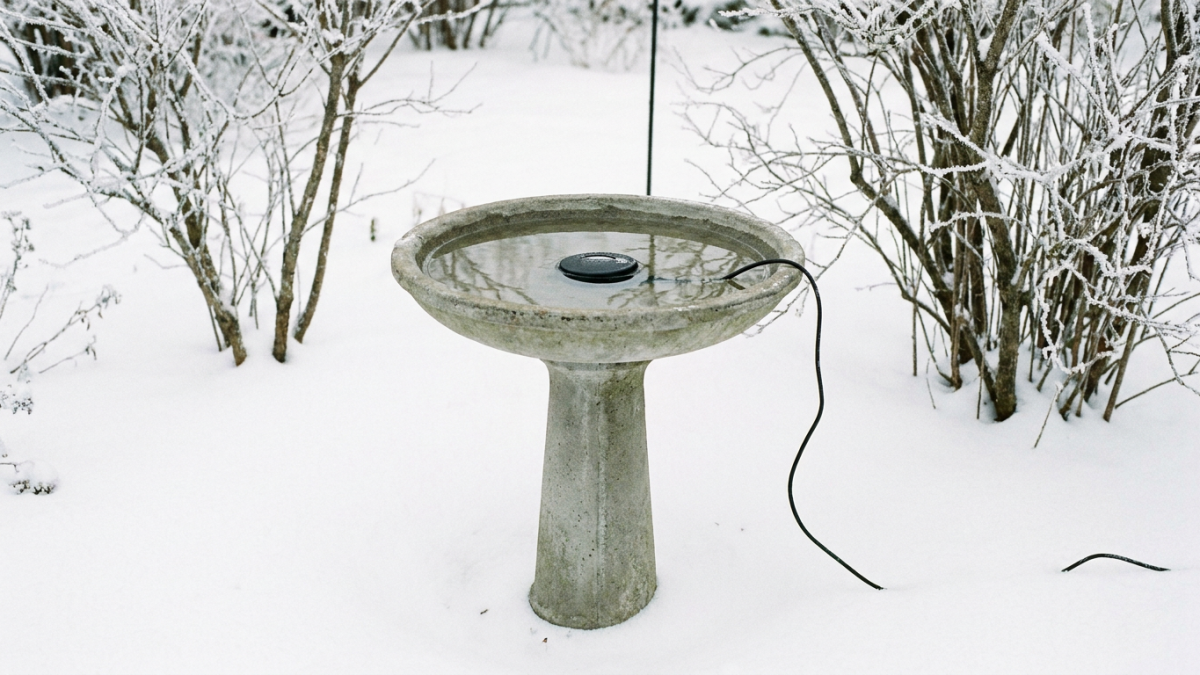
A de-icer is a sealed heating element, usually a disc or a short rod, that sits on the bottom of the basin. A built-in thermostat means it only draws power when the water approaches freezing.
A heated bird bath builds that element into the bowl itself. The basin is almost always plastic or resin because those materials handle heat cycling without cracking.
Wattage and climate
Manufacturer figures for common de-icers run from 50 watts on small disc units to 250 watts on stock-tank style models. Integrated heated baths usually sit around 60 to 150 watts, again manufacturer figures.
Match wattage to your coldest nights, not your average ones. A 50 watt unit keeps a hole open in a shallow bowl through light frosts. Once nights drop well below zero Fahrenheit, you want 150 watts or more and a smaller water volume.
Wind matters as much as temperature. A bath tucked near a wall or an evergreen holds heat far longer than one in the open, so sheltered placement lets you run a lower wattage.
Thermostats and what they cost to run
Both types switch on near the freezing point and off a few degrees above it. The water never gets warm, which is what you want. Warm water encourages birds to bathe in dangerous cold and wastes electricity.
Because the thermostat cycles, a 150 watt heater does not pull 150 watts around the clock. Your real cost is the rated wattage multiplied by the hours it runs, worked out from your utility rate and the manufacturer figure.
Why the de-icer wins for most people
You keep the bath birds already know. Our guide to heated bird baths below freezing covers placement, but the short version is that birds return to a spot, not to a product.
You also keep your material choice. Concrete and heavy resin hold heat better than a thin plastic bowl, and a de-icer lets you use them. Check the manufacturer’s approved-materials list first. Glass and thin glazed ceramic crack under uneven heating, so those come inside for winter.
And a de-icer is portable. In a mild spell you can pull it and fall back on how to keep a bird bath from freezing without electricity.
When a heated bath is the better buy
Choose the integrated model if you have no bath yet, if your only bath is glass or ceramic, or if you want nothing loose sitting in the water.
The picks in best heated bird baths for winter lean toward models with a detachable bowl, because the heating element outlives the plastic.
Safety and setup
Plug into a GFCI-protected outdoor outlet with an outdoor-rated cord, connection kept off the ground. Never add antifreeze, glycerin, or salt to bird water. If temperatures fall below what your heater can hold, set a few stones in the bowl so birds can drink without soaking their feathers.