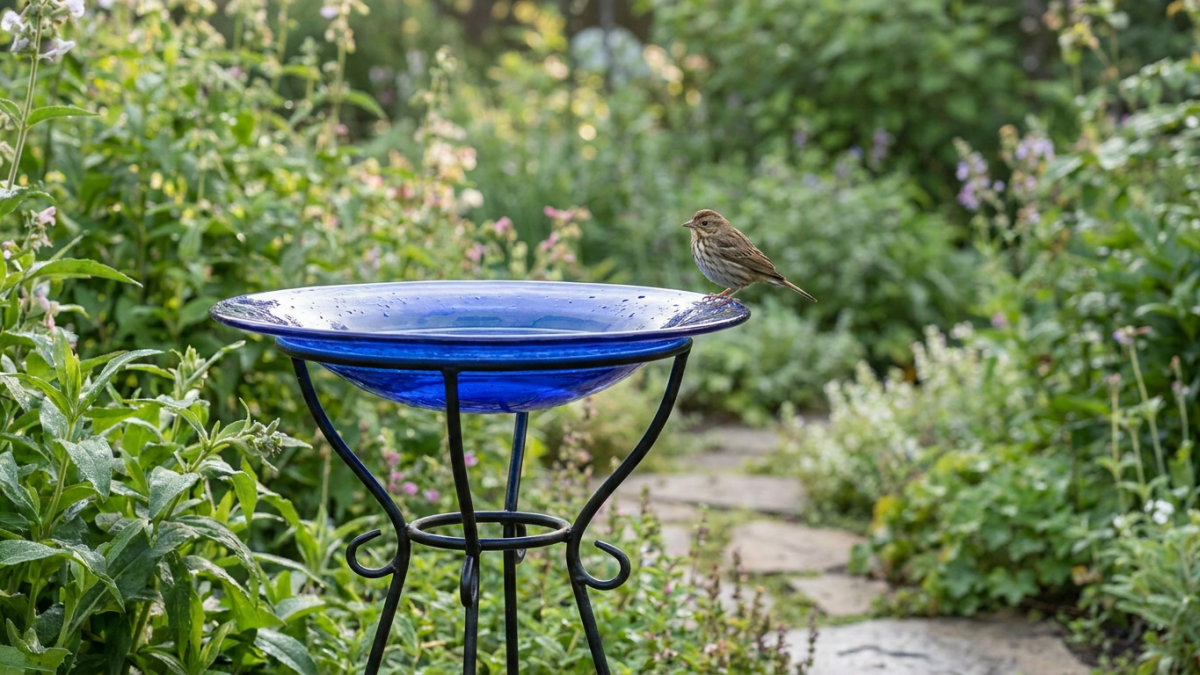
A decorative glass bird bath, including the ones you see at Hobby Lobby and similar home stores, can work in a real backyard. Two features decide it: water depth and surface grip. Most decorative glass bowls are slick, shallow, and styled for the shelf rather than the sparrow, so check both before you buy.
Depth is the first dealbreaker
Birds bathe comfortably in about 1 to 2 inches of water. Many decorative glass bowls hold under an inch at the center, which suits drinking and toe-dipping but not bathing, while some deep bowl designs run past 2.5 inches, which small songbirds avoid. Measure before you judge the design. Our piece on bird bath size, small vs large covers what each depth attracts.
Grip decides whether anyone stays
Fired glass is slick, and wet feathers need traction. A bird that cannot plant its feet will sip and leave. The fix costs nothing: a shallow layer of pea gravel or a few flat stones on the bottom gives toes something to hold, the same trick we recommend for glaze in our ceramic bird bath guide.
Freeze and sun
Thin glass cracks when trapped water freezes and expands, so a glass bath is a three-season item in most of the US unless you empty it before hard frosts. Dark glass in full sun also heats up fast; give it morning sun and afternoon shade, one of the rules in how to choose a bird bath.
Where a glass bath is the wrong buy
Two named failures. Shallow decorative bowls in a hot-summer yard need refilling daily, sometimes twice, because an inch of water evaporates by mid-afternoon; if nobody in the house will commit to that, buy a deeper material instead. Painted and foil-etched designs also fade within a season or two of sun exposure, so the bowl that matched your cushions in spring looks chalky by fall. Function outlasts the pattern.