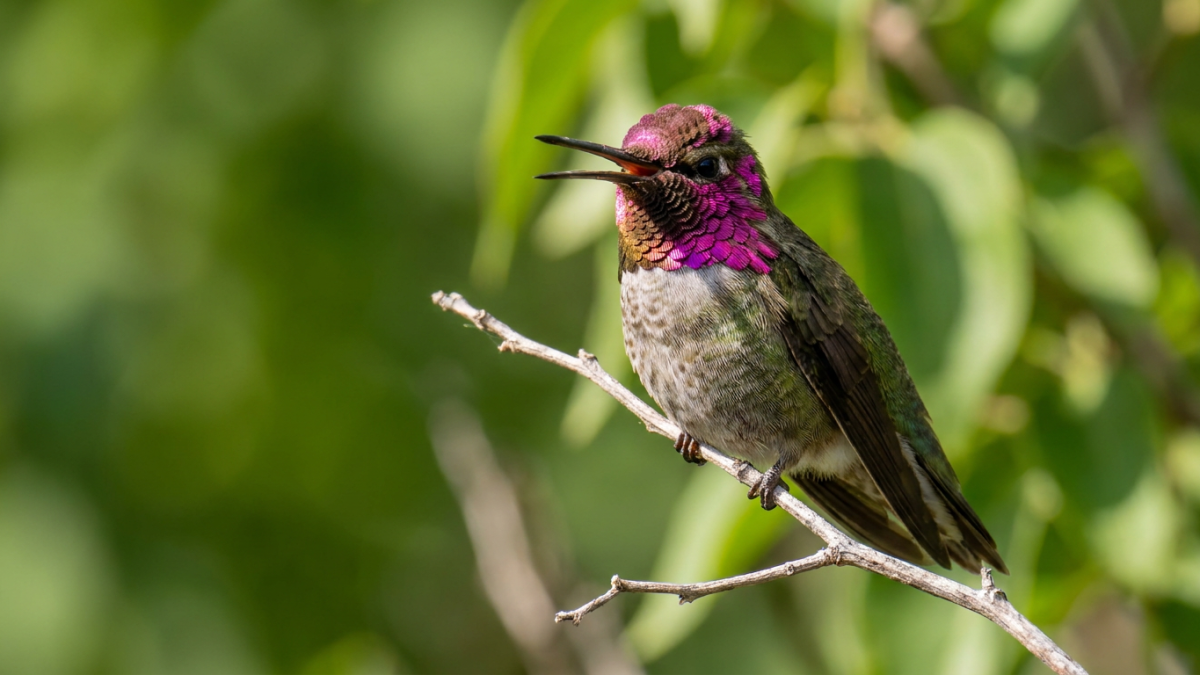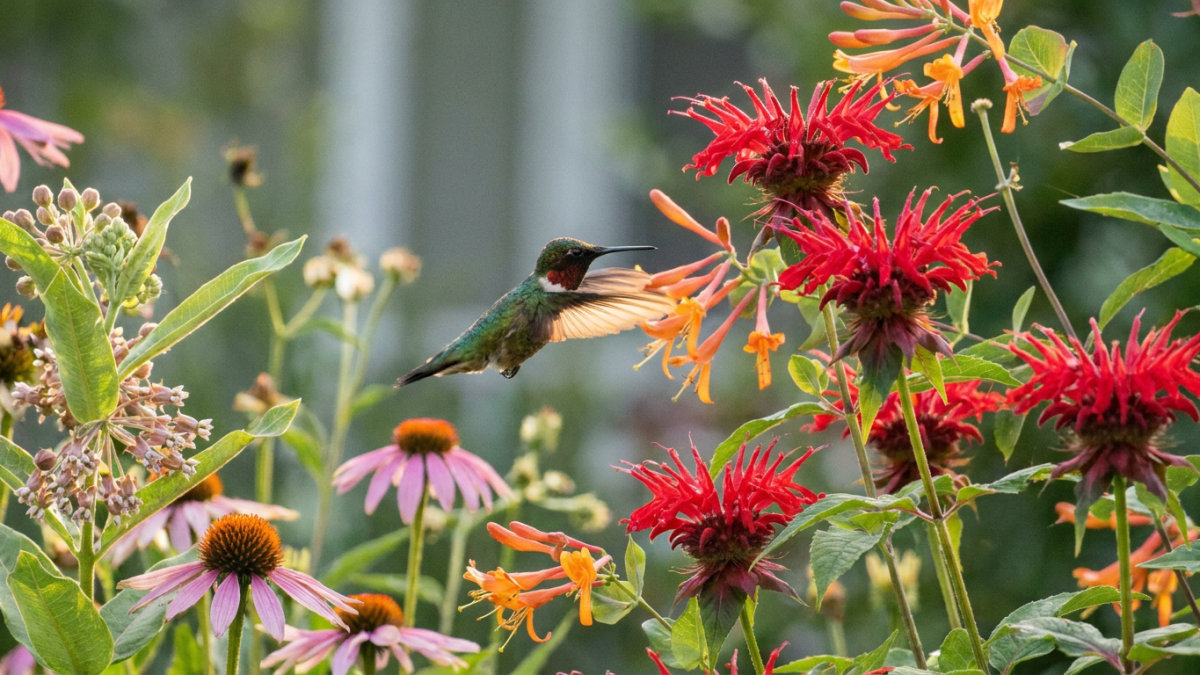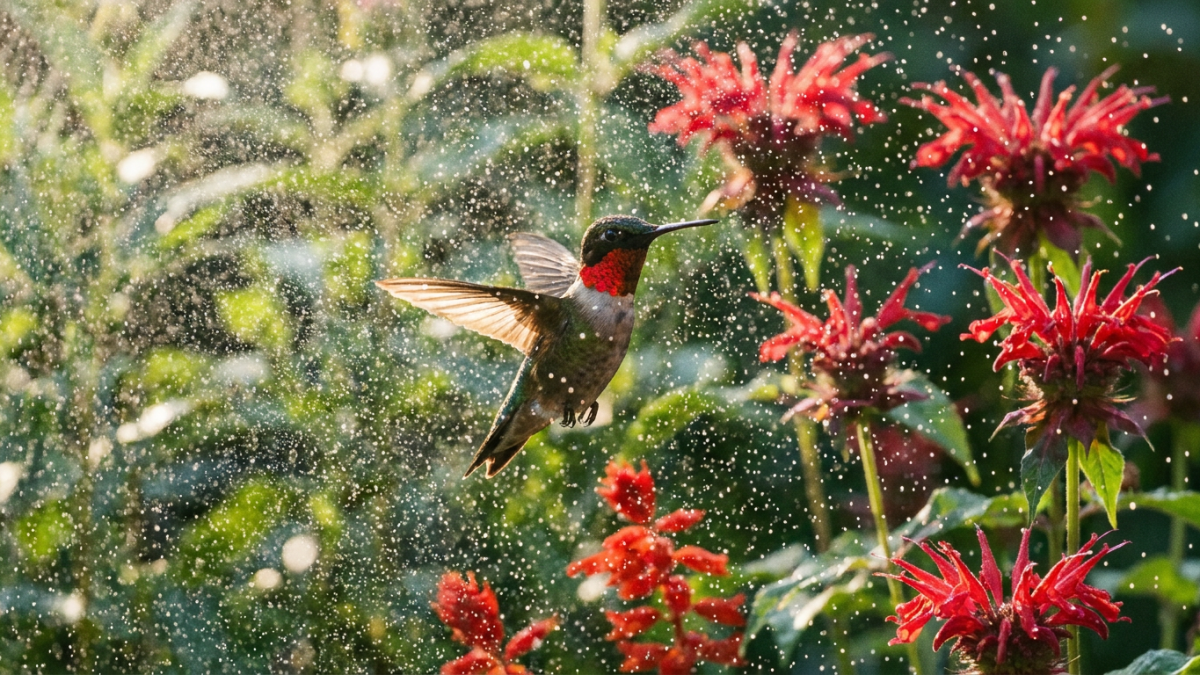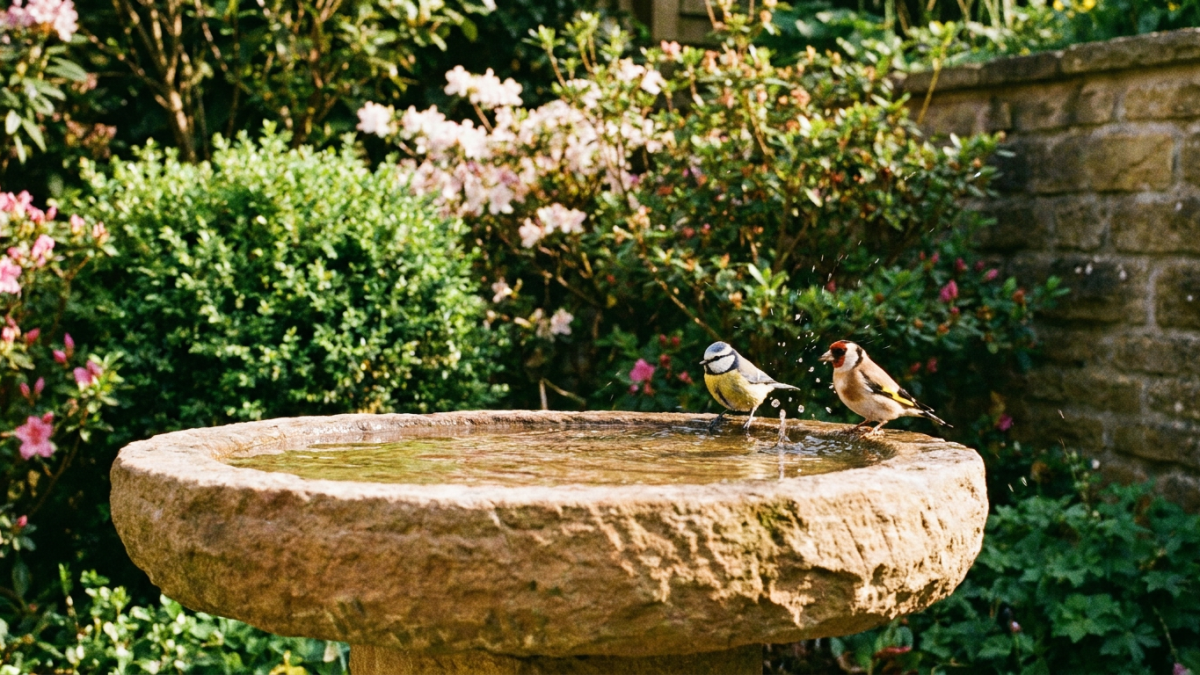
The bird bath birds actually use is shallow, rough, and easy to grip. Aim for about 2 inches of water at the rim sloping to no more than 3 inches in the middle, a textured basin, and a wide lip they can perch on before they step in. Most baths sold in garden centers fail on depth alone.
Depth Is the Whole Decision
Songbirds wade, they do not swim. A chickadee stands roughly 2 inches tall at the leg, so a 5 inch basin reads as open water it cannot stand in.
Measure before you buy. If the deepest point clears 3 inches, the bath is not ruined, you just need a layer of flat stones or pea gravel to raise the floor and give the birds footing.
Texture Beats Good Looks
Glazed ceramic and polished granite photograph beautifully and feel like wet ice underfoot. Birds land, slip once, and stop coming back.
Unglazed concrete, rough-cast stone, and pebbled resin give claws something to hold. Run your fingers across a wet basin in the store: if it feels slick to you, it is worse for a bird carrying its whole weight on two toes.
Materials and the Tradeoff Each One Makes
- Concrete: heavy, naturally textured, will not blow over. It cracks if you leave water in it through a hard freeze.
- Glazed ceramic: easy to scrub, too slippery without added gravel, and also freeze-vulnerable.
- Resin: light and freeze-tolerant, but it tips in wind unless the pedestal is weighted or you use a ground-level basin.
- Metal: durable and simple to clean, though it heats quickly, so site it where it gets afternoon shade.
A basin 14 to 20 inches across suits most yards. Smaller than that and only one bird bathes at a time, which cuts the traffic you were hoping for.
Height, Cover, and Sight Lines
Ground-level baths draw the widest species list because that is where most birds drink in the wild. Pedestal baths trade some of that for safety from cats, which matters if your yard has resident hunters.
Either way, set it within about 10 feet of a shrub or low branch so wet birds have a fast escape and a place to preen. The details of bird bath placement change your species count more than the price of the bath does.
Upkeep You Are Signing Up For
Shallow water warms and fouls fast. Plan on a rinse and refill every two or three days in summer, plus a scrub with a stiff brush weekly to keep a bird bath from turning green.
Give a new bath two to three weeks before you judge it. If the water sits untouched past that, the usual causes are depth, a slick surface, or an exposed location, and there are fixes for a bird bath nobody uses that cost nothing.