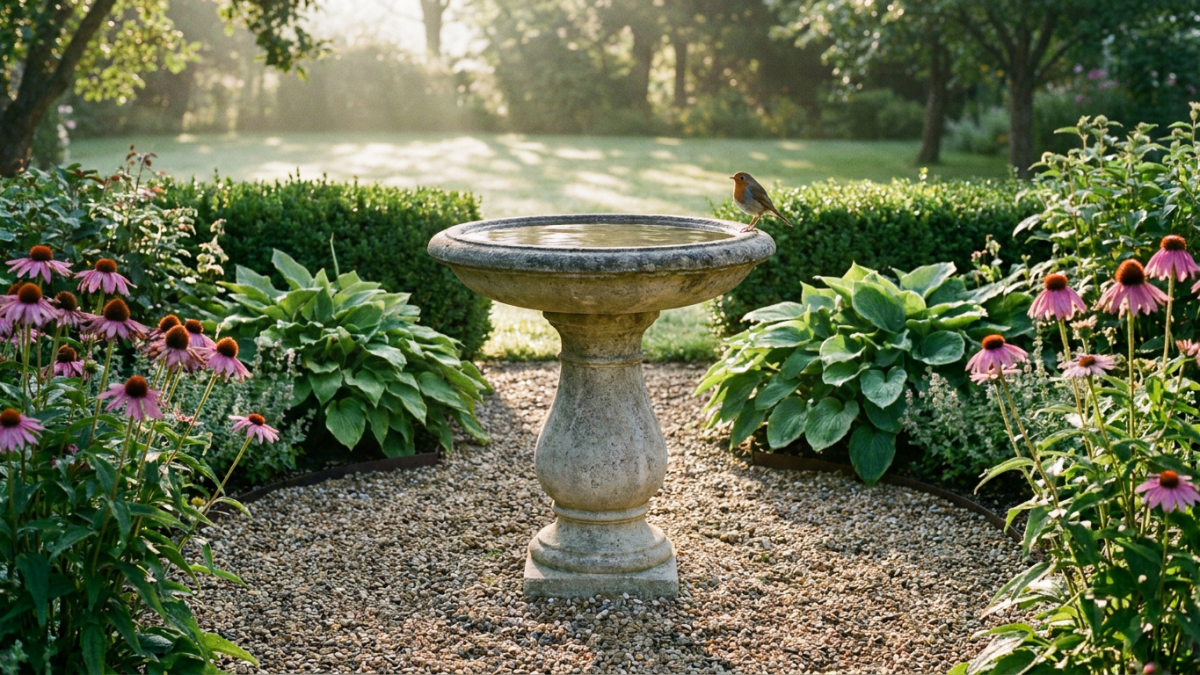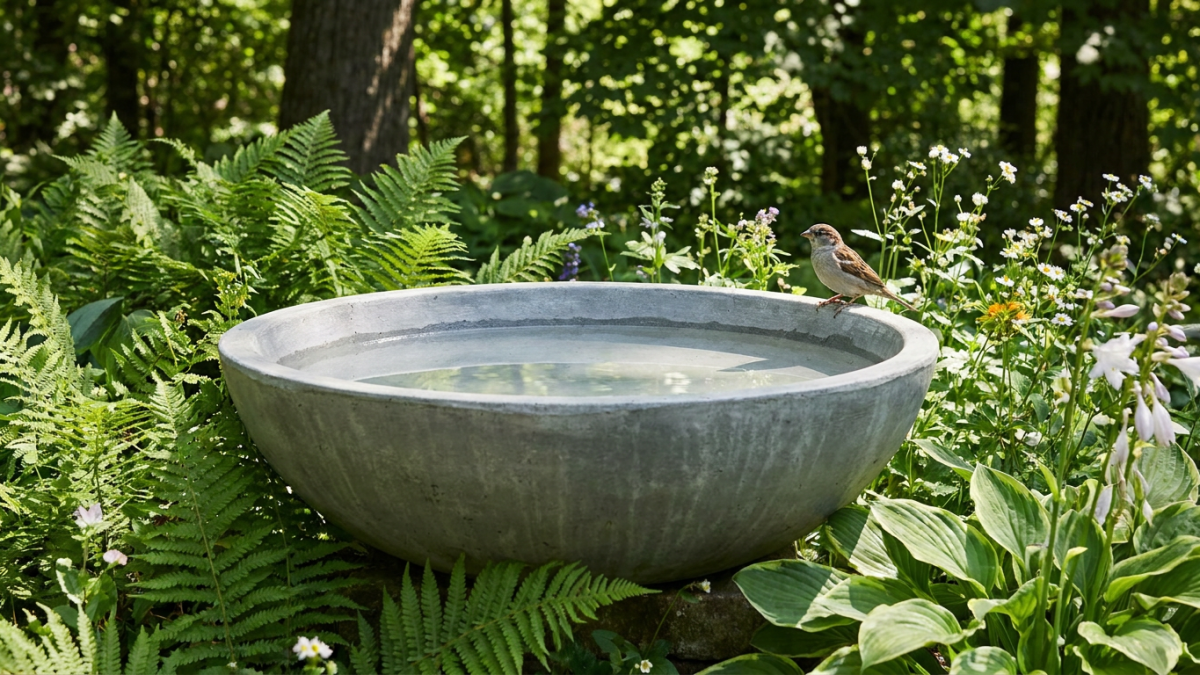
Seal a cement bird bath with a penetrating silane or siloxane sealer once the concrete has cured for a full month, then renew it every two or three years per most sealer makers’ guidance. Left bare, cured concrete drinks water, holds it in the pores, and grows algae faster than you can scrub it out. The sealer is the difference between a weekly rinse and a weekly scrub.
Why bare concrete goes green
Concrete is porous, and those pores hold a thin film of water where algae spores anchor. Once algae establishes inside the pores rather than on top, scrubbing removes the visible layer and leaves the roots behind, which is why an unsealed bath regreens within days. That is the cycle we break down in how to keep a bird bath from turning green; the methods there treat symptoms, while sealing treats the cause.
The sealing method that works
Wait out the cure first. Fresh concrete keeps releasing alkaline salts for roughly the first month, and sealer applied too early traps that residue and peels. Scrub the bath, let it dry completely, then brush or spray on a penetrating sealer in two thin passes. Penetrating sealers soak in and block the pores without forming a surface film, and once fully cured they are inert to the birds drinking from the bowl.
Skip the wet-look film-forming products sold for driveways. This is the failure mode that matters: glossy film sealers leave the basin slick, which is bad footing for small birds, and the film eventually flakes into the water. Silane and siloxane penetrating products exist precisely because film formers misbehave on anything that holds standing water.
Stains and repairs
If you want color, use a penetrating concrete stain rather than paint. Paint sits on the surface, lifts with freeze-thaw cycling, and ends up as flakes in the drinking water. Stain soaks into the pore structure and fades instead of peeling.
Cracks mean water got in and froze. Chip out loose material and fill with a cement-based patching compound rated for thin layers, then seal over the repair after it cures. Hairline cracks on baths in freeze country will return every winter unless the bath is drained from first frost onward; the winter routine we cover for stone bird baths and freeze risk applies to concrete identically.
Weight is the one thing concrete holds over every alternative. A two-piece concrete bath stays put in wind and gives raccoons nothing to tip, where our ceramic bird bath guide walks through the tradeoffs on the lighter end.