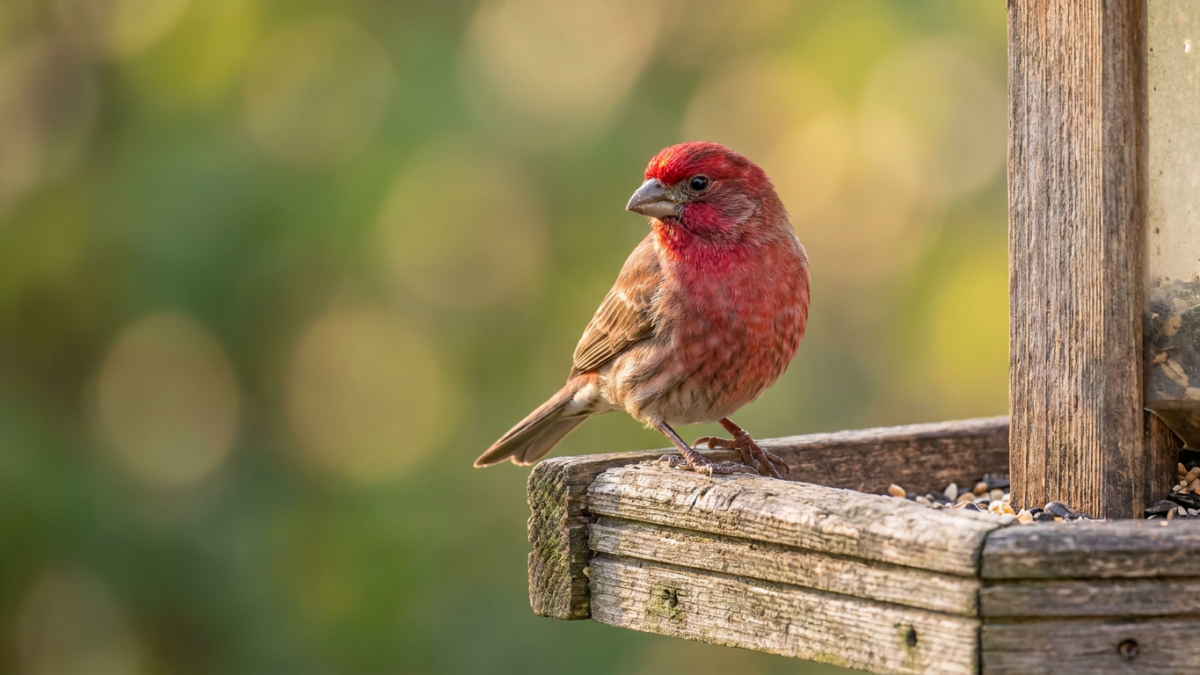
The quickest way to tell them apart: a male house finch has red mostly on the head and upper chest with brown, streaky sides, while a male purple finch looks like it was dipped in raspberry, with color washing over the head, back, and breast. Females are trickier, but the face pattern gives them away.
Males: red versus raspberry
House finch red is orange-to-red and stays near the forehead, throat, and chest. The belly and flanks keep obvious brown streaks.
Purple finch color is deeper and rosier, spreading across the whole head and down the back. The streaking on the sides is muted or washed with pink instead of sharp brown lines.
Females: look at the face
Female house finches are plain grayish-brown with blurry streaks and a plain face. Female purple finches have a bold face pattern: a strong white eyebrow stripe and a dark cheek patch.
That facial contrast is the single most reliable field mark when there is no red to compare. It helps as much as learning to identify birds by song.
Where and when you see them
House finches are common year-round across most of the country, especially in towns and suburbs. Purple finches are more of a woodland bird and often show up at feeders in winter.
Both love sunflower seed, so a feeder can draw either one. If you want to bring in more finches, our tips on attracting goldfinches and the right bird seed apply to house and purple finches too.
Give it a few visits. Once you have seen both, the raspberry wash of a purple finch is hard to unsee.