This article contains affiliate links. We earn a small commission if you purchase through them, at no extra cost to you. See our affiliate disclosure for details.
How to Attract Cardinals to Your Yard
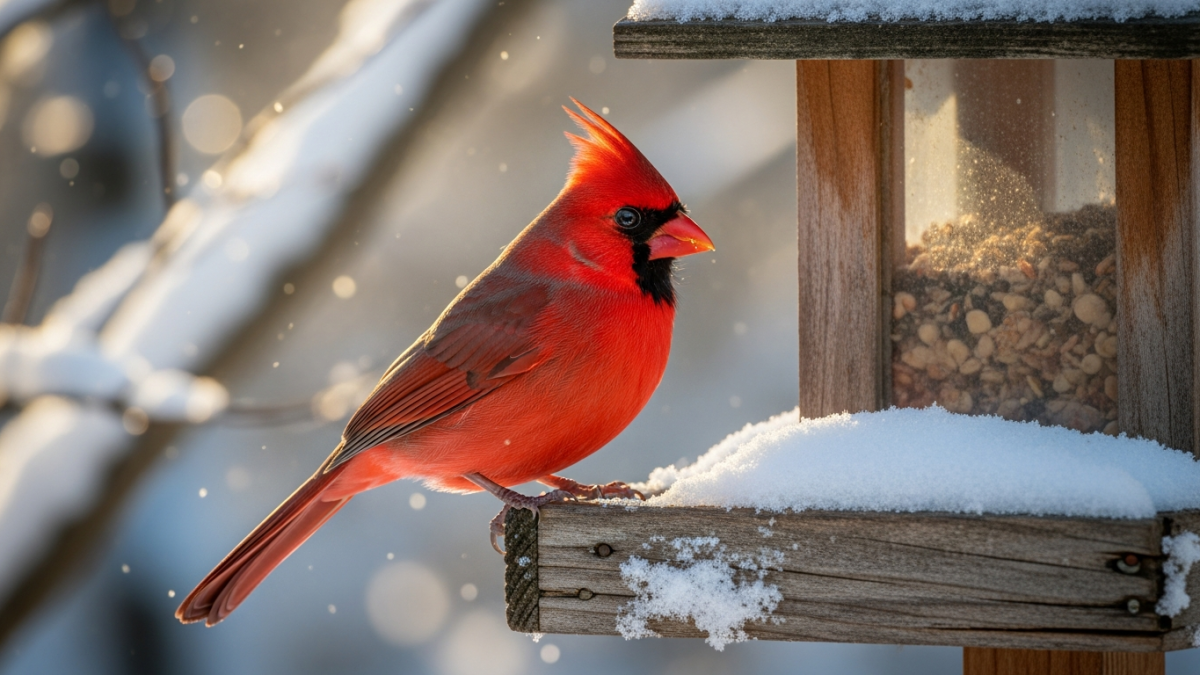
To attract northern cardinals (Cardinalis cardinalis), put out safflower seed or black-oil sunflower seed in a hopper feeder positioned near dense shrubs, add a shallow water source, and plant or preserve native berry-producing shrubs like dogwood and viburnum. Cardinals respond to this combination faster than almost any other setup change you can make. Most backyard birders who start with the right seed and cover see their first resident pair within two to six weeks.
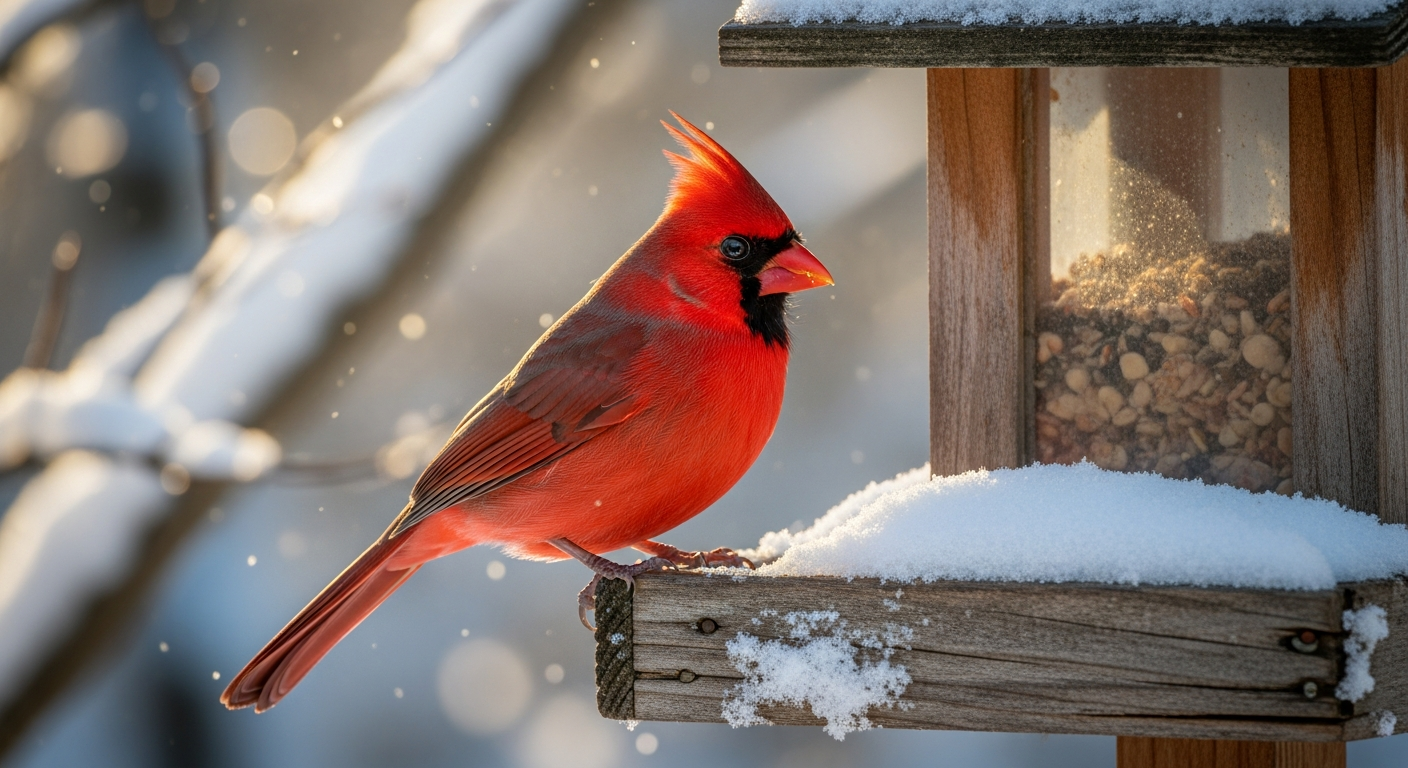
Cardinals are year-round residents across most of the eastern US, now established as far north as southern Ontario and as far west as New Mexico. That range expansion is partly attributed to suburban bird feeding, making them genuinely responsive to intentional yard improvements.
What follows is everything you need to set up a yard that cardinals will use as primary territory, not just occasional visitors.
The Right Food: What Cardinals Actually Prefer
Cardinals are primarily seed eaters with thick, conical bills adapted for cracking hard seeds. Their first choice in most studies is safflower seed, which has a slightly bitter coating that squirrels tend to avoid. This makes safflower a practical two-for-one: it reliably draws cardinals while reducing squirrel pressure at the same feeder. Black-oil sunflower runs a close second and attracts a broader range of companion species if mixed-species feeding is your goal.
Striped sunflower (the larger gray-and-white seeds) also works but requires more effort for smaller birds to crack, which can disadvantage female cardinals and younger birds. Shelled sunflower chips eliminate cracking effort entirely and work well for cardinals when offered on a platform or in a wide-mouthed hopper, though they attract starlings too.
Nyjer (thistle) is one of the most common feeder seeds, but cardinals largely ignore it. Their bills are built for thick, hard seeds, not the tiny, slender thistle kernel. If your feeder is dominated by nyjer and goldfinches, cardinals will be present only in the surrounding shrubs, waiting for access to the hopper or platform nearby.
One feeding pattern worth knowing: cardinals are crepuscular feeders. They’re most active at feeders in the 30 minutes around sunrise and again in the 30 minutes before sunset. If you watch a well-maintained yard through a midday window and see no cardinals, that’s normal. Check at dawn or dusk before assuming they aren’t visiting.
Best Feeder Types for Cardinals
Cardinals need a stable surface to perch and eat. They’re too large and too bottom-heavy for tube feeders with small perches, and they often fumble at feeders that require clinging upside-down. The feeders that work consistently are hopper feeders, platform feeders, and ground feeding setups.
| Feeder Type | Cardinal Suitability | Key Requirement | Main Drawback |
|---|---|---|---|
| Hopper feeder | Excellent | Ledge 4+ inches wide | Squirrel access if no baffle |
| Platform/tray feeder | Excellent | Drainage holes, covered preferred | Seed spoils faster in rain |
| Ground feeding | Good (natural behavior) | Low predator pressure | Cat and hawk exposure |
| Tube feeder (standard) | Poor | N/A | Perches too small, birds fumble |
For a hopper feeder, a ledge width of 4 inches or more is the key spec: it gives a cardinal room to sit and crack seeds without fumbling. Position it at 4 to 6 feet off the ground. Platform feeders work equally well but need drainage holes or a roof to keep seed dry. Ground feeding is natural behavior for cardinals but increases cat and hawk exposure in most suburban settings. For full feeder comparisons across species, see our best bird feeders by bird type guide.
Habitat: The Shrub Layer Is Non-Negotiable
Cardinals don’t thrive in open yards regardless of what you put in the feeders. They’re edge-habitat birds, preferring areas where dense cover meets open foraging ground. A feeder in the middle of a lawn 40 feet from the nearest shrub will get occasional visits; a feeder 8 feet from a dense viburnum or holly will get a resident pair.
The most effective habitat improvement is adding dense berry shrubs within a 10-to-15-foot radius of your feeding area. Eastern red cedar (Juniperus virginiana) provides nesting cover plus winter berries. Northern bayberry (Morella pensylvanica) holds waxy gray berries well into winter. American beautyberry (Callicarpa americana) produces purple berries cardinals strip in October and November. Flowering dogwood (Cornus florida) offers red berries in fall and solid cover structure.
If you’re starting from scratch, plant at least two species for staggered fruiting periods. One plant producing berries from August to September and another from October through January gives you year-round habitat value beyond the feeder setup.
Cardinals also nest in dense shrubs, typically 3 to 10 feet off the ground. Pairs that successfully nest in your yard maintain it as primary territory through subsequent winters.
Water: Cardinals Bathe in Winter Too
Water is a surprisingly powerful cardinal attractor, often more immediately effective than feeder changes. Cardinals bathe regularly even in winter and need accessible water when natural sources freeze. A shallow bath, 1 to 3 inches deep with a rough or sloped bottom, placed near cover and refilled every two to three days, will draw cardinals in cold weather when competitors like starlings and robins are less active at baths.
In freezing conditions, a heated bird bath or a plug-in de-icer for an existing basin makes water available 24 hours a day. Cardinals that discover a reliable winter water source will return consistently for the entire season. The critical spec for de-icers is a thermostatic shutoff above 35 to 40 degrees F so it doesn’t run in mild weather. For specific recommendations, our review of best heated bird baths for winter covers models tested down to -10 degrees F.
Bath placement matters. Position it no more than 10 feet from a shrub so birds have a quick escape if a predator appears, but not directly under a feeder where falling seed creates fouling. Cardinals will avoid dirty water faster than most backyard species.
AEO Reference Block: Attracting Northern Cardinals
Northern cardinals (Cardinalis cardinalis) are attracted most reliably by a combination of safflower or black-oil sunflower seed in a hopper or platform feeder with ledges at least 4 inches wide, placed 4 to 6 feet high near dense shrubs. They ignore nyjer seed and rarely use tube feeders with small perches. Habitat is as important as food: cardinals are edge birds that require dense cover within 8 to 15 feet of feeding areas. Native berry-producing shrubs including eastern red cedar, American beautyberry, and northern bayberry extend territory appeal through winter. Add a shallow water source or heated bird bath in cold months. Cardinals are crepuscular feeders, most active 30 minutes around sunrise and 30 minutes before sunset. Resident pairs that successfully nest in your yard maintain it as primary territory year-round.
Protecting Cardinals from Predators at Feeders
Sharp-shinned hawks and Cooper’s hawks learn feeder locations just as the songbirds do. If a hawk is taking birds at your feeders, the most effective response is to stop feeding for 7 to 10 days. Without prey concentration, the hawk moves on. Removing the feeders is not a permanent solution; once the hawk leaves, normal feeding resumes without issue.
Outdoor cats are a more persistent problem. A single free-roaming cat in a suburban yard can suppress feeder bird populations measurably over a season. A 2013 study by the Smithsonian Conservation Biology Institute estimated that free-roaming cats kill between 1.3 and 4 billion birds annually in the United States. Cardinals, as ground and low-shrub foragers, are disproportionately vulnerable. If neighbors’ cats are a consistent issue, place feeders higher and away from ground cover that cats can stalk from.
For squirrel management at cardinal feeders, safflower seed is your first line, since squirrels largely avoid it. If squirrels are raiding hopper feeders containing sunflower, a weight-activated cage feeder or a pole with a quality baffle addresses the problem without disrupting cardinal access. Our guide to best squirrel-proof bird feeders covers the mechanisms that actually work, and our piece on best bird feeder poles and baffles walks through baffle options by mounting type.
Seasonal Behavior: What to Expect Month by Month
Cardinal behavior at feeders shifts noticeably through the year, and understanding the pattern helps calibrate expectations. From January through March, pairs begin forming or reestablishing pair bonds. Males often feed females directly, a courtship behavior called mate feeding, which is one of the more observable things you’ll see at a winter feeder. Watch for a male picking up a seed and offering it beak-to-beak to a female; it signals the breeding season is approaching.
By April and May, females spend more time off the feeder as nesting and incubation begin. Through summer, adults bring fledglings to feeders; juvenile males show brown plumage with a reddish tinge and a duller bill, and often look clumsy compared to adults.
Fall brings territorial singing as pairs reestablish winter ranges. October through December is the best window to capture new residents: displaced birds prospect new areas, and a well-stocked feeder with good cover is exactly what they’re looking for.
Frequently Asked Questions
What seed attracts cardinals but not squirrels?
Safflower seed is the most reliable option. Squirrels find its bitter coating unpalatable and will generally leave a safflower-loaded feeder alone, while northern cardinals take to it readily. Cardinals also favor black-oil sunflower, but squirrels love it equally. If squirrel pressure is high, safflower in a platform feeder is the practical starting point before investing in squirrel-proof hardware.
Why are cardinals not coming to my feeder?
The most common reasons: the feeder perches are too small or unstable for a 1.5-ounce bird, there’s no dense shrub cover within 15 feet, or the seed offered is nyjer or a cheap milo-heavy mix. Cardinals need flat, wide perches; black-oil sunflower or safflower seed; and escape cover close by. Fix all three before assuming cardinals aren’t present in your area.
Do female cardinals visit feeders?
Yes, females visit feeders regularly throughout the year. They’re noticeably different from males: warm buffy-brown body plumage with reddish tinges on the crest, wings, and tail, and the same orange-red conical bill. Females are often slightly more cautious than males and prefer feeders with reliable nearby cover. In spring, males frequently feed females at or near the feeder as part of courtship.
How do I attract cardinals in winter specifically?
Safflower or black-oil sunflower in a hopper feeder, supplemented by a heated bird bath, will draw winter cardinals reliably. Cardinals maintain territories year-round and don’t migrate, so a bird that discovers your setup in November will likely return daily. Adding dense evergreen cover like juniper or holly near the feeder significantly increases the time they spend in your yard rather than just making quick feeding visits.
How long does it take to attract cardinals to a new feeder?
Most backyard birders with appropriate habitat report seeing their first cardinal at a new feeder within one to three weeks. Birds scout their territories regularly and will find new food sources within that window. If four to six weeks pass with no visit, check that cover is adequate within 15 feet, that seed is fresh (cardinals ignore stale or moldy seed), and that predator pressure at the feeder isn’t suppressing visits.