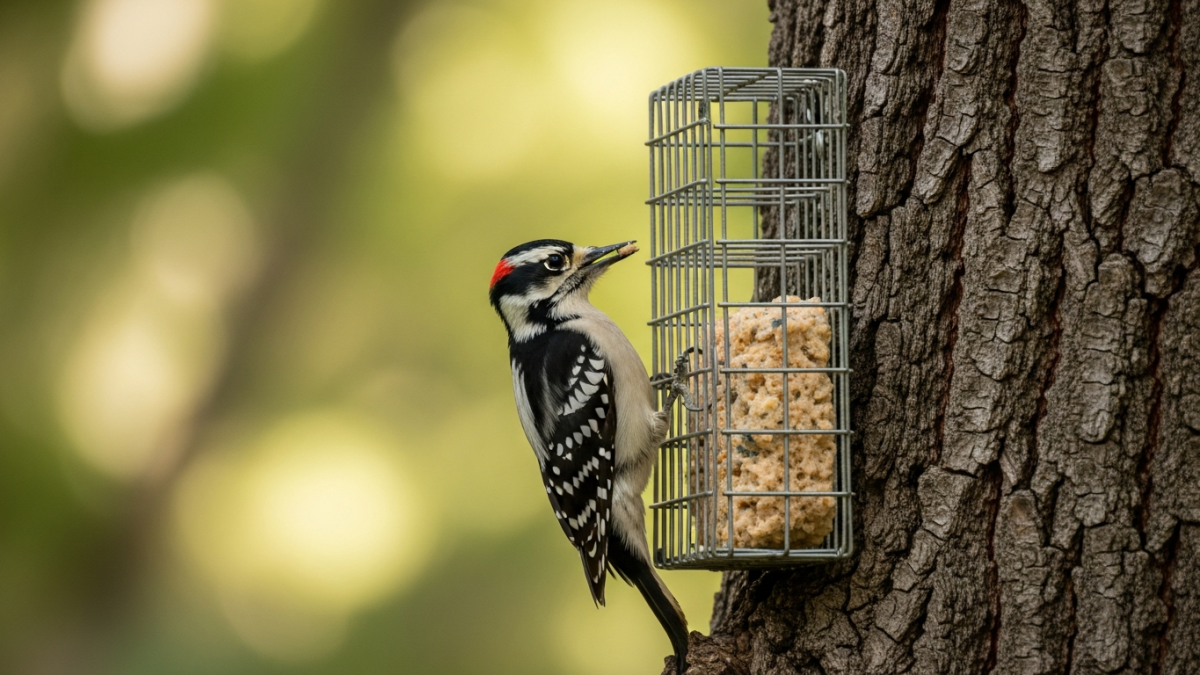
Attract woodpeckers by offering suet, peanuts, and a dead or dying tree snag if you have one, while protecting vulnerable siding with decoys, wind chimes, or reflective tape near the areas they target. Woodpeckers drum on houses for two main reasons, feeding on insects hidden in the wood or announcing territory, and each reason calls for a different fix.
Getting woodpeckers to visit your feeders instead of your house is entirely possible with the right setup.
What actually brings woodpeckers to your yard
Suet is the single most reliable food for attracting woodpeckers, since it mimics the fat content of the insects and larvae they naturally forage for in tree bark. Our best suet feeders picks cover cage-style options built specifically for larger woodpecker species.
Peanuts, whole or crushed, are a close second choice, and offering both at once gives you a shot at attracting several woodpecker species with different size and bill preferences.
Why some yards see more woodpeckers than others
Mature trees, especially any dead or dying snags left standing, are a major draw because they house the beetle larvae and insects woodpeckers hunt naturally. If safety allows, leaving a dead tree standing does more for woodpecker visits than any feeder alone.
Yards near wooded edges or with larger trees nearby simply have a natural advantage. If your yard is more open, feeders become your main tool for compensating.
Stopping siding damage without scaring them off entirely
Reflective tape or old CDs hung near the damaged area disrupt the visual cues that make woodpeckers keep returning to the same drumming spot. Wind chimes placed close to the siding work through a similar disruption, adding noise and movement they tend to avoid.
Decoy predators like a fake owl, moved every few days so the bird does not learn it is harmless, can also help redirect drumming activity elsewhere on the property.
Is the drumming actually feeding or something else
Rhythmic, repeated tapping in the same spot for long stretches is often territorial drumming, not feeding, and tends to happen most in early spring during mating season. This kind of drumming is the hardest to stop with food alone, since the bird is broadcasting rather than hunting.
Irregular pecking that stops and starts as the bird moves around is more likely feeding behavior, which is where addressing the underlying insect problem in your siding actually helps.
Positioning your feeders for the best results
Place suet feeders on a tree trunk or a dedicated pole 8 to 12 feet from the house, close enough to feel safe but far enough that it becomes the more convenient food source than your siding. Mount it on a sturdy setup like the options in our best bird feeder poles and baffles guide for stability against a larger bird’s weight.
Pair feeders with water access too. A working bird bath nearby rounds out the habitat and keeps woodpeckers visiting for more than just food.