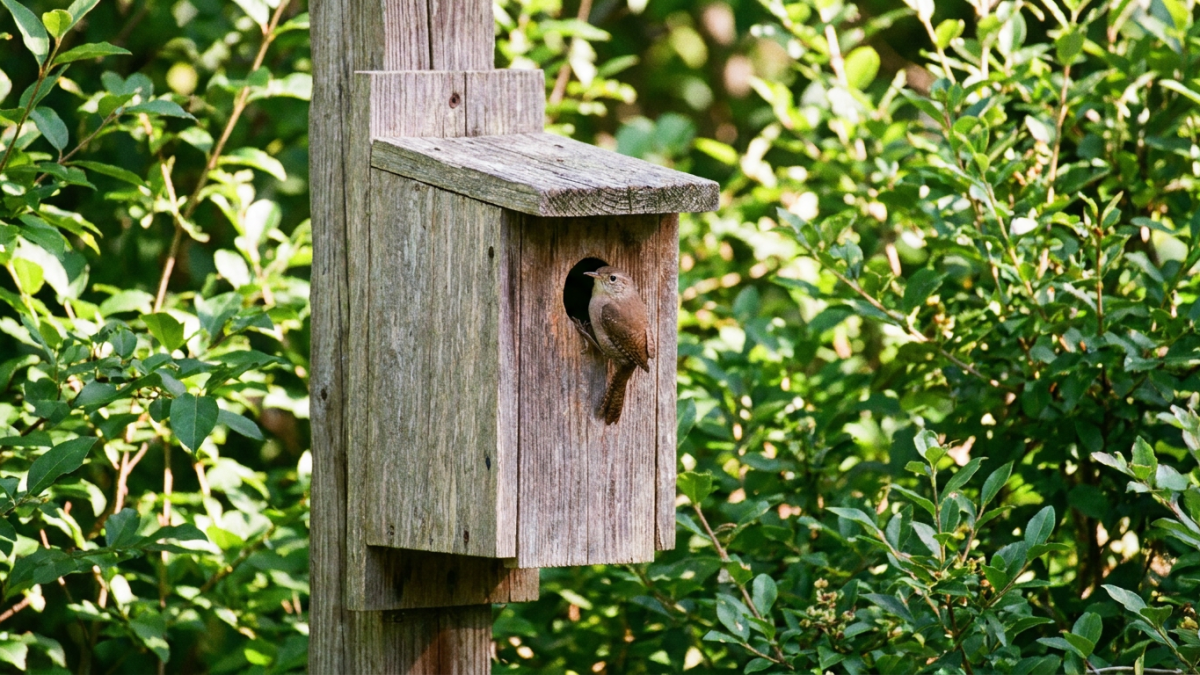
To attract wrens to nest in your yard, put up a small nest box with a 1 to 1.25 inch entrance hole, keep a brushy corner for cover, and skip the pesticides so insects stay plentiful. Wrens are insect eaters, so a bug-friendly yard matters more than any feeder.
House wrens especially are bold, adaptable birds that will nest in surprising spots. Give them the right cavity and some cover, and they often move in fast.
Put up the right nest box
Wrens use cavities, so a properly sized box is the single biggest draw. Mount it 5 to 10 feet high on a post or tree, ideally near shrubs or a wood edge rather than out in the open.
A 1 to 1.25 inch hole lets wrens in while keeping larger competitors out. This cavity-nester approach is the same idea behind our guide to attracting bluebirds, though wrens prefer more cover nearby.
Feed the insects, not just the birds
Wrens rarely visit seed feeders because they eat spiders, caterpillars, and beetles. The best thing you can do is stop spraying insecticides and let a natural bug population build.
Native plants and a small brush pile support that food web. If you do offer food, suet is the most likely draw, and our roundup of the best suet feeders shows good options.
Add cover and water
A tangled shrub, a brush pile, or a hedge gives wrens the low cover they forage and shelter in. A ground-level or shallow bird bath adds year-round appeal.
Small songbirds like these often share the same yard, so the tactics that bring in chickadees tend to help wrens too.
Timing and patience
Put boxes up by early spring, before nesting season starts. Male house wrens build several partial dummy nests, so do not worry if you see stick piles in more than one box. A female picks the one she likes best.