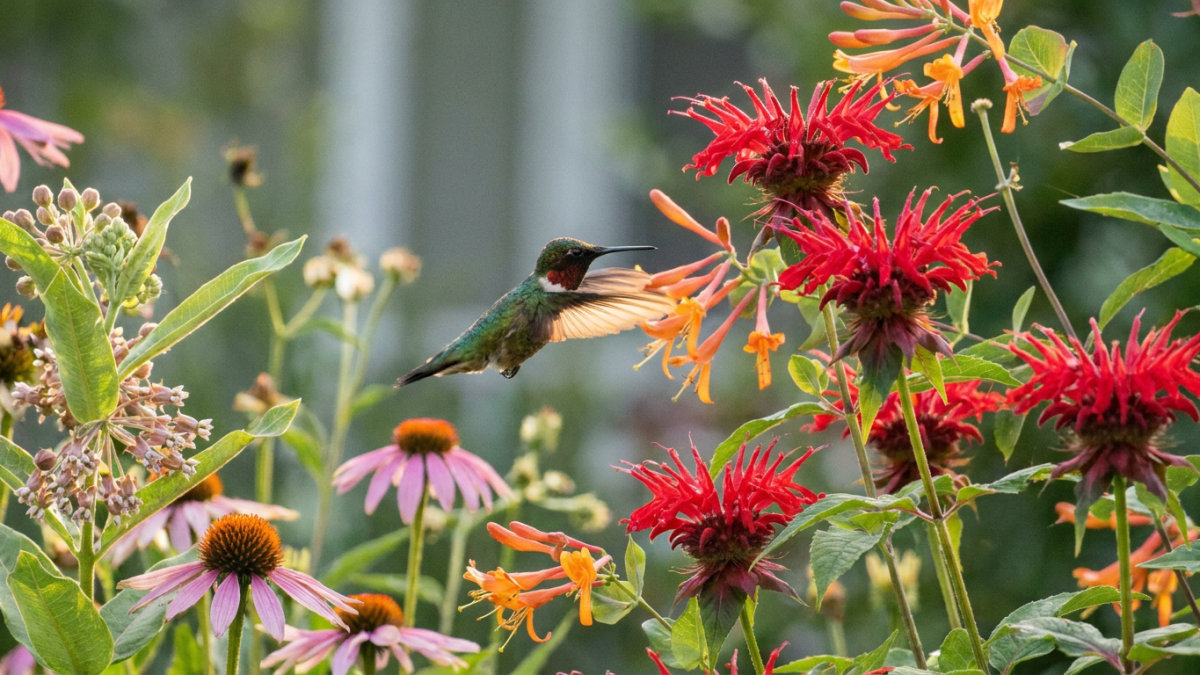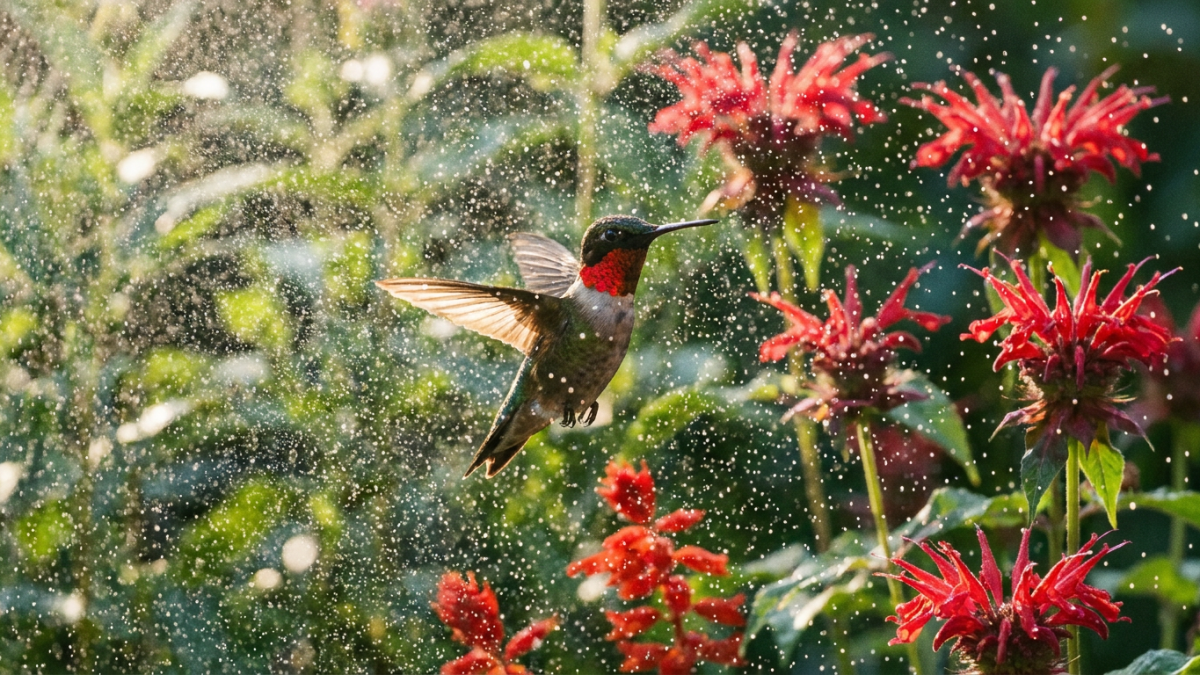
A hummingbird feeder hat works, but only after the birds in your yard have already learned to trust a feeder and a still human beside it. Put one on cold, with no habituated birds around, and you will sit in the sun a long while with nothing landing.
That is the part the product listings leave out. The hat is the last step of a training process, not the first.
Why the hat alone attracts nothing
Hummingbirds key on two things: a red flower shape and a location they remember. Cornell Lab’s All About Birds explains that feeders carry red parts because flowers are colored, not the nectar, and Perky-Pet’s hand-feeding guide says birds remember locations as much as the feeder itself.
A hat on a moving head has neither. It is a new object in a new spot with a large animal underneath it. Birds that remember your feeders from last season will investigate sooner, but even they need a bridge.
Video: Robbie and Gary Gardening Easy
How the training actually goes
Every maker of a wearable or handheld feeder gives the same sequence. HummViewer tells you to remove your hanging feeders and sit or stand where they hung. Nectar DOTS says to place its handheld feeder next to an existing feeder first, then remove that feeder and hold the DOT.
Perky-Pet splits it into three stages: introduce the feeder on a flat surface, introduce yourself by sitting a step closer each day, then hold it. None of them commit to a number of days, and you will not get one here either. Your birds set the pace.
Three conditions shorten it: an established yard with daily traffic, late summer when migrants pile in and compete, and a single food source in play. Full feeders hanging elsewhere mean no bird has a reason to risk your face. That is the same logic behind how many hummingbird feeders you need, run in reverse.
Wearable and handheld feeders compared
| Product | Type | Nectar capacity | In the box | Street price (retailer) |
|---|---|---|---|---|
| HummViewer Kit | Wearable face-shield mask, 12 x 9 x 11 in | 3 flower tubes, capacity not published | 3 flower feeders, 3 perches, nectar bulb, brush, red sling bag | $69.95 (hummviewer.com) |
| Nectar DOTS kit | Handheld, 2 per kit | 0.25 oz each | 2 feeders, cleaning brush, instructions | $21.96 (JCs Wildlife) |
| Perky-Pet Handheld and Tabletop 9100 | Handheld or tabletop, 3 ports, 0.168 lb | 2 oz | Feeder with removable ports and lid | Not shown on perkypet.com product page |
All figures are manufacturer or retailer listings. The HummViewer is the only true mask of the three. Its maker says the design is patented, ships from Loveland, Colorado, and left Amazon because of counterfeits, so the cheaper hats on marketplaces are unbranded copies with no published specs.
When the hat is a realistic buy
You already have hummingbirds on a feeder every day. You can sit still for a stretch without checking your phone. You are willing to pull your other feeders during sessions. If all three hold, a hat or handheld puts a bird a few inches from your eyes.
If you have one occasional visitor, spend the money on a second regular feeder in the right feeder color first. Build the traffic, then earn the close-up.
Keep the tubes and the nectar clean
Hat tubes hold a small volume and sit in sun on a warm head. Cornell’s guidance is a quarter cup of table sugar per cup of water, no red dye, and never leave nectar out more than two or three days, with daily changes in heat.
Nectar DOTS and Perky-Pet both say clean after every use. Empty the tubes when you go inside and rinse them, then refill fresh for the next session.