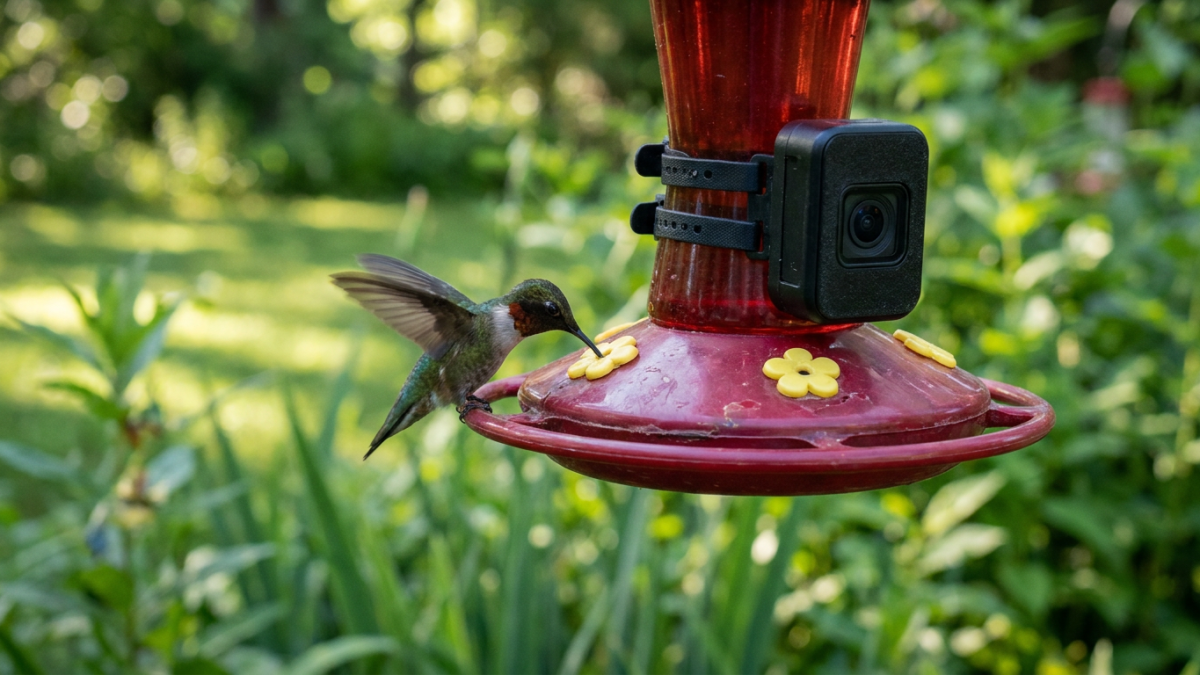
A hummingbird feeder with camera gives you identifiable, watchable footage when the bird is at a port a few inches from the lens, the sensor is not pointed into the sun, and the battery is above the level where the unit throttles recording. Miss one of those and you get soft blur or gaps in the timeline. Here is what the clips look like and how to mount for better ones.
Resolution claims and what reaches your phone
Most units advertise 1080p or 2K on the box. Those are manufacturer figures for the sensor, not for the clip you receive, which is compressed and often downscaled so uploads stay short over 2.4 GHz Wi-Fi.
Frame rate matters more than pixel count for hummingbirds. Wings beat dozens of times per second, so at consumer frame rates the wings read as a haze while the head and gorget stay sharp.
The bigger factor is focus distance on camera feeders. The lens is fixed-focus and tuned to the port, so a bird hovering a hand’s width back looks softer than one that has landed to drink.
How the light changes the clips
Morning and late afternoon light produces the footage people share. Midday sun overhead flattens color, and a feeder facing west turns every evening visitor into a dark shape against a bright sky.
Night footage is irrelevant for hummingbirds, which feed by day, but motion triggers still fire on moths and bats after dark and quietly eat storage and battery.
Battery reality
Manufacturer runtime figures assume a modest number of triggers per day. A busy feeder in August can trigger hundreds of times a day, and each clip wakes the Wi-Fi radio for an upload. Expect real runtime well under the box figure during peak season.
A solar panel helps if it gets direct sun for much of the day while the feeder itself sits in partial shade, which also keeps nectar fresher. Cold mornings reduce lithium cell output, so late-season clips may drop out until the unit warms.
The Bird Buddy hummingbird feeder and similar app-connected units also lean on cloud storage and species tagging, and those features may sit behind a subscription. Check what the free tier keeps before you buy.
Mount placement that keeps clips usable
Hang the feeder so the camera faces north or east, with foliage behind the ports rather than open sky. That background gives the sensor something to expose for and keeps the bird from going dark.
A pole mount beats a hanging hook. Hanging feeders sway in wind, which fires false motion events and shifts the framing. Keep the unit within reliable range of your router, since weak signal is the most common cause of missing clips.
If you already run bird house cameras, the same power and signal rules apply. The difference is that a nectar feeder needs cleaning every few days in heat, so pick a unit whose reservoir detaches without removing the camera.
Who gets value from a camera feeder
You gain something real if you want to recognise individual birds or log arrival dates from indoors without startling them. If you only want close views, a plain feeder near a window and a pair of binoculars gives sharper detail at a fraction of the cost.