Pick western red cedar if you want wooden bird feeders that last without help, and treat pine as the shorter-lived option unless you finish its outside. The USDA Wood Handbook rates cedar heartwood as resistant to decay and most pines as slightly or nonresistant. One catch applies to both woods: neither gets as clean as plastic or metal.
Cedar vs pine for a feeder that stays out all year
Table 14-1 of the Forest Products Laboratory’s Wood Handbook places western redcedar, eastern redcedar and incense cedar in its resistant group. Pines, apart from a few old-growth types, land in the lowest group.
That rating covers heartwood only. The same handbook says untreated sapwood of essentially all species has low decay resistance, so a pale, sappy cedar board behaves closer to pine.
Panacea, maker of the Deluxe Cedar line, credits cedar’s natural oils with resisting insects and decay. Pine carries no such rating, so a pine feeder depends on its finish and on shedding water.
Video: Woodsmith
Finish choices, and where they never go
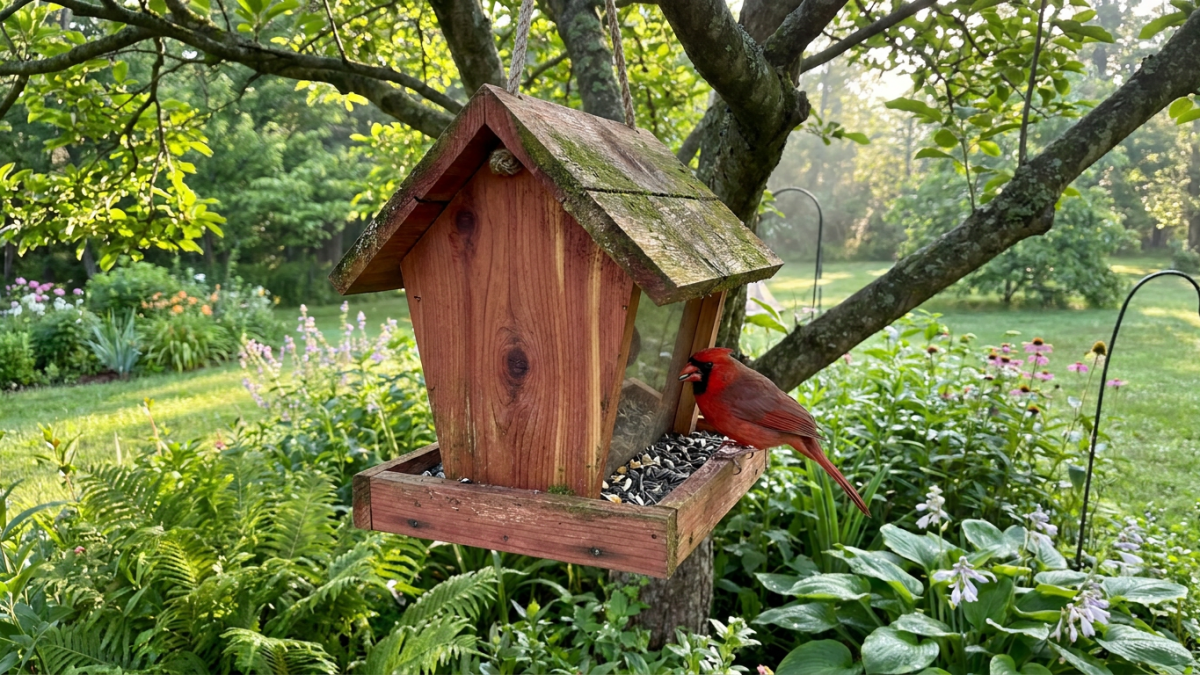
Cedar can stay bare. It grays as it weathers but keeps its heartwood resistance without a coating.
Pine is the wood that benefits from a finish. Put an exterior stain or sealer on the roof, walls and outer edges, then let it cure fully before any seed goes in.
Keep every finish off the tray, the perches and the inside of the hopper. NestWatch tells birdhouse builders to use untreated, unpainted wood, and the same caution fits any surface where birds pick up food. Skip pressure-treated lumber for the same reason.
Building your own? Work from these bird feeder plans and cut the roof and floor from cedar if your budget allows.
Wooden hopper and platform feeders compared
Figures are manufacturer specs, with list prices from Duncraft checked on 9 October 2026.
| Feeder (maker) | Wood and floor | Seed capacity | Size (in) | Duncraft price |
|---|---|---|---|---|
| Deluxe Cedar Hopper, Mini (Panacea) | Kiln-dried inland red cedar | 1.5 lb | 9.25 x 7.5 x 8.75 | $49.95 |
| Moraine Hopper JR (Kettle Moraine) | Red cedar, perforated aluminum floor | 3 lb | 10 x 9 x 10 | $69.95 |
| Deluxe Cedar Hopper (Panacea) | Kiln-dried inland red cedar | 4 lb | 11 x 9.5 x 9.75 | $69.95 |
| Premier Cedar Double Hopper (Panacea) | Cedar | 5.5 lb | 13.5 x 10.5 x 11.5 | $94.95 |
| Cedar Hanging Tray, Small (Backyard Nature) | 7/8 in cedar, perforated steel tray | Open tray | 11 x 10 x 2.6 | $39.95 |
| Cedar Hanging Platform, Large (Backyard Nature) | Cedar, perforated steel tray | Open tray | 16.25 x 14 x 2.5 (tray) | $79.95 |
Look at the floors before the wood. The Moraine uses perforated aluminum and both Backyard Nature trays use perforated steel, so seed drains and the wood under it dries faster.
Still deciding on style? The capacity and squirrel trade-offs are laid out in tube feeder vs hopper feeder.
Cleaning wood, and the FeederWatch warning
Project FeederWatch recommends washing seed feeders every week or two with warm water and dish soap, then letting them dry completely. It also says not to use feeders that cannot be thoroughly washed, and names wooden feeders as the example.
That is the real cost of wood. If you keep one, choose a model with a metal mesh floor, scrub it on that schedule and dry it in the sun before refilling.
FeederWatch’s optional disinfecting step is a 10-minute soak in one part bleach to nine parts water, rinsed off before drying. For heavy-use and wet-weather timing, see how often to clean a bird feeder.
How long a wooden feeder lasts
None of the makers above publishes a service life, and the Wood Handbook notes that pieces cut from the same tree can last very different lengths of time. Judge by condition instead.
Replace the feeder when the floor wood dents under a thumbnail, dark staining survives a scrub, or seams open wide enough to trap wet seed. Cedar over a metal floor should reach that point later than bare pine with a solid wooden tray.