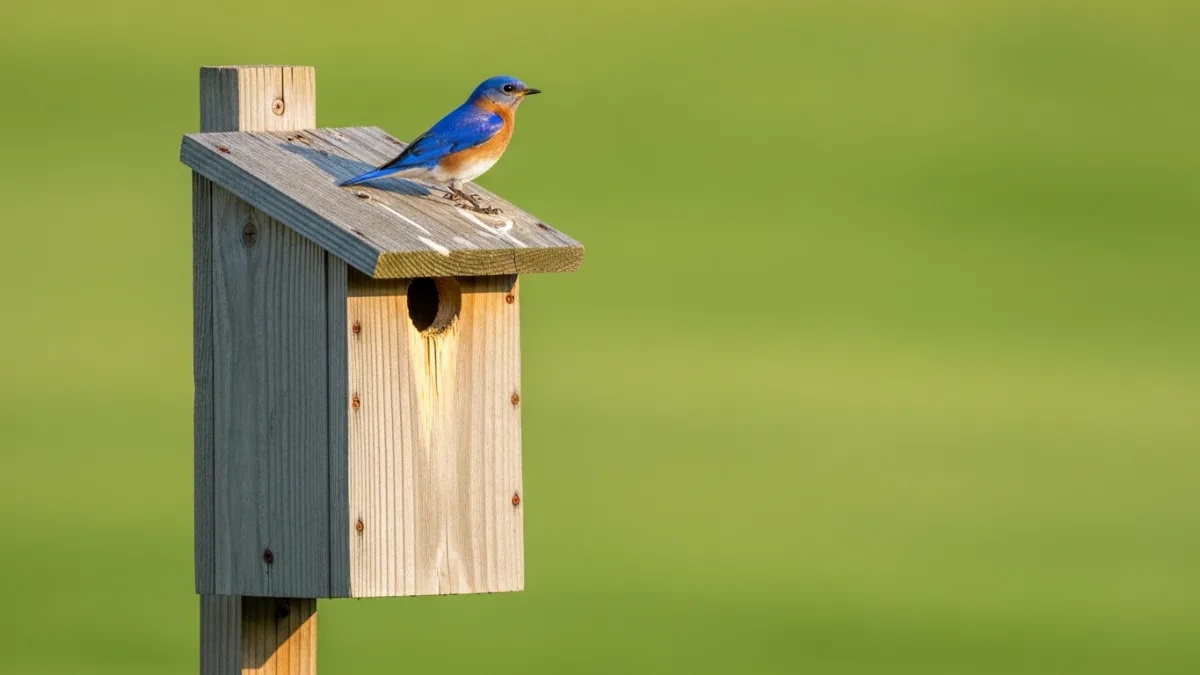
You attract bluebirds with three things at once: an open lawn they can hunt from, a nest box mounted the right way, and mealworms or water nearby to hold their attention. Skip any one of those and they will pass your yard by for a neighbor’s.
Bluebirds are picky compared to backyard regulars like sparrows or finches. They want short grass, low perches, and a box that keeps out starlings and house sparrows. Get the setup right and a pair can stay for years.
What habitat do bluebirds actually need?
Bluebirds hunt insects from a perch, then drop down onto open ground to grab them. A dense, shrubby backyard does not work. They need short lawn, a fence line, or a low branch within sight of the nest box.
If your yard backs onto a field, golf course, or mowed common area, you already have the habitat. If not, keeping one section of lawn trimmed short near the box goes a long way.
Where should you place the nest box?
Mount the box 4 to 6 feet high on a smooth metal pole, facing away from prevailing wind, with a clear flight path in front of the entrance hole. Wood posts and trees make it too easy for raccoons and snakes to climb up.
Use a 1.5-inch entrance hole. Anything larger lets starlings in, and starlings will kill bluebird nestlings to take over the box. Space multiple boxes at least 100 feet apart since bluebirds defend a territory around the nest.
Spring, from March through May depending on your region, is when pairs start scouting boxes. Have yours up before then.
Do mealworms really work?
Yes, and it is the fastest way to get a bluebird’s attention once a box is up. Live or dried mealworms in a shallow dish, or a feeder built with small entry holes to keep starlings out, will pull bluebirds in within days in areas where they already live nearby.
A dedicated mealworm feeder works better than scattering worms on the ground, where they disappear before a bluebird notices them. Our guide to bird feeders by species covers the styles built specifically for insect-eating birds like bluebirds.
Does water make a difference?
A shallow bath with moving water is one of the strongest bluebird draws you can add, especially outside nesting season when mealworms alone will not hold them. Bluebirds prefer water under two inches deep with a gently sloped edge.
A dripper or small solar fountain adds movement, which bluebirds notice from a distance. Keep the bath within 15 feet of cover like a shrub or fence, so they have somewhere to dry off and watch for predators.
What should you avoid putting out?
Skip suet feeders and standard seed mixes. Bluebirds are not seed eaters, and a feeder full of sunflower or mixed seed mainly draws in competing species that crowd them out. If you are already feeding cardinals nearby, our piece on attracting cardinals explains how to keep those setups spaced apart.
Also skip cheap seed mixes with filler grain when stocking any other feeders in the yard. Our bird seed buying guide breaks down which fillers go to waste on the ground and attract rodents instead of birds.