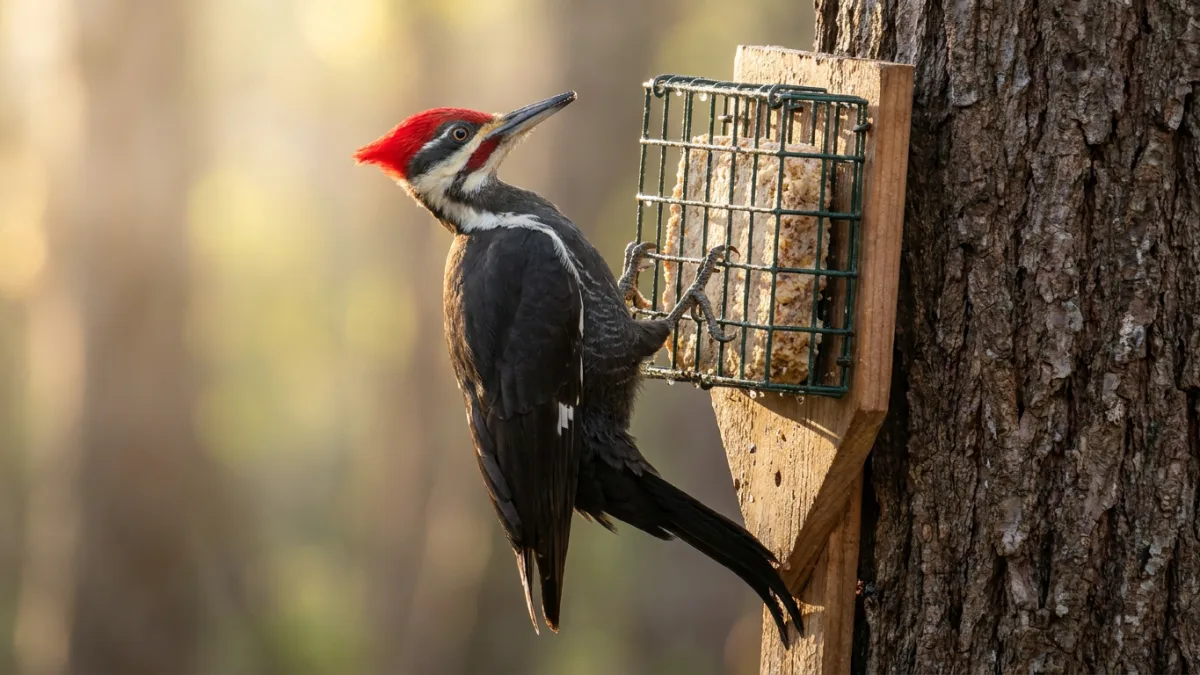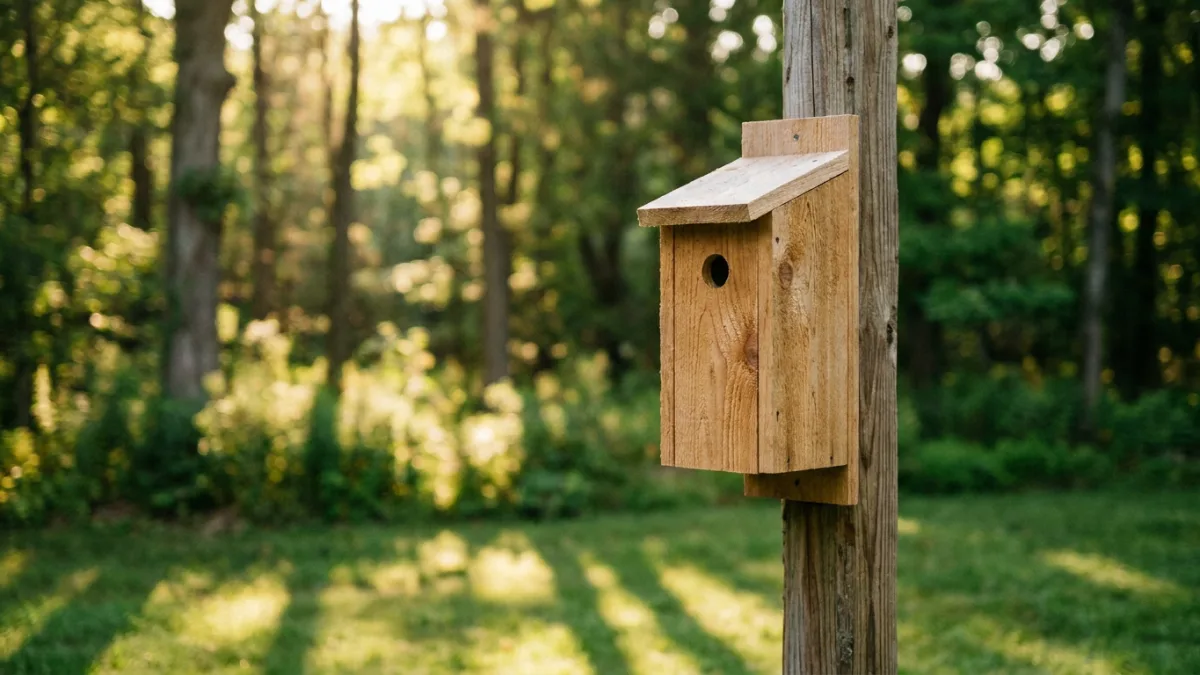
Every bird house design that raises broods shares the same skeleton: a species-correct hole, thick rough wood, drainage, ventilation, and a panel that opens for cleaning. The decorative features people pay extra for, perches, bright paint, metal roofs, ornate porches, either do nothing or actively keep birds out.
Dimensions decide the tenant
Hole diameter is the most important measurement in any design. Eastern bluebirds need a 1-1/2 inch entry, chickadees 1-1/8, and wrens accept 1 inch, so the hole picks the bird before a single board is cut. Cornell’s NestWatch publishes full floor and depth specs per species, and our guide to how hole size decides the tenant plus the plans with dimensions birds actually accept carry the working numbers.
Depth matters as much as width. Keep the hole at least 5 inches above the floor so raccoons and roaming cats cannot reach in and grab nestlings.
What decorative houses get wrong
Perches top the list. Cavity-nesting birds never use them, while house sparrows, starlings and squirrels absolutely do, so a perch turns your box into a sparrow motel. Paint or sealant inside the cavity is the second strike, since chicks peck at the walls and chemical fumes build in summer heat. Thin plywood under 3/4 inch and uninsulated metal roofs complete the usual defect list, and what cheap bird house kits get wrong covers the rest.
The recurring heat failure
Dark-painted cottage boxes with metal roofs are the predictable casualty. On a 90-degree afternoon the cavity holds heat like an attic, and nestlings in an enclosed box cannot escape it the way fledged birds would. If you love the look, hang the cottage as garden decor and put a plain cedar box nearby for the birds.
The features worth paying for
A side or roof panel that opens for end-of-season cleaning is the upgrade that actually matters, because old nests carry mites and birds reject dirty boxes in spring. Beyond that, an angled roof that shades the entrance, kerf scratches inside the front wall for fledglings to climb, and corner drainage cuts cover nearly everything separating a nest box from garden art.