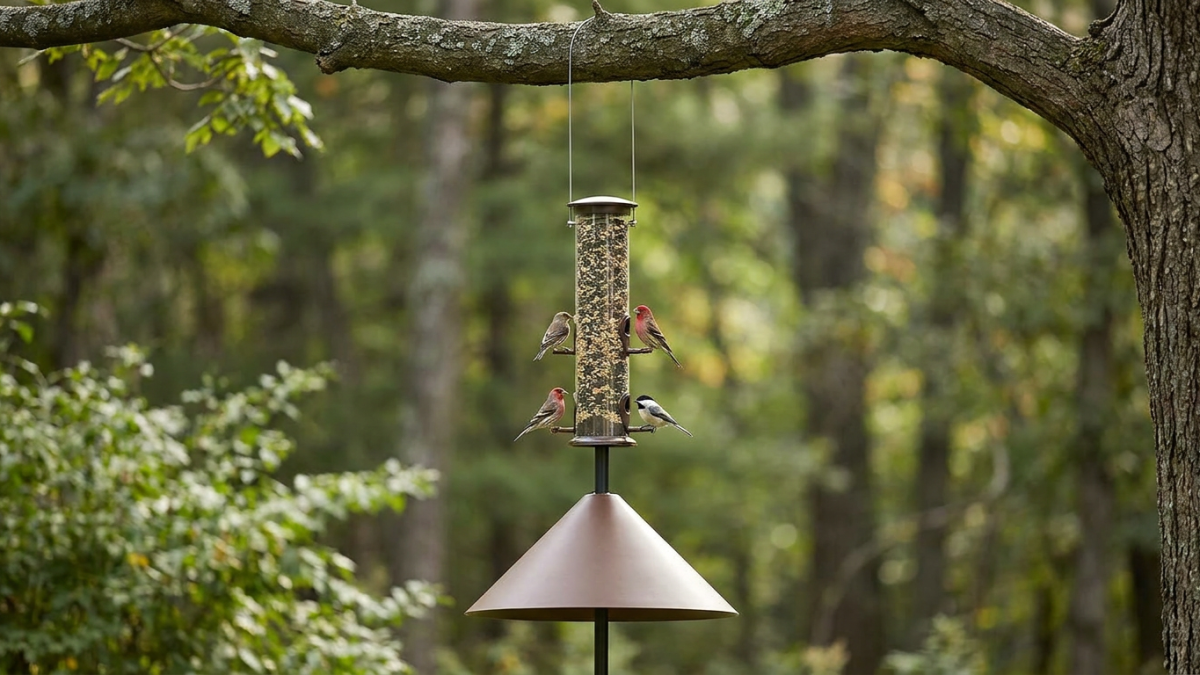
Hang the feeder about 5 feet up, on a branch at least 8 to 10 feet from the trunk or any other launch point, with a cone or torpedo baffle on the rope directly above the feeder. Miss any one of those three and you are running a squirrel feeder with birds as occasional guests.
Why 5 feet is the usual number
Five feet off the ground is the height most backyard birding guides suggest, and the reasons are practical rather than bird-specific. It puts the ports at eye level for refilling, keeps seed spill out of easy cat range, and stays low enough that you can clean the thing without a ladder. Songbirds are flexible about height. The mammals in your yard are not.
We cover the numbers in more depth in how high a bird feeder should be, including what changes when you switch to a pole.
The jump distances that decide everything
Cooperative extension sources commonly cite a gray squirrel jumping about 4 feet vertically and 8 to 10 feet horizontally from a standing start. Those two figures set your geometry. The branch you choose needs roughly 10 feet of clear air from the trunk, the fence, the shed roof, and any dense shrub, plus nothing overhanging within about 6 feet above the feeder.
The classic mistake is the beautiful limb 3 feet out from the trunk. It looks perfect from the kitchen window, and a squirrel reaches it in one hop before you have finished filling the tube.
Where the baffle actually goes
A hanging feeder cannot use a pole baffle, so you need one of two options. The first is a cone or torpedo baffle mounted on the rope or chain above the hook, wide enough that a squirrel coming down the limb cannot get around it. The second is giving up on the branch entirely: a freestanding pole in open lawn with a stovepipe baffle below the feeder defeats climbers more reliably than almost anything else, and our guide to setting up a feeder pole with a baffle walks through the parts.
Baffle position fails quietly when it sits too close to the feeder. A squirrel hangs from the limb, stretches, and reaches past a small cone. Give the baffle its clearance and keep it above the seed ports.
When no baffle saves you
In bear country, none of this works overnight. A bear dismantles a hanging feeder without noticing the baffle, so the standard advice from state wildlife agencies is to bring feeders in from dusk to dawn, or skip summer feeding altogether. Raccoons are the second undoing: they will work a branch line for several nights until something gives.
Placement for the birds themselves is its own topic. For species and sightlines, see where to hang a bird feeder before you commit to a spot.