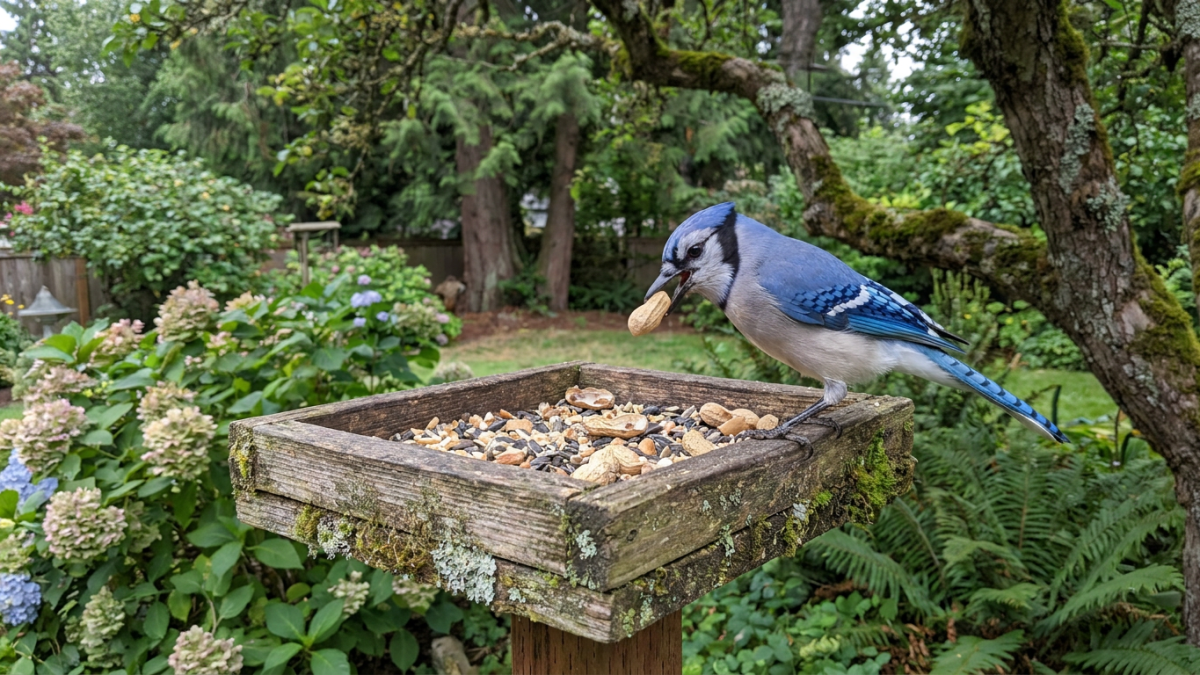
Put out whole peanuts and black oil sunflower seeds on a platform or tray feeder positioned away from your smaller feeders. Blue jays are drawn to that combination fast, and separating feeding stations keeps them from crowding out chickadees or finches.
What Blue Jays Actually Want to Eat
Peanuts in the shell are close to irresistible for blue jays, along with black oil sunflower seed and suet. A dedicated platform feeder holds these foods better than a tube feeder built for smaller birds.
If you already run feeders for attracting cardinals, you will notice blue jays like similar open, sturdy feeding surfaces rather than perches built for small songbirds.
Why Separation Matters More Than Deterrents
Blue jays are loud and bold, but they are not usually aggressive predators toward smaller birds. The real issue is that they can dominate a single feeder through sheer size and appetite.
Placing a platform feeder 15 to 20 feet from your tube and mesh feeders gives small birds a jay-free zone to feed in. This is the same logic behind keeping squirrels off bird feeders, distance and dedicated stations solve more than any single gadget.
Feeder Types That Work Best
Platform feeders, hopper feeders, and ground trays all suit blue jays well since they can land and perch comfortably. Compare your setup against our best bird feeders by bird type guide if you are starting from scratch.
Water and Cover Bring Them Back
A shallow bird bath and nearby trees or dense shrubs give blue jays a reason to stick around beyond just food. They prefer some cover to retreat to between feeding trips.
What to Skip
Avoid tiny tube feeders with small perches as your main blue jay offering. They cannot comfortably use them, and you will just frustrate both the jays and yourself.