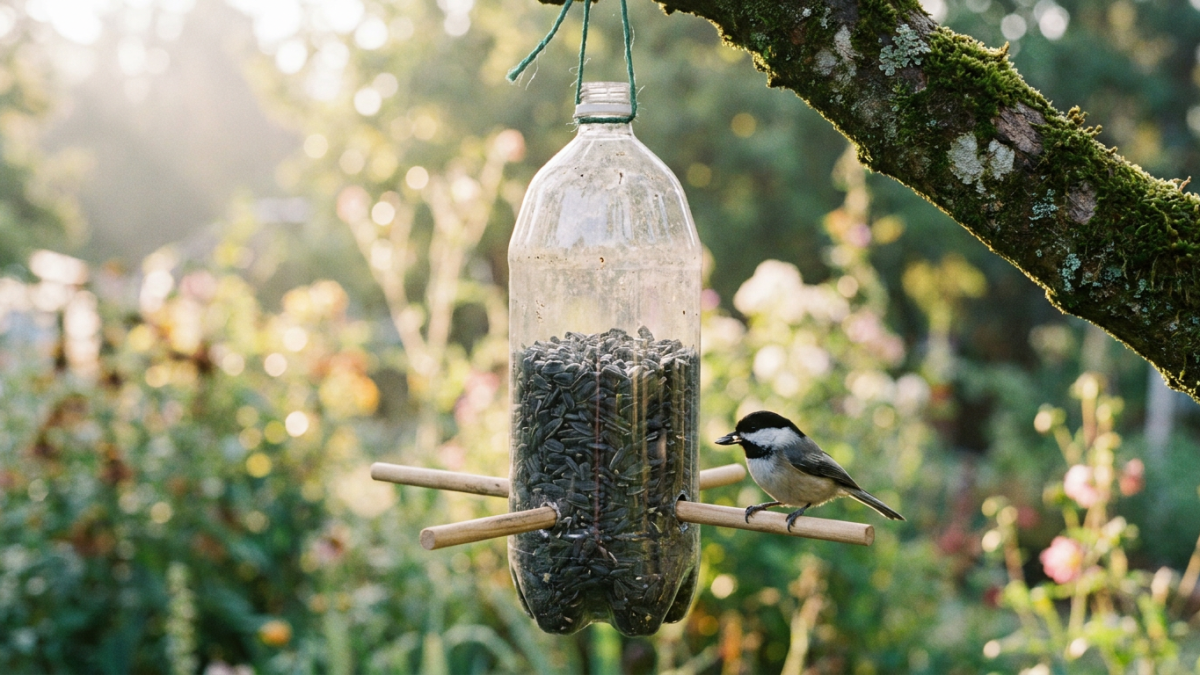
A plastic bottle bird feeder lasts more than a week when you do three things most kid-craft versions skip: punch drainage holes in the base, cut smooth feeding holes just above real perches, and treat the bottle as a seasonal part you replace. Skip those and you get wet, clumped seed by the first rainy weekend.
You have two routes. Cut and perch the bottle yourself, or screw a purpose-made feeder base onto the neck and hang the bottle upside down.
The cut-and-perch build, step by step
The Natural History Museum in London publishes the cleanest version of the DIY method, and its video below walks through it.
Video: Natural History Museum
- Wash the bottle, then use a pin to make several small drainage holes in the base.
- Push a stick through two level holes near the bottom so about 5 cm sticks out on each side as a perch.
- Cut a feeding hole the size of a UK 5p coin slightly above each perch.
- Repeat higher up, turned 90 degrees, for a second pair of perches.
- Thread string through two holes in the neck and hang it.
Sand or trim every cut edge. The museum warns that jagged plastic can cut birds and snag feathers, and that is the detail cheap builds get wrong.
Want a sturdier frame to work from? Our bird feeder plans cover wooden builds that pair well with a bottle reservoir.
Screw-on bases versus a bare bottle
A screw-on base turns the bottle into a gravity hopper. Seed drops into a tray as birds eat, so you skip cutting holes in the bottle at all.
| Option | Bottle | Base | Cleaning | Price |
|---|---|---|---|---|
| NHM cut-and-perch build | Any plastic bottle with cap | None, stick perches | Warm soapy water, replace often | Household scraps |
| Educational Innovations Soda Bottle Bird Feeder | Any bottle with standard cap | Recycled plastic, bottom refill opening | Not stated | $3.99, teachersource.com |
| American Bird Products Soda Bottle Bird Feeder | Standard 2-liter | Cast zinc, pole-mountable, made in USA | Dishwasher-safe | From $15, birdcall.com |
Figures are manufacturer listings at the time of writing. The American Bird Products base is the one that outlives several bottles, because only the bottle wears out.
What breaks a bottle feeder, and when to bin it
Moisture is the real failure point. A closed bottle traps condensation, and damp seed clumps and molds faster than seed in an open tray.
Thin soda bottle plastic also was never meant to sit in the sun for years. Once it clouds over, splits at a hole, or the perches wobble loose, swap in a fresh bottle rather than patching it.
Fill it with black oil sunflower rather than a cheap mix heavy on filler grains. Our breakdown of cheap bird seed filler shows why the bargain bag often costs more per bird actually fed.
Cleaning cadence that keeps it safe
Project FeederWatch advises cleaning seed feeders every week or two, more often in wet weather or heavy use. It also asks you to avoid feeders that cannot be thoroughly washed.
A bottle passes that test only if you can get a bottle brush inside. Wash it in warm soapy water, soak it 10 minutes in one part bleach to nine parts water if you want to disinfect, rinse, and let it dry completely before refilling.
If cleaning a bottle feels fiddly, keep two and rotate them. Our guide on how often to clean a bird feeder sets out a full schedule by feeder type.