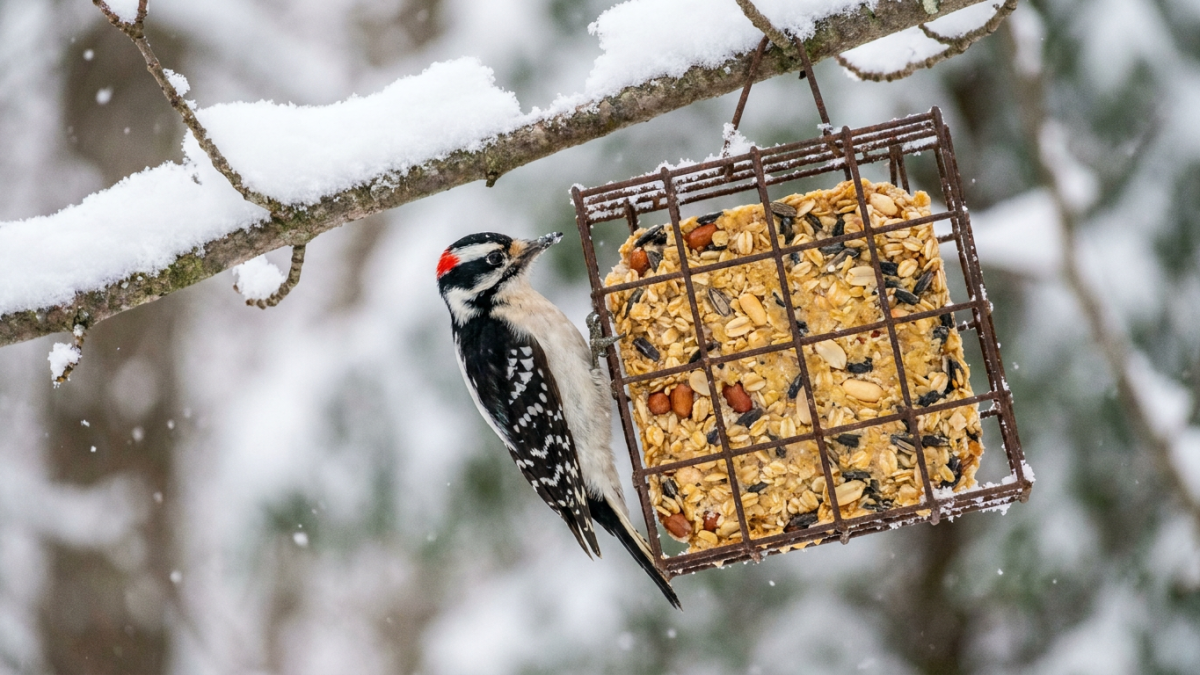
The suet pudding recipe that birds clear first is a rendered fat base (lard or rendered beef suet) bound with peanut butter, oats and cornmeal, served only in cold weather. Raw fat and soft peanut butter mixes are the parts that turn rancid or oily once temperatures climb.
A suet pudding recipe with published proportions
Nature writer Julie Zickefoose published her “Zick Dough, Improved” in Audubon magazine. It is a crumbly pudding, and the proportions are hers, not ours:
- 2 cups unmedicated chick starter
- 2 cups quick oats
- 3 cups white flour
- 1.5 cups yellow cornmeal
- 1 cup lard, melted with 1 cup peanut butter
Stir the melted fats slowly into the dry mix until a dough forms. If it feels gummy, add flour and cornmeal until it turns soft and crumbly. She reports the batch makes 12 cups, about 3.5 pounds, stored in mason jars somewhere cool.
The chick starter is there for a reason. Zickefoose writes that her original fat-heavy version caused gout in her bluebirds, and a calcium-rich base fixed the imbalance.
Video: Gardener Scott
Which ingredients go first and which go bad
Cornell’s All About Birds lists woodpeckers, nuthatches, chickadees, jays and starlings as the birds most drawn to suet. Starlings are the ones that empty a feeder fastest, and Zickefoose says starlings and House Sparrows will clear her dough in no time.
| Ingredient | What the source says | Spoilage or safety note | Source |
|---|---|---|---|
| Raw beef suet | Hard kidney and loin fat, high energy | Grows rancid quickly above freezing, offer in winter only | Cornell All About Birds |
| Rendered suet | Melted with impurities removed | Keeps much better, still softens in warm weather | Cornell All About Birds |
| Lard | 1 cup per batch in Zick Dough | Author reports birds prefer it to shortening | Audubon magazine |
| Peanut butter | Safe while cold keeps it hard | Separated oil can coat feathers and plug egg pores | Cornell All About Birds |
| Cornmeal and peanuts | Common suet cake fillers | Growth medium for bacteria, refrigerate until use | Cornell All About Birds |
| Whole wheat flour | Swapped out for white flour | Spoils too quickly, per the recipe author | Audubon magazine |
| Bacon drippings | Not recommended | Carries nitrosamines from curing and frying | Cornell All About Birds |
| C&S High Energy Delight No Melt Suet Dough | Processed commercial dough | Manufacturer figure: holds up to 100°F | C&S Products |
When to serve it and when to stop
Zickefoose serves half a cup once a day, and only below 55°F. Cornell’s warning explains the cut-off: soft fat coats belly feathers, and during nesting that residue can clog the pores on eggs.
So treat homemade pudding as a cold-season food. Once spring warms up, pull it, clean the feeder, and switch to a processed no-melt cake if you still want suet out.
Neither Cornell nor Audubon gives a shelf life in days for homemade pudding, so trust your nose. A sour smell or an oily sheen means the batch goes in the trash.
Crumbly dough does not sit well in a standard cage. Offer it in a small covered dish, or pick a model from our guide to the best suet feeders that keeps food dry.
If Pileated Woodpeckers visit, a suet feeder with a tail prop gives them the bracing they need to feed for longer.
Suet is one part of a cold-weather menu. Pair it with seed and water using our breakdown of what to feed birds in winter.