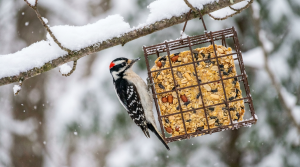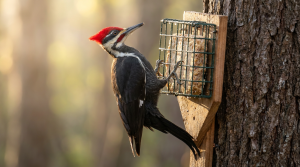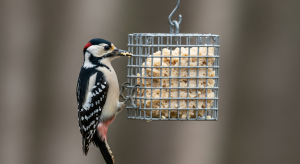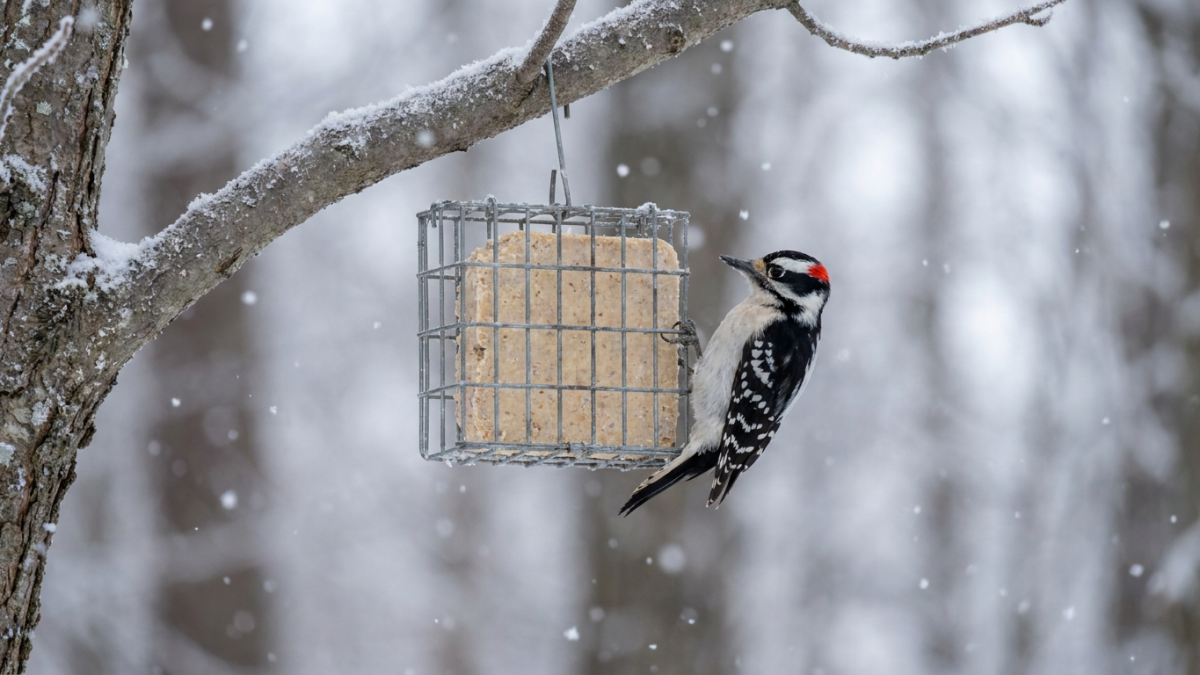
Suet is hard beef fat, defined by Cornell Lab as the fat around the kidneys and loins, that birds burn as high-energy fuel. Most feeders use rendered suet pressed into cakes with corn, peanuts or seed, and it is safest in cold weather.
Woodpeckers, nuthatches, chickadees and jays all treat a suet cake as the best thing on the menu in winter. The catch is that the stuff you buy is not always plain fat, and the wrong form goes bad fast once it warms up.
Below you get what suet is made of, three cakes and feeders worth a look, and a calculator for how many cakes a winter takes.
Plumelore earns a commission on qualifying Amazon purchases made through these links, at no extra cost to you.

Not in stock on Amazon as of 1 Nov 2026.

Not in stock on Amazon as of 1 Nov 2026.

What is the difference between raw suet, rendered suet and suet cakes?
Raw suet is the plain fat, rendered suet is the cleaned and melted version, and cakes are rendered fat bound with other food. Each one spoils on a different schedule.
| Form | What it is | How it keeps | Cornell Lab guidance |
|---|---|---|---|
| Raw suet | Hard fat from around the kidneys and loins of beef or mutton | Grows rancid quickly above freezing | Offer it only in winter |
| Rendered suet | Suet that was melted and strained to remove impurities | Keeps much better, but still softens in warm weather | Pull it if it goes soft |
| Suet cakes | Blocks of suet or a thick substitute mixed with corn meal, peanuts, fruit or dried insects | Corn and peanuts can grow bacteria | Buy from reputable dealers and consider refrigerating until use |
| Bacon drippings | Cooked animal fat, which birds do eat | Contains nitrosamines from curing and frying | Not recommended |
Definitions and storage guidance from the Cornell Lab All About Birds article on suet, checked October 2026. Prices are not listed because this table compares forms of suet, not products.
Formula: cakes = feeders x days / days one cake lasts, rounded up. Assumes every feeder holds one cake and you refill when it is empty.
What is suet made of?
Beef fat. Cornell Lab says the strict definition is the hard fat around the kidneys and loins of beef and mutton, though most beef fat sold for birds gets called suet.
Animal fat is easily digested and metabolized by many birds, which makes it a high-energy food, especially in cold weather.
It slots into a wider cold-season plan, and our guide to what to feed birds in winter covers the seed and water that go with it.
Video: Birdfeeding with Kurtis
Which birds eat suet?
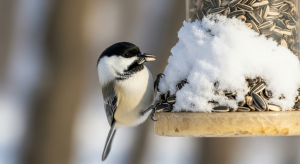
Woodpeckers, nuthatches, chickadees, jays and starlings, according to Cornell. Wrens, creepers, kinglets, cardinals and some warblers drop in now and then.
Starlings are very fond of it. Cornell suggests a feeder that makes birds hang upside down, which woodpeckers, chickadees and nuthatches manage easily and starlings cannot.
Our roundup of suet feeders sorts cages by who they favor.
Is suet safe in summer?
Only if it stays hard. Raw suet grows rancid quickly above freezing, and even rendered suet can soften in warm weather.
Cornell warns that soft suet can coat belly feathers, a danger in spring and summer when birds are incubating, because it can clog the pores in the eggs. If your cakes sag in the sun, take them down.
Making your own is an option too, and our suet pudding recipe shows one way.
Questions people ask about what is suet
What is suet in simple terms?
Suet is hard beef fat, strictly the fat around the kidneys and loins. Birds eat it as a high-energy food, and feeders usually offer it as rendered cakes mixed with corn, peanuts or seed.
Which birds eat suet?
Cornell Lab lists woodpeckers, nuthatches, chickadees, jays and starlings as the most attracted. Wrens, creepers, kinglets, cardinals and some warblers visit suet feeders occasionally.
Does suet go bad?
Yes. Cornell says raw suet grows rancid quickly above freezing, and rendered suet keeps better but can soften in warm weather. Cakes with corn or peanuts may be worth refrigerating until use.
How do you keep starlings off a suet feeder?
Cornell suggests a feeder that requires birds to feed hanging upside down. Woodpeckers, chickadees and nuthatches reach the suet easily, but starlings cannot.