A house wren accepts a 1 inch round entrance and an 8 inch deep box on a 5.5 by 5.5 inch floor. That is the spec sheet Cornell Lab’s NestWatch publishes for the species, and it is narrower and shallower than the numbers most generic birdhouse plans give you.
Wrens are not fussy about looks. They are fussy about the hole. Build to the figures below and the box gets claimed; a “one size fits all” plan hands the cavity to house sparrows.
Wren house specs, species by species
Three wren species use nest boxes in the United States and none wants the same box. The house wren takes the smallest hole of any common cavity nester; the Carolina wren wants a wide, half-open front.
| Species | Entrance hole | Inside depth | Floor (W x L) | Mount height |
|---|---|---|---|---|
| House wren | 1 in round | 8 in | 5.5 x 5.5 in | 5 to 10 ft |
| Bewick’s wren | 1.125 in round | 8 in | 5.5 x 5.5 in | 3 to 6 ft |
| Carolina wren | 2.5 in open front | 7 in | 5 x 6.5 in | 3 to 6 ft |
| Black-capped chickadee | 1.125 in round | 8 in | 5.5 x 5.5 in | 5 to 15 ft |
| Eastern bluebird | 2.25 in round | 9 in | 5.5 x 5.5 in | 4 to 6 ft |
All figures are from Cornell Lab of Ornithology’s NestWatch nest box guides. Chickadee and bluebird rows show how far a wren box drifts from a generic plan.
Why the 1 inch hole is the whole plan
A 1 inch entrance keeps house sparrows out. Sparrows need about 1.25 inches, so the eighth of an inch between a wren hole and a chickadee hole decides who raises a brood. Read how hole size decides the tenant before you pick up a drill.
Drill it with a 1 inch Forstner bit, centered, bottom edge 6 inches above the floor. That 2 inch lip under the entrance keeps a raccoon paw off the eggs.
Video: Nature Yardlife
Cut list for a house wren box
One 1 by 6 board about 4 feet long covers it. Cedar or untreated pine, unpainted inside.
- Floor: 5.5 by 5.5 inches, with the corners clipped for drainage
- Front: 5.5 by 8 inches, hole centered 6 inches up
- Back: 5.5 by 12 inches, the extra length is the mounting flange
- Sides: 5.5 by 8 inches, one hinged on two screws for cleanout
- Roof: 7 by 8 inches, overhanging the front by 1.5 inches
Drill two 0.25 inch vent holes near the top of each side and recess the floor a quarter inch so rain running down the walls drips off. The full framing logic is in bird house plans and the dimensions that get occupied.
Where to hang it
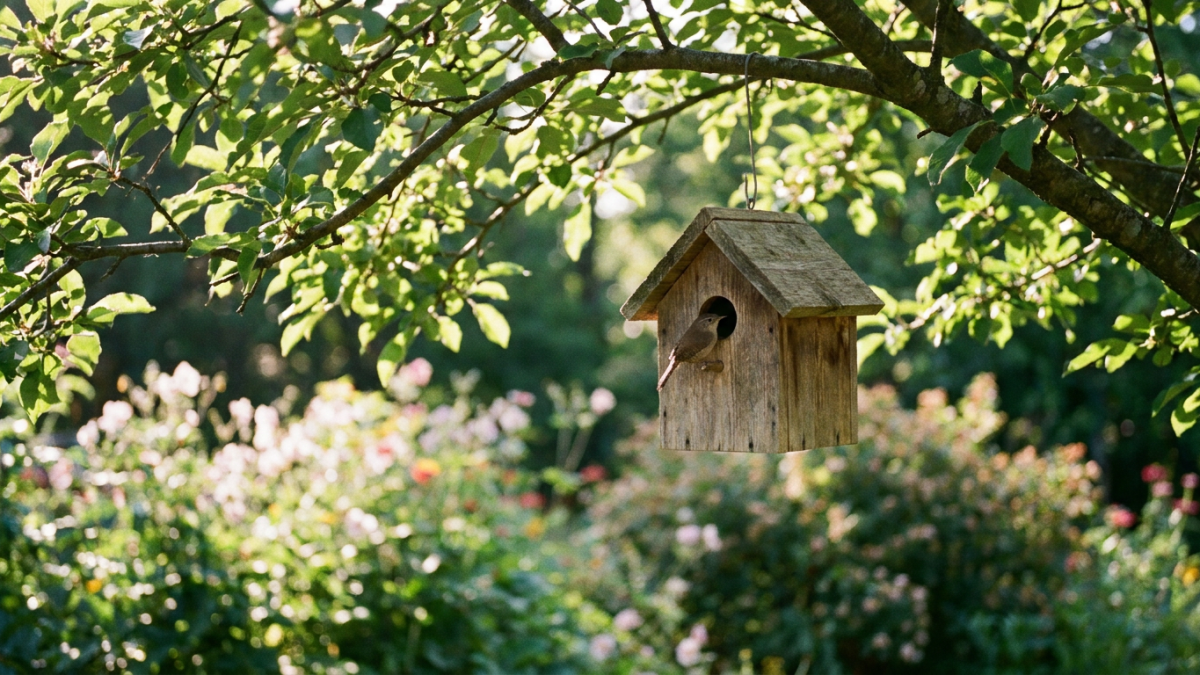
NestWatch puts house wren boxes 5 to 10 feet up, within 100 feet of shrubs or trees, with open air in front of the hole. Wrens tolerate a swinging box better than bluebirds do, which is why the classic hanging wren house exists.
Keep any bluebird or chickadee box at least 100 feet away. Male house wrens stuff every cavity in their territory with stick “dummy nests” and puncture neighbors’ eggs to clear the competition.
The box is only half the invitation. Brush piles, water and an unsprayed yard do the rest; how to attract wrens covers that side.
Carolina wrens want a different box
If the wren singing at dawn is rusty brown with a white eyebrow, that is a Carolina wren and it will mostly ignore a 1 inch hole. NestWatch’s Carolina plan is an open-front box: 2.5 inch opening across the top of the front panel, 7 inches deep, 5 by 6.5 inch floor, mounted 3 to 6 feet up under an eave or porch roof.
Build both if you host both species.