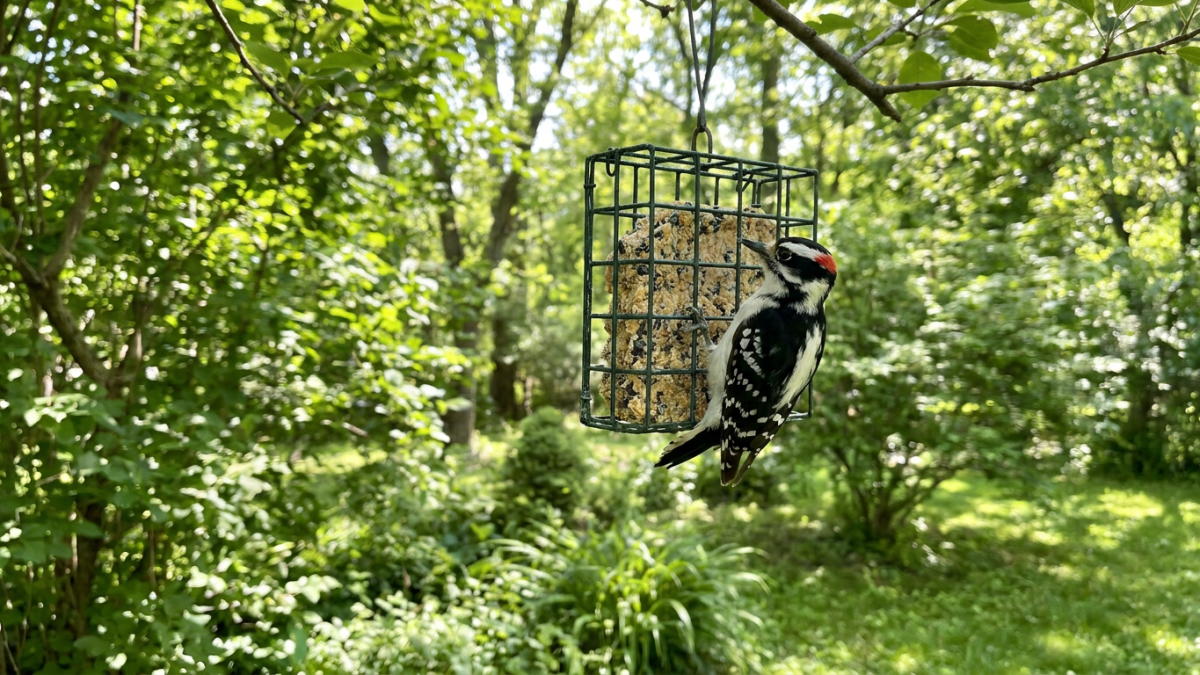
The fastest way to tell a downy from a hairy woodpecker is bill length. The downy has a short, stubby bill less than half the width of its head, while the hairy has a long, chisel-like bill nearly as long as its head. Both are black-and-white backyard woodpeckers, but size and bill give them away.
The key differences
The downy woodpecker is small, about the size of a sparrow, with a delicate bill and a gentle look. The hairy woodpecker is noticeably larger, closer to a robin, with a heftier, longer bill.
Bill length is the most reliable field mark. On a downy, the bill looks too short for the head. On a hairy, it looks strong and in proportion.
Check the outer tail feathers too. Downies usually show small black spots on their white outer tail feathers, while hairies tend to have clean white ones.
Behavior and where you see them
Downies are bolder at feeders and will work thin stems, weed stalks, and small branches. Hairies prefer larger trunks and bigger limbs and can be shyer around people.
Both come to suet readily. If you want more of either, our guide to the best suet feeders covers the setups they favor.
Their calls differ slightly. The downy gives a soft, descending whinny, while the hairy’s call is a sharper, flatter note.
Telling them apart at home
Put out suet and let them settle in. Once they visit regularly, size becomes obvious when they land near each other, and our tips on how to attract woodpeckers help bring both to your yard.
If you enjoy sorting out look-alikes, you will like our walkthrough on how to tell a house finch from a purple finch, another common backyard mix-up.
Give it a few sightings. Even experienced birders lean on bill length before anything else.