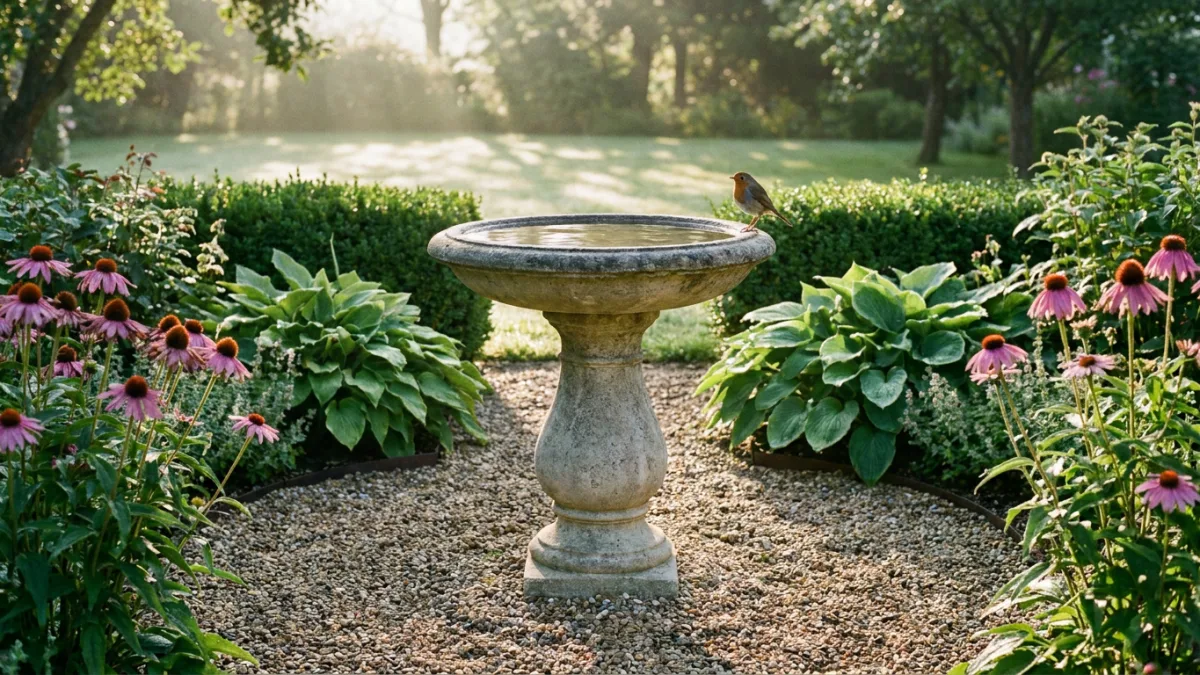
A stone bird bath is the most durable bath you can put in a garden, and also the one most likely to crack over winter. Both facts come from the same property: real stone and cast concrete are heavy, porous, and completely rigid. Buy one knowing how to handle the freeze season and it can outlive the tree next to it.
Weight is the first decision
Carved granite and basalt are heaviest, often well over 40 kilograms, and they essentially never blow over. Cast concrete, the common garden center version, is lighter and cheaper but still needs a flat, settled base. Before choosing, weigh the practical side with our bird bath choosing guide.
Freeze is the real risk
Water expands about nine percent when it freezes. In a porous stone bowl, ice lenses pry open micro cracks, and after a few winters a hairline becomes a split basin. The fix is simple discipline: empty the bowl before hard freezes, or run a heater through the cold months. If you want birds in winter without electricity, the tactics in keeping a bird bath from freezing without electricity apply directly, and a heated model from our heated bird bath roundup removes the chore entirely.
Cleaning without damaging stone
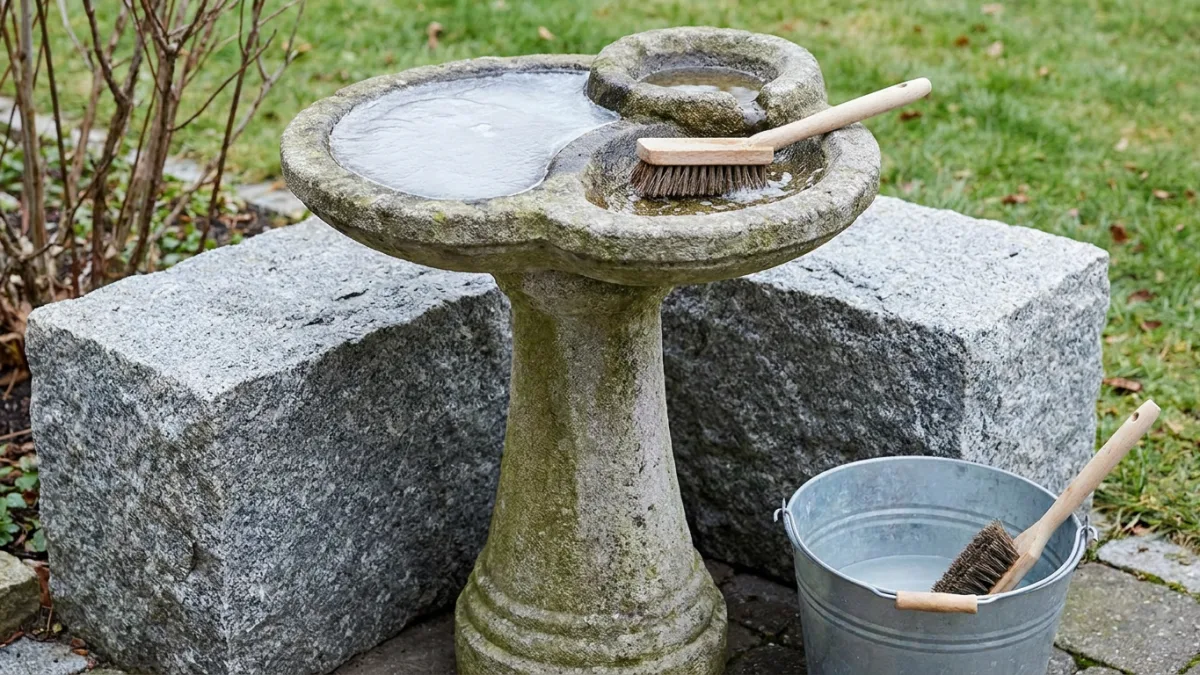
Scrub weekly with a stiff brush and plain water, and refresh the water every few days in summer. Avoid bleach on porous stone; a nine to one water to vinegar mix lifts algae without soaking harsh chemistry into the pores. The same routine and timing rules are in how to keep a bird bath from turning green.
Placement decides how much cleaning you will do. Shaded spots grow algae slower but get less winter sun; the tradeoffs are laid out in bird bath placement by species.