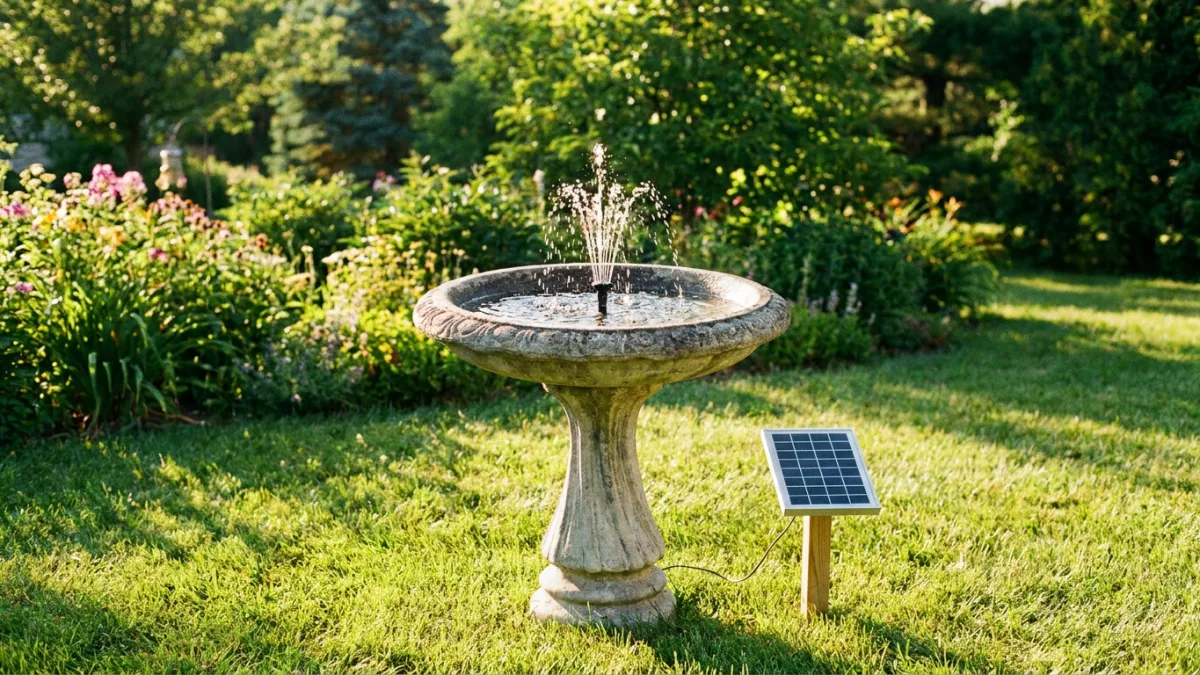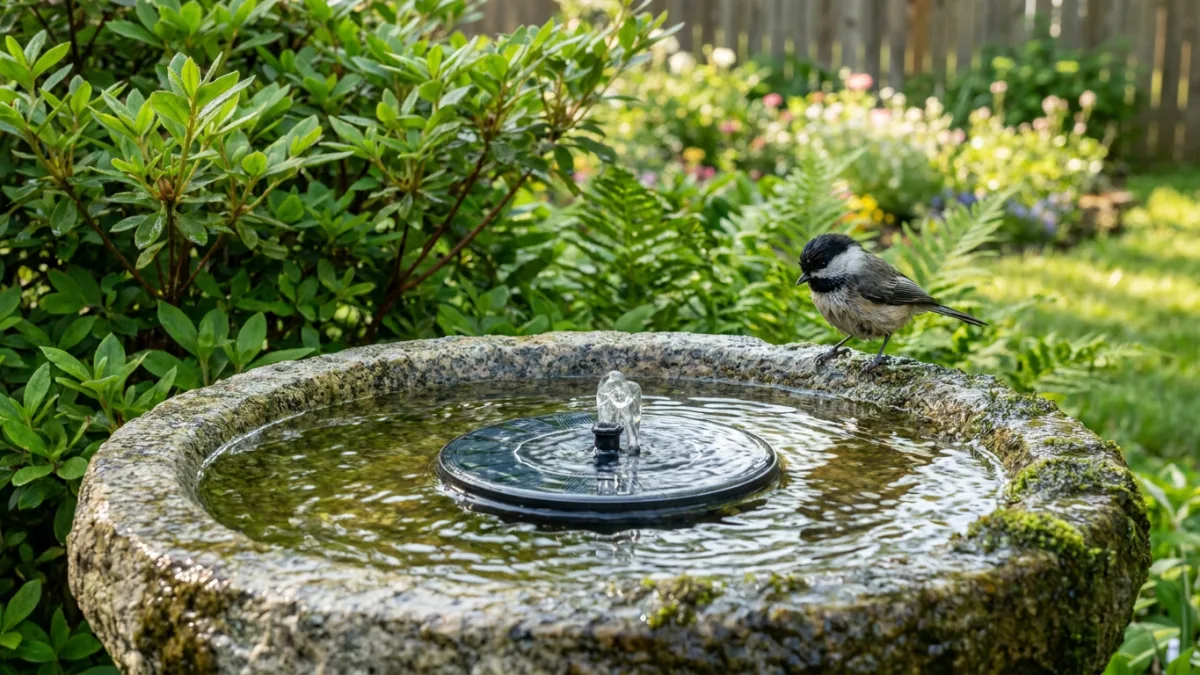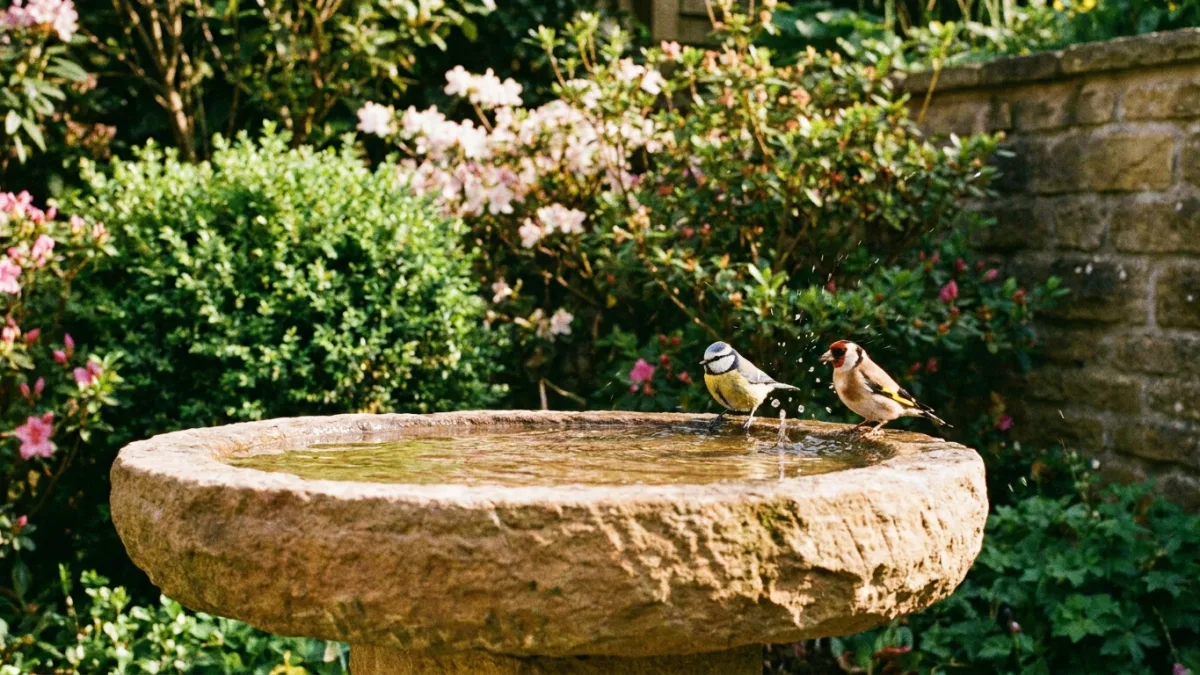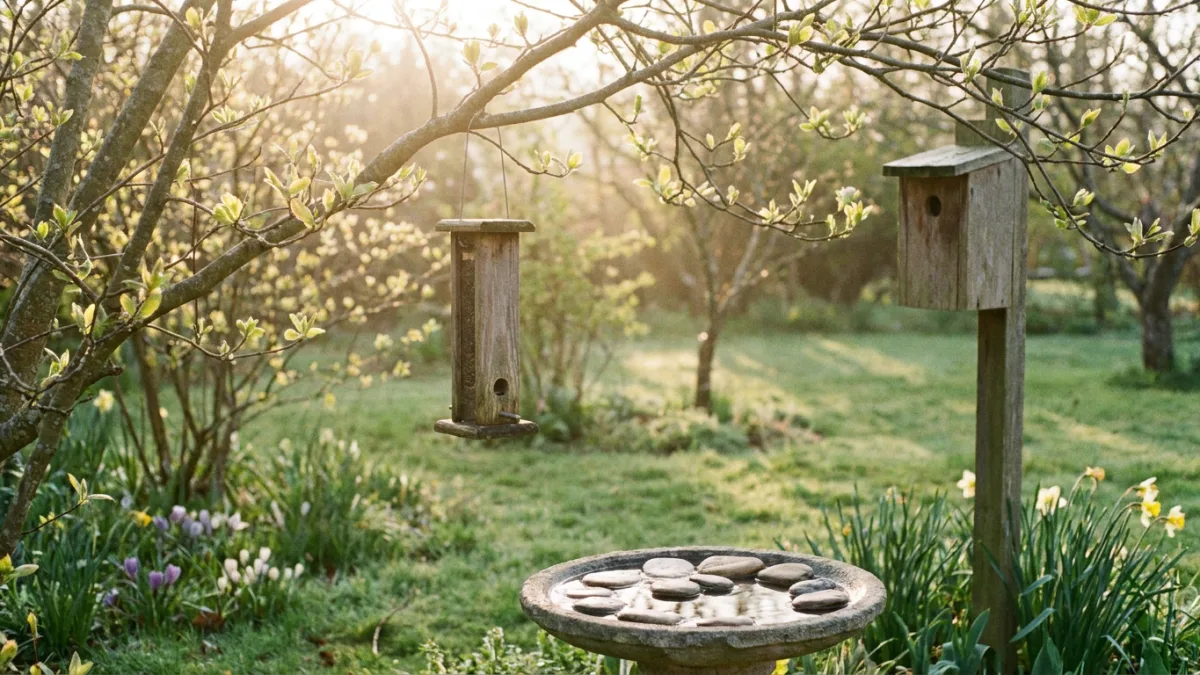
Four jobs before nesting season starts, in this order: deep clean the feeders and bath, get nest boxes emptied and mounted, put out water and nesting material, then adjust what you are feeding as migrants filter back in.
Start with a full scrub
Winter feeders collect wet seed, hulls and droppings, and the first warm damp weeks are exactly when that turns into a disease problem for finches.
Take every feeder apart, soak the pieces in one part bleach to nine parts water, scrub the ports and corners, rinse well, then let everything dry completely before refilling. The bath gets the same treatment. This guide on how often to clean a bird feeder sets the rhythm for the rest of the season.
Nest boxes go up before the birds arrive
Chickadees, titmice and bluebirds start prospecting cavities in early spring, so a box you hang once pairs have already settled is a box that sits empty until next year.
Pull last season’s nest out, check that the drainage and ventilation holes are clear, and remount 5 to 6 feet up with the entrance facing away from prevailing weather. Open ground and a low perch within sight are what you need to attract bluebirds to the box instead of house sparrows.
Water earns more visits than seed
Birds moving through in spring have no idea your feeder exists, but they will drop into shallow water they can see and hear.
Keep the bath around two inches deep in the middle, drop in a few flat stones for footing, and refresh it every couple of days once daytime temperatures climb.
Time the hummingbird feeder to your region
Gulf Coast yards want nectar out weeks before northern yards do, and hanging early costs you nothing but syrup.
Check when to put out hummingbird feeders for your region and hang the first one about two weeks ahead of the earliest expected arrival.
Adjust the menu and leave the yard messy
Keep suet running through cold snaps, then switch to a no-melt formulation once daytime highs pass roughly 70F. Standard suet turns rancid in heat and smears on feathers.
Black oil sunflower stays the workhorse. Add nyjer for goldfinches moulting into breeding plumage, and hold orange halves and grape jelly until orioles actually reach your latitude.
Offer nesting material in a mesh holder: short lengths of natural fibre, untreated pet fur, thin twigs. Skip dryer lint, which mats solid when wet, and skip anything longer than a few inches that can tangle around a leg.
Then leave one corner of leaf litter unraked. That is where the insects nestlings are raised on actually come from.