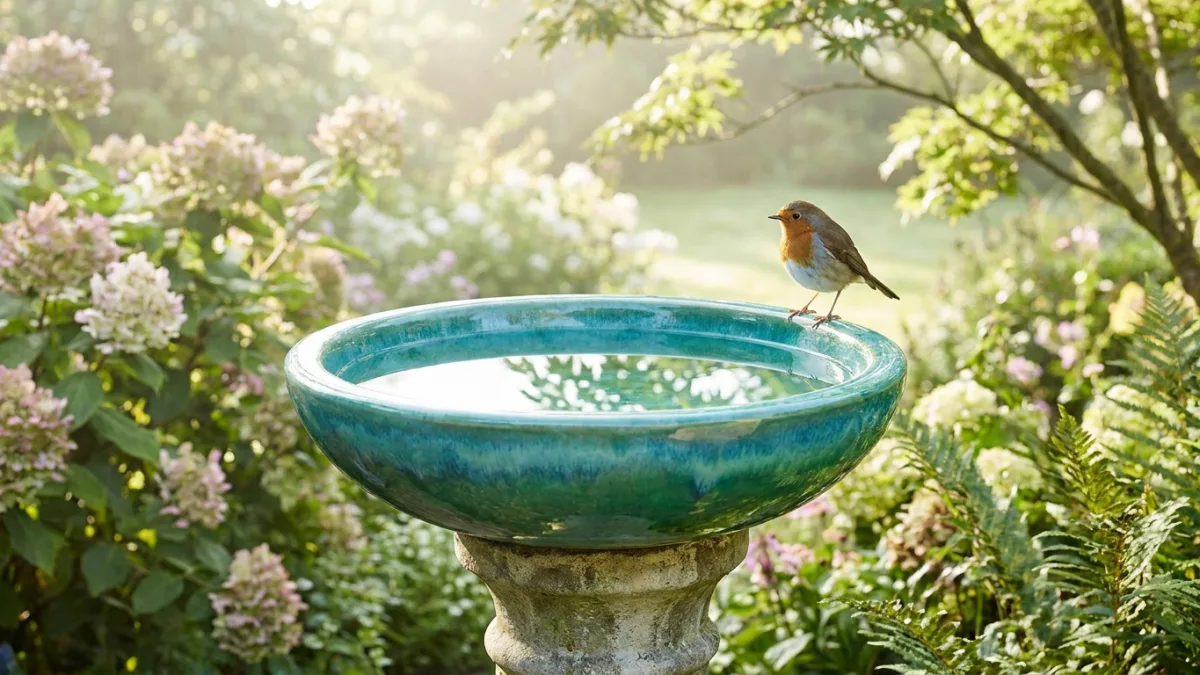
A ceramic bird bath is the best-looking water feature you can put in a flower bed and one of the least forgiving things you can leave outside through a hard freeze. Buy it for the summer display and plan around the winter, because fired clay and freezing water are a bad combination.
Glazed or unglazed, two different products
Unglazed terracotta drinks water. Every pore that soaks up moisture becomes a crack site when that water freezes, which is why unglazed clay baths spall and flake after a season or two outdoors. A glaze seals the surface, and a fully glazed bowl survives winters far better, but only until the first chip. Once water slips behind a glaze through a hairline crack, freeze damage works from the inside out.
Grip is the problem nobody mentions
Birds do not land in the middle of a bath. They wade in from the edge, and a wet glazed rim is closer to ice under their feet than anyone expects. Rough-textured glazes help. So does a handful of pea gravel or a flat stone set in the shallow end, which gives small songbirds somewhere to perch while they drink. If you are still choosing, our guide to how to choose a bird bath birds actually use covers depth and slope, the two factors that matter more than material.
Freeze risk and the nine percent problem
Water expands by roughly 9 percent when it freezes, and a glazed bowl holds water without flexing, so the expanding ice pushes outward on the walls until something gives. A stone bowl survives this for years because it is thick; ceramic usually is not. Empty the bowl before a hard freeze, flip it upside down or bring the insert indoors, and it lasts indefinitely. The winter notes in our stone bath freeze and cleaning guide apply to ceramic too, and the tricks for keeping a bird bath from freezing without electricity buy you margin in the shoulder months.
One honest concession: in climates with real winters, a ceramic bath is a three-season product unless you are diligent about emptying it. If that sounds like you, the glaze colors alone justify the choice.